Here’s what USDA/AMS had to say:
Midwest:
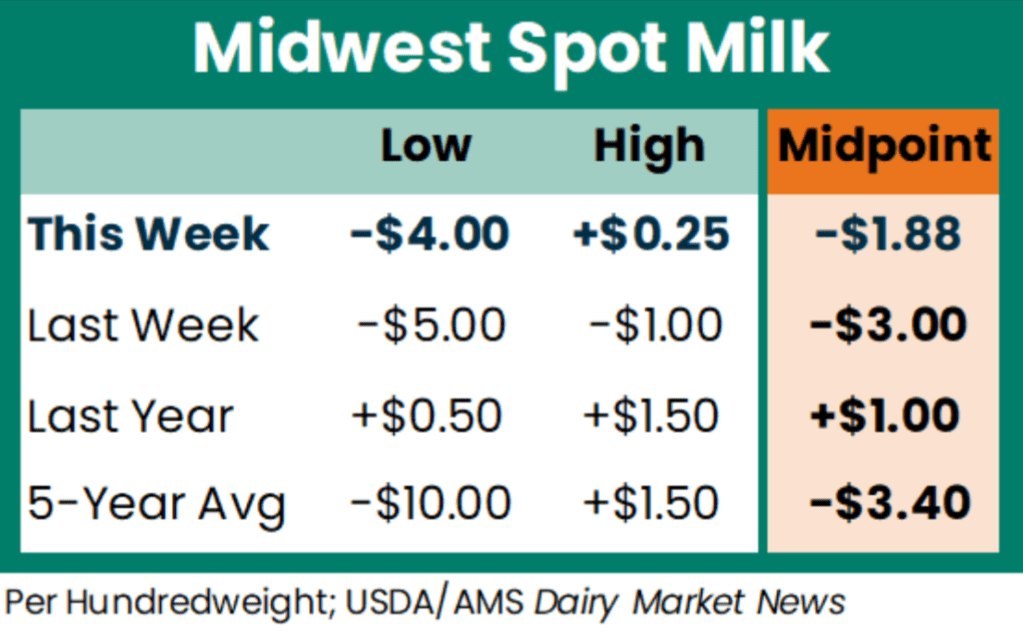
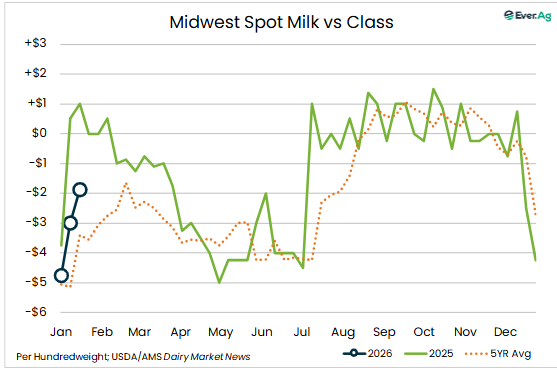
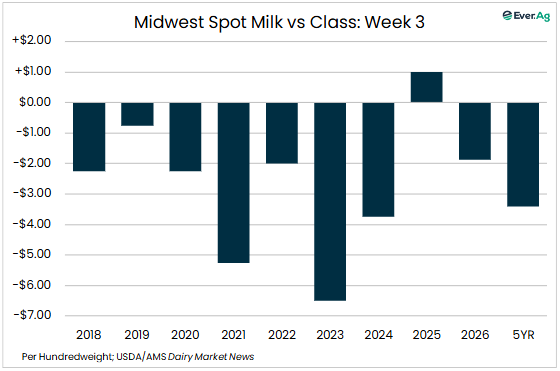
Milk production is steady in the Central region and contacts say output is up compared to this time last year. Demand for Class I milk is steady to higher. Bottlers are running busier schedules compared to a few weeks ago, when educational institutions were on break for the winter holidays. However, contacts report spot demand is lighter than it was before Class I processors began preparing for those holidays. Demand for milk from Classes II and IV is strong. Spot loads of Class III milk are plentiful; contacts report a slight uptick in demand this week but say trading remains somewhat light overall. Some cheesemakers say they are primarily using internal milk volumes for production and are not currently purchasing additional spot volumes. Cheese production is strong, but some plant managers report offering spot loads at discounted prices due to downtime. Spot prices for Class III milk range from $4-under to $0.25-over this week.

EAST
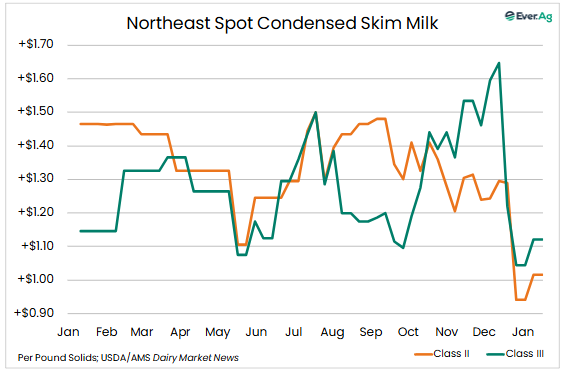
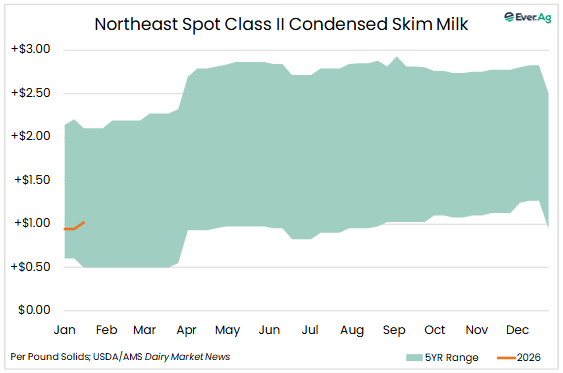
Farm level output of milk is seasonally strong, and contacts mention how high the volumes are compared to this time in previous years. Milk components remain high providing plenty of cream for the market. Bottlers are seeing a slight drop in demand in some parts of the region, sending some milk to spot market. Demand in the Southeast remains steady to strong; the need to import milk from other regions is low. Class II production is increasing slightly as some manufacturers begin increasing production of ice cream and frozen dairy desserts. Class III production is steady to strong in the Northeast. Some cheesemakers are taking in spot loads of milk to increase production, ultimately to produce more whey as prices and demand of whey protein concentrates remain high. Class IV production is strong. Butter makers are operating churns at or near capacity due to high retail demand.
WEST
California handlers note mixed week-over-week milk production. Although year-over-year milk production is up, some stakeholders convey it is below anticipated volumes. However, open processing time is tight, especially in the Central Valley. Stakeholders indicate plenty of milk is available for production managers. Farm-level milk output in Arizona is steady. Some manufacturers are bringing in spot milk loads to utilize with open processing time. Milk production in New Mexico is steady. Handlers convey milk production is fairly balanced with processing capacities. Farm-level milk output varies from lighter to steady in the Pacific Northwest. Handlers convey warmer than typical temperatures, adverse winter weather, or heavy rainfall have negatively impacted cow comfort and milk output in some cases. Spot milk load availability is tighter. Milk production in the mountain states of Idaho, Utah, and Colorado varies from stronger to steady. Idaho handlers convey warmer temperatures than what is to be expected is increasing cow comfort and milk production in some cases. Stakeholders note spot load availability grew this week for Idaho. Colorado handlers convey milk production is fairly balanced with processing capacities. Demand for all Classes is steady throughout the region.
Questions or concerns? Please contact Ever.Ag Insights at insights@ever.ag