
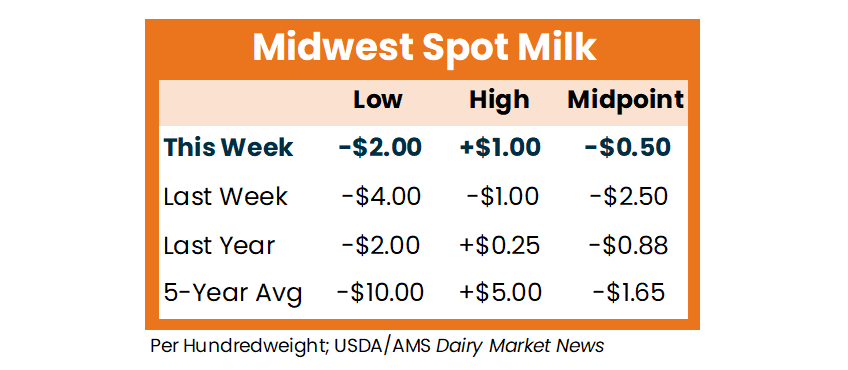
Here’s what USDA/AMS had to say:
Midwest:
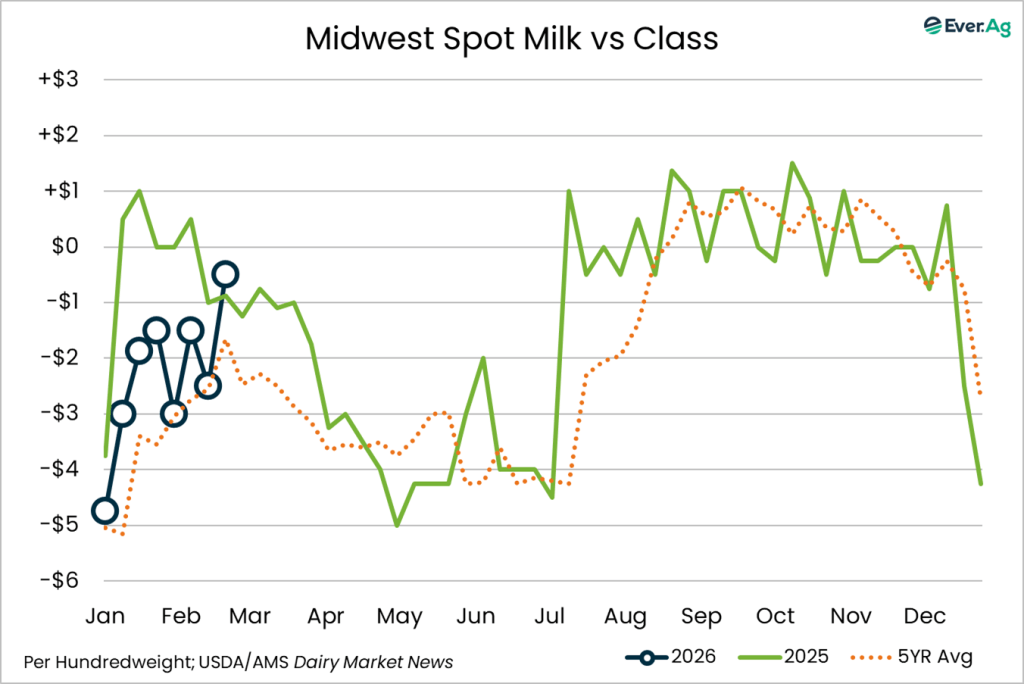
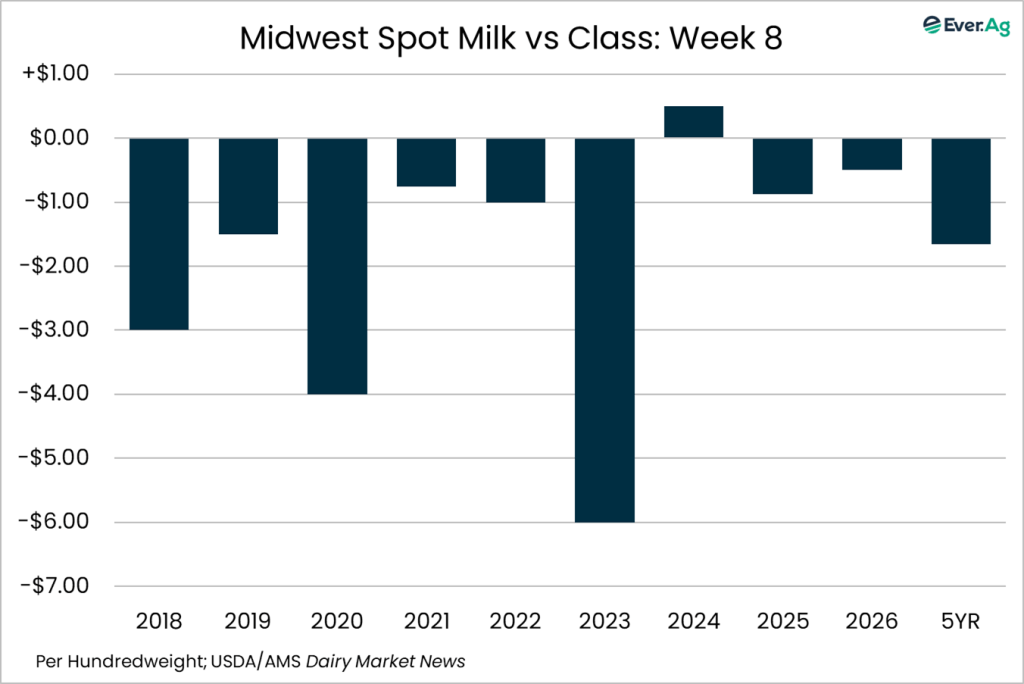
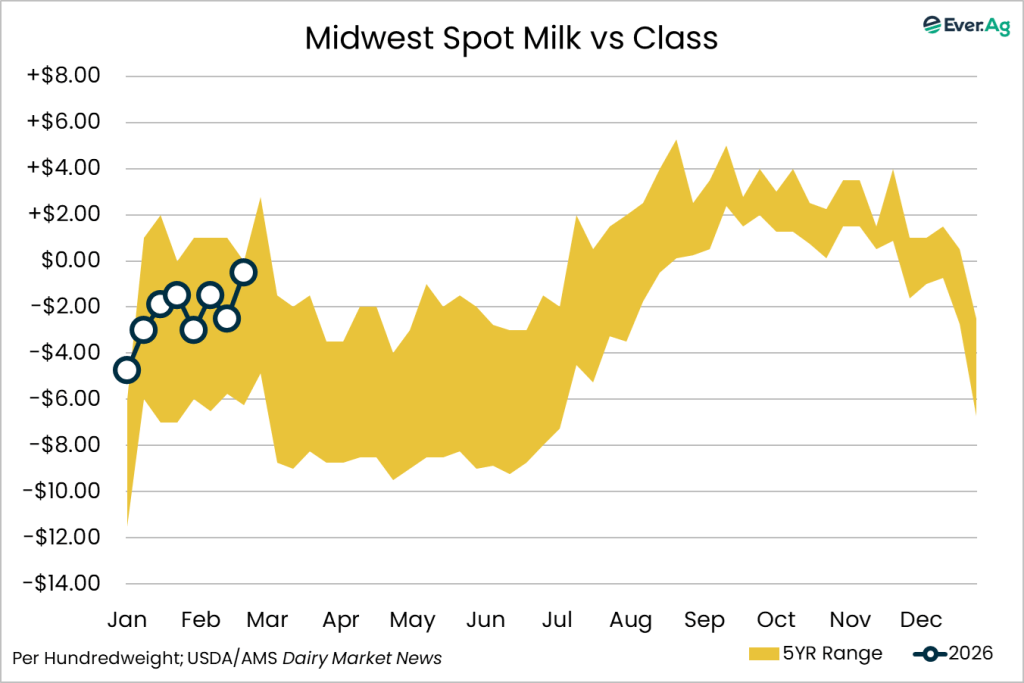
In the Central region, contacts report steady milk output but say production remains up from a year ago. Class I demand is unchanged as contacts say bottling operations in the region are running steady production schedules. Demand is strengthening for Classes II and IV. Spot prices for Class III milk prices range from $2-under to $1-over, up from last week, though contacts say spot demand is light. Cheesemakers are running busy production schedules but say they are primarily using milk from within their network, and some are not actively selling or purchasing spot volumes.
EAST
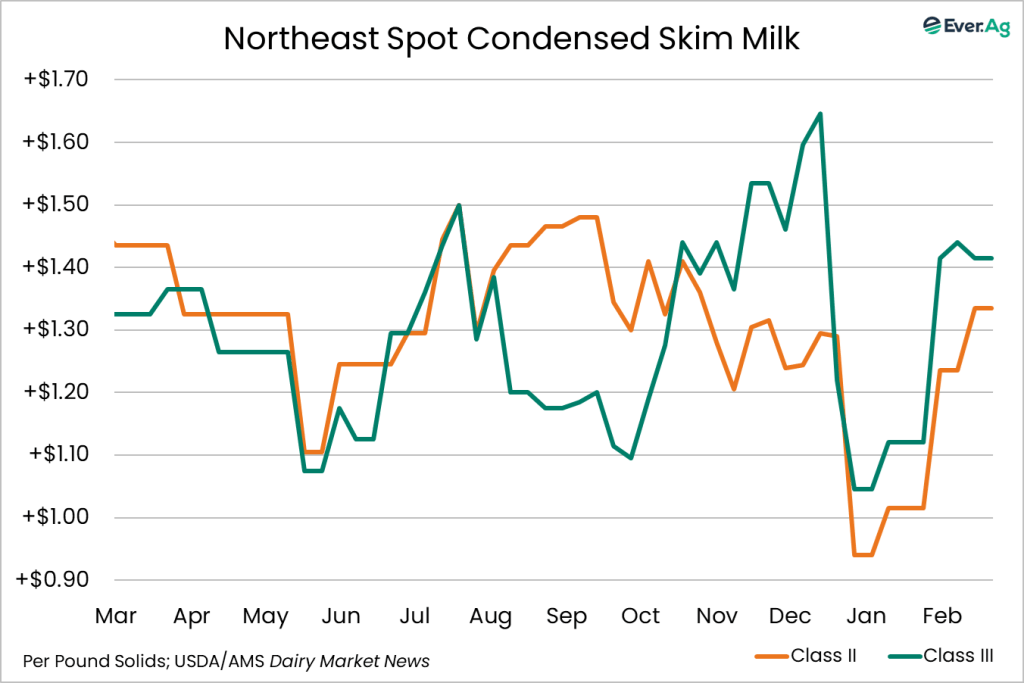
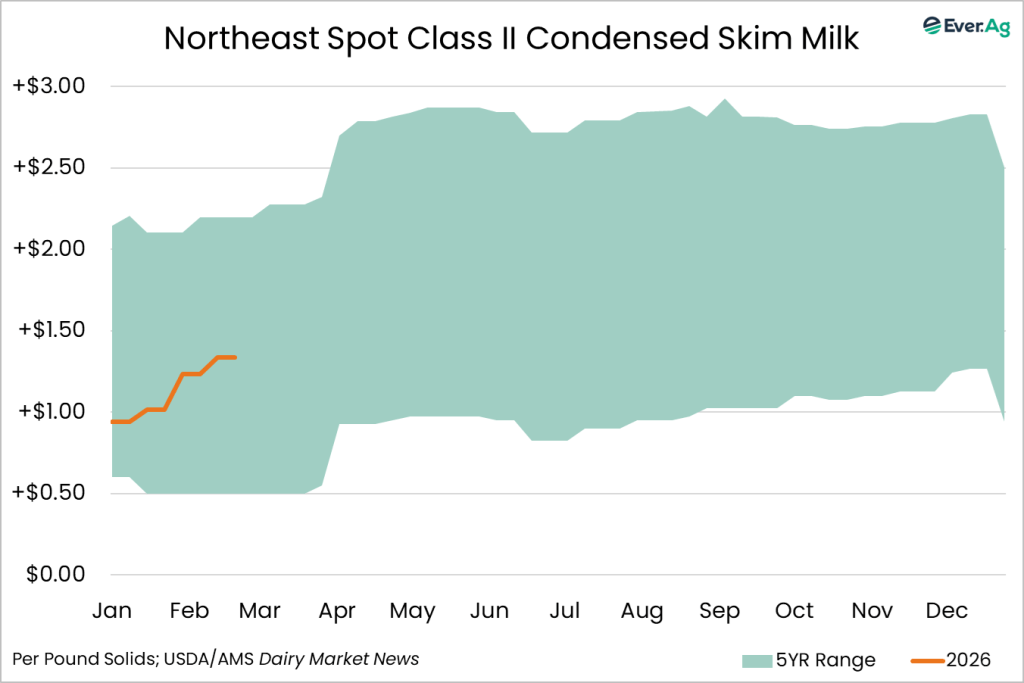
Seasonally strong milk production continues throughout the East region. Despite this, some facilities are having difficulty securing loads of milk. Milk distribution to new, larger facilities is pulling milk from other facilities. Milk components remain strong with fat content higher than this time last year. Class I production is steady to strong. Bottlers are taking in full contract loads of milk to meet demand. Class II production is increasing in the region with several facilities taking in spot loads of cream to bolster production. Class III production is balanced with demand this week. Manufacturers indicate good retail demand is keeping production schedules busy. Some facilities are looking for spot loads of condensed skim to supplement milk supplies. Class IV production is strong. Butter and milk powder prices are on the rise and manufacturers are taking advantage of the opportunity by keeping churns and dryers operating seven days a week.
WEST
California milk production is strong, despite some processors noting slightly weaker milk output for week 8 compared to week 7. Handlers note February 2026 milk production is comfortably up year over year and compared to January 2026. Manufacturers in the state are busy working through milk volumes and note open processing time, especially in the Central Valley, is very tight. Stakeholders indicate spot loads are not scarce. Arizona and New Mexico farm level milk output is steady. Handlers note milder than typical winter weather has positively impacted cow comfort and milk output. Farm level milk output varies from steady to stronger. Although processors convey milk intakes are within expectations, open processing time can be found and spot milk load demand from some manufacturers is stronger. According to the latest National Agricultural Statistics Service (NASS) milk production report, total milk cows in Washington decreased by 19,000 head and total milk cows in Idaho increased by 40,000 for December 2025 compared to December. Milk production in the mountain states of Idaho, Utah, and Colorado varies from steady to stronger. Stakeholders note spot milk loads are tighter in some parts of the mountain states. Class I demand is steady, while demands for all other Classes are somewhat stronger throughout the region.
Questions or concerns? Please contact Ever.Ag Insights at insights@ever.ag