

Here’s what USDA/AMS had to say:
Midwest:
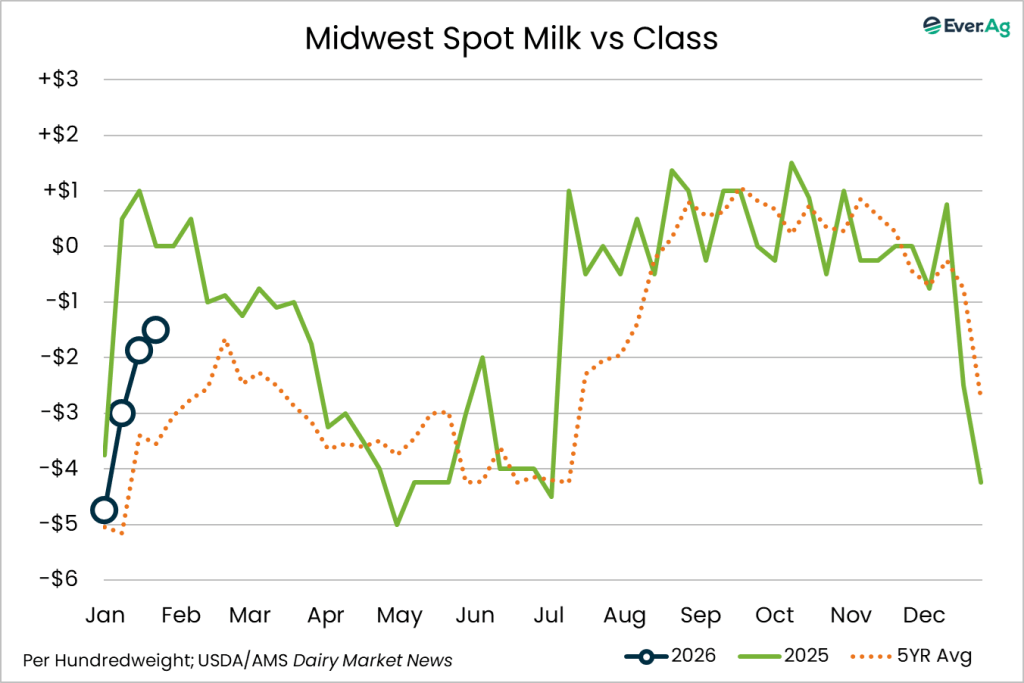
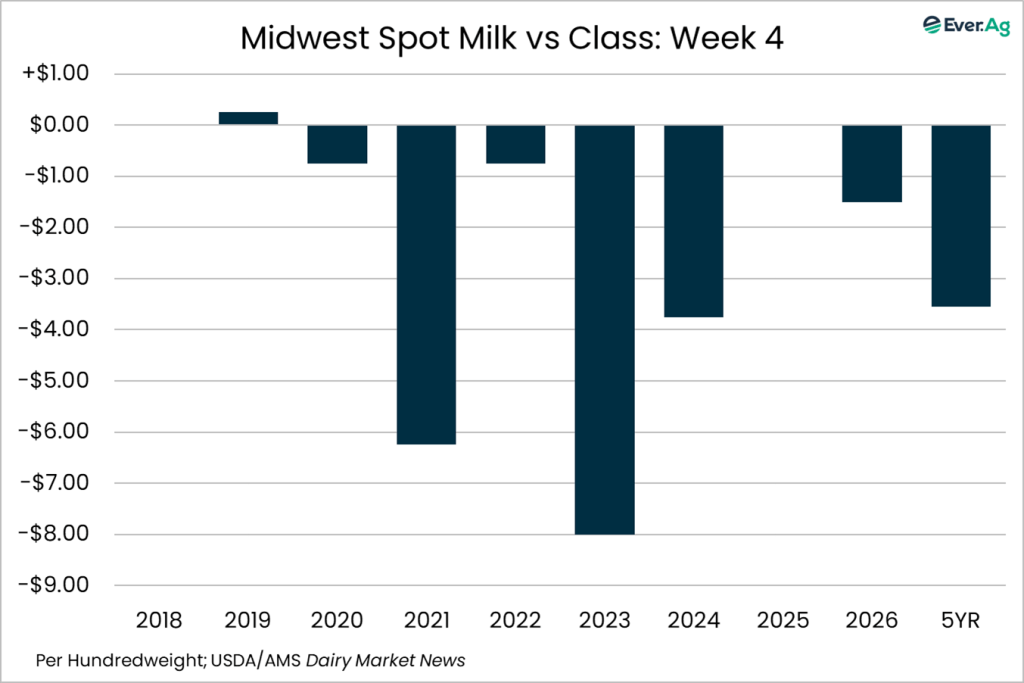
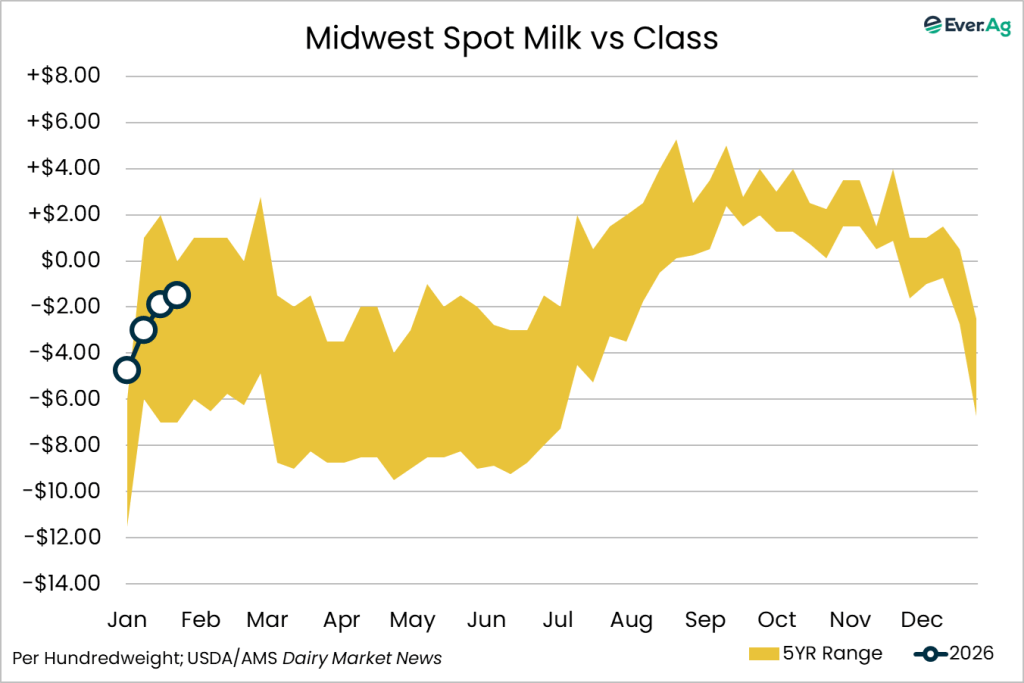
In the Central region, milk output is strong and some contacts in the Midwest say volumes are up this month from December. Class I demand is strengthening, and some processors say they are moving volumes to other regions ahead of a winter storm expected later in the week. Strong demand is present for Classes II and IV. Contacts report Class III interest remains light overall and is unchanged from recent weeks. Cheesemakers are running busy production schedules and fewer plant managers reported downtime this week. Prices for spot volumes of Class III milk range from $4-under to $1-over. The bottom of the range is unchanged as spot volumes remain available, but some contacts say a lighter volume of milk was offered by nearby cheesemakers contributing to an increase at the top.
EAST
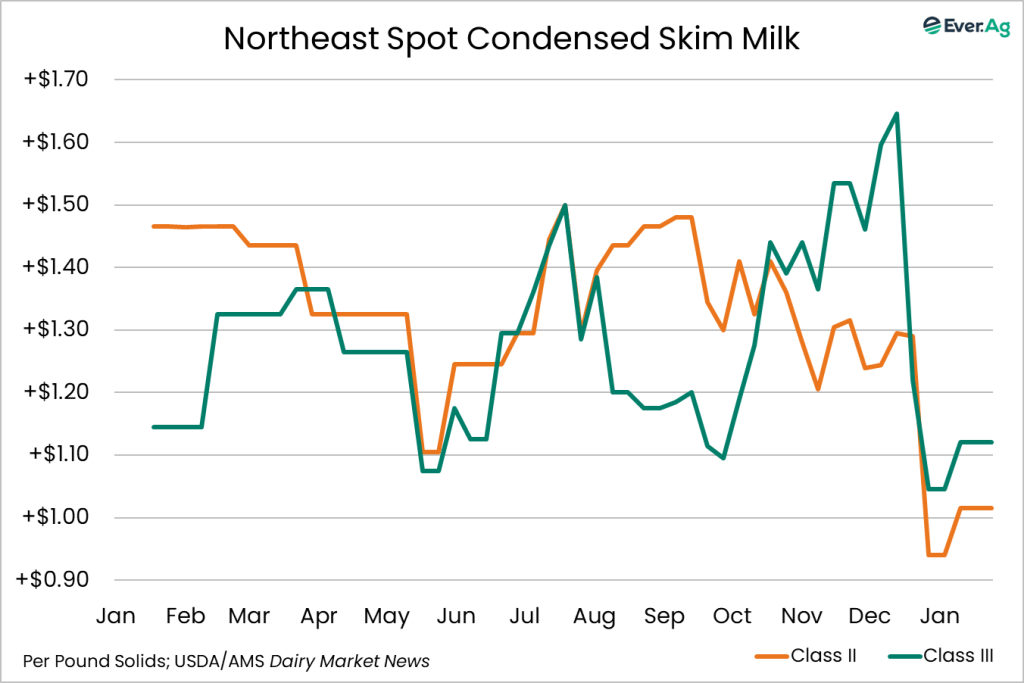
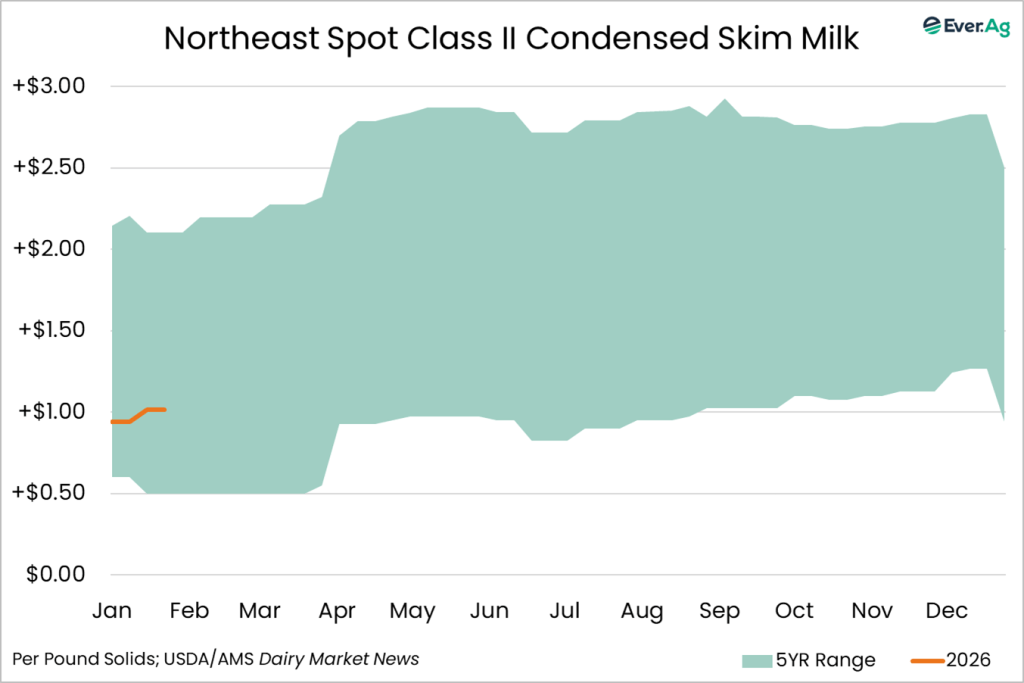
Milk production remains seasonally elevated, supported by herd expansion and higher production per head in New York. Most available milk is being absorbed by a new processing facility, leaving little excess for the spot market. Contacts note that future milk availability in the region will depend on herd expansion decisions. In January, the Whole Milk for Healthy Kids Act of 2025 was signed, which will redirect more whole and 2% milk toward school programs. Class II utilization increased year over year. No specific factors were identified by contacts, though steady Class II activity continues to draw on regional cream supplies. Class III demands are mixed. Retail cheese demand is solid, while bulk demand is slowing. Milk available for Class III remains limited due to strong Class I pulls and the new facility’s intake. Class IV conditions are mixed. Butter production remains active, with churns running at or near capacity for seasonal inventory building.
WEST
California handlers report milk production is continuing to strengthen. January 2026 milk output is noted as up from December 2025 and year over year. Manufacturers convey open processing time is extremely tight, especially in the Central Valley. Spot milk loads continue to be available. Sellers note spot milk load sales down to $6 below the federal milk market order blend price. Stakeholders indicate there is some displaced milk volumes due to a facility closure at the start of the year, which has contributed to some distressed milk being sold to calf ranches. Farm level milk output in Arizona is stronger. Some manufacturers are bringing in spot milk on top of contractual intakes. New Mexico milk production various from steady to stronger. Farm level milk output is mixed in the Pacific Northwest. Some handlers convey untypical seasonal weather conditions negatively impacted cow comfort and milk output. Spot milk load availability and demand is mixed. Milk production in the mountain states of Idaho and Utah is strong. Handlers convey warmer than typical temperatures and lower than typical snowfall are positively impacting cow comfort and milk output. For Colorado, milk production is steady. Demand for all Classes is steady throughout the region.
Questions or concerns? Please contact Ever.Ag Insights at insights@ever.ag