Here’s what USDA/AMS had to say:
Midwest:
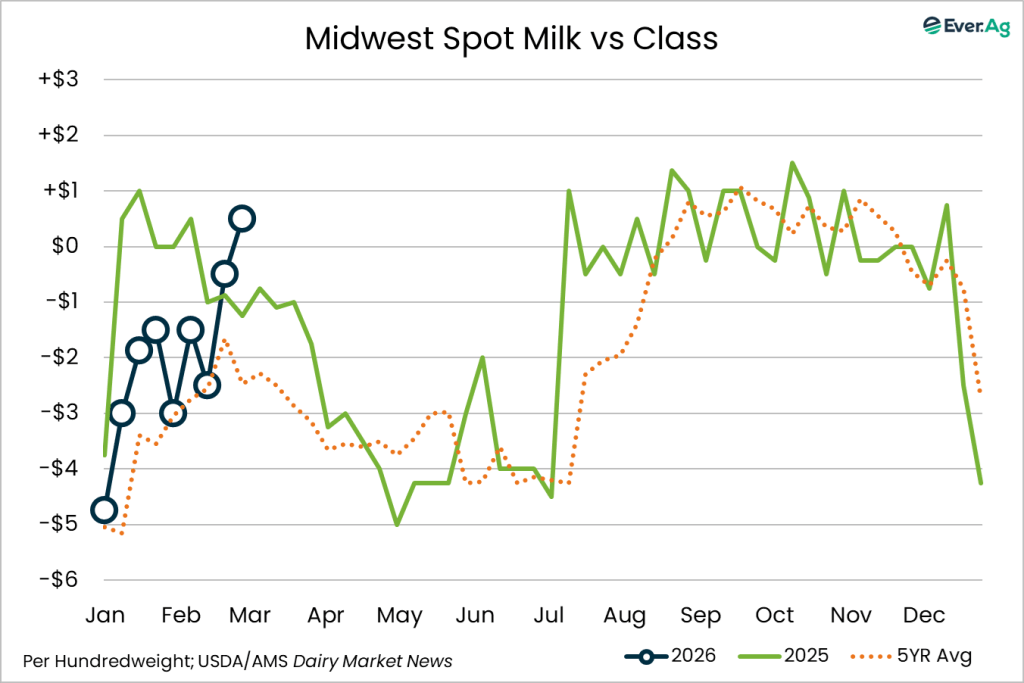
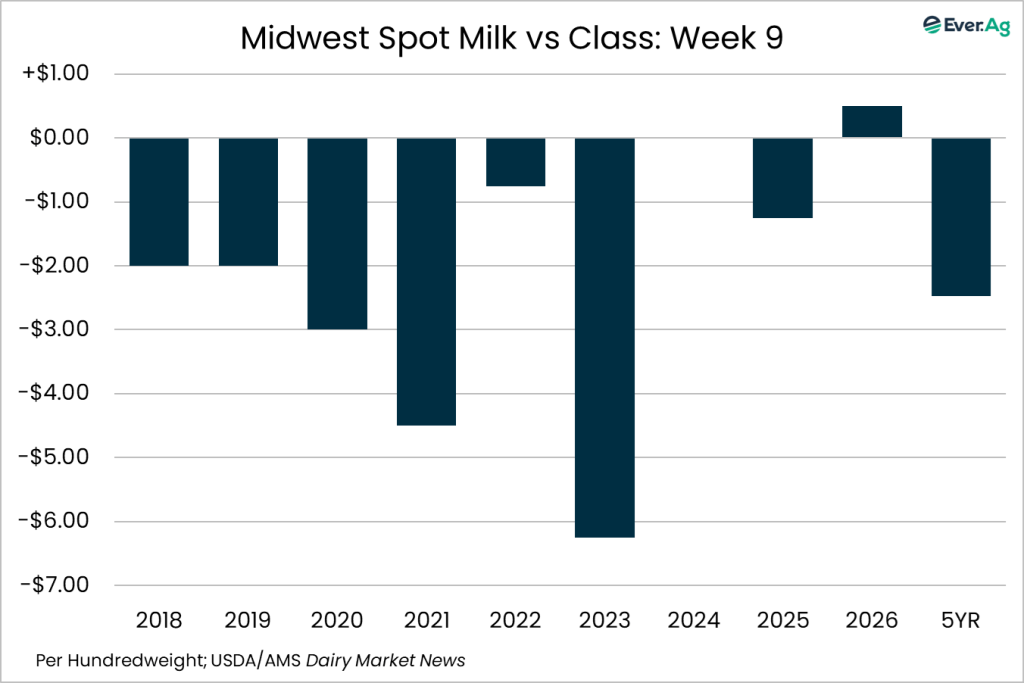
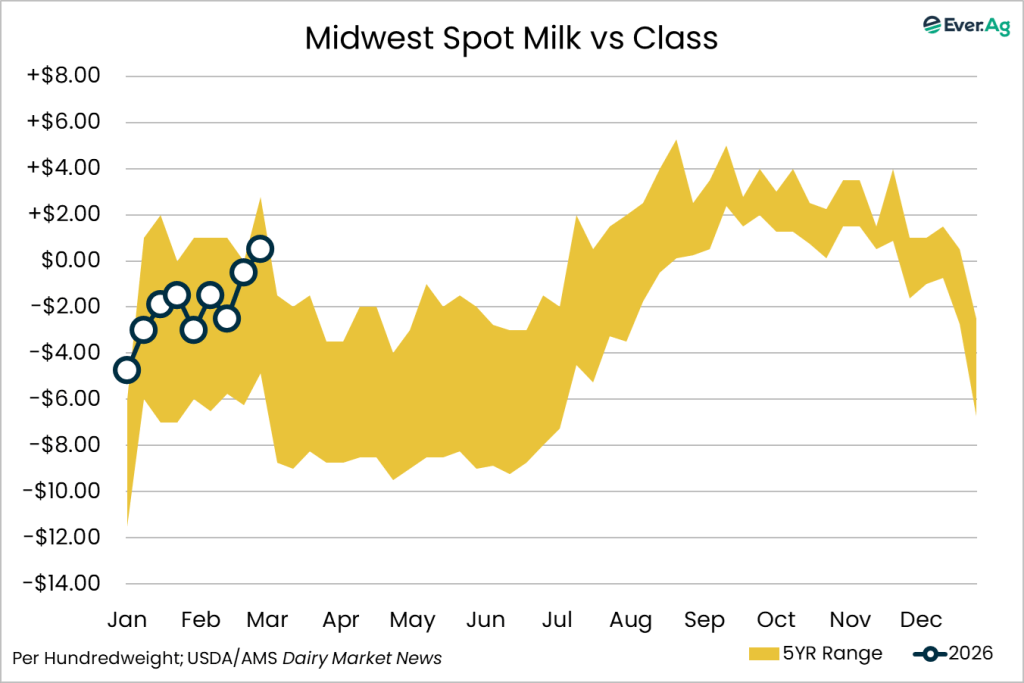
Central region milk production is trending higher, and output remains up from last year. Demand for Class I milk is strong but is steady from last week. Contacts report demand for Classes II and IV is strengthening as some processors are preparing for spring holidays. Spot prices for Class III milk range from $1-under to $2-over this week. Class III demand is light but up slightly from last week. Some cheesemakers say they are purchasing additional spot loads of milk from nearby plants with scheduled downtime, while others are using milk from within their network to run steady production schedules. Milk components are strong.
EAST
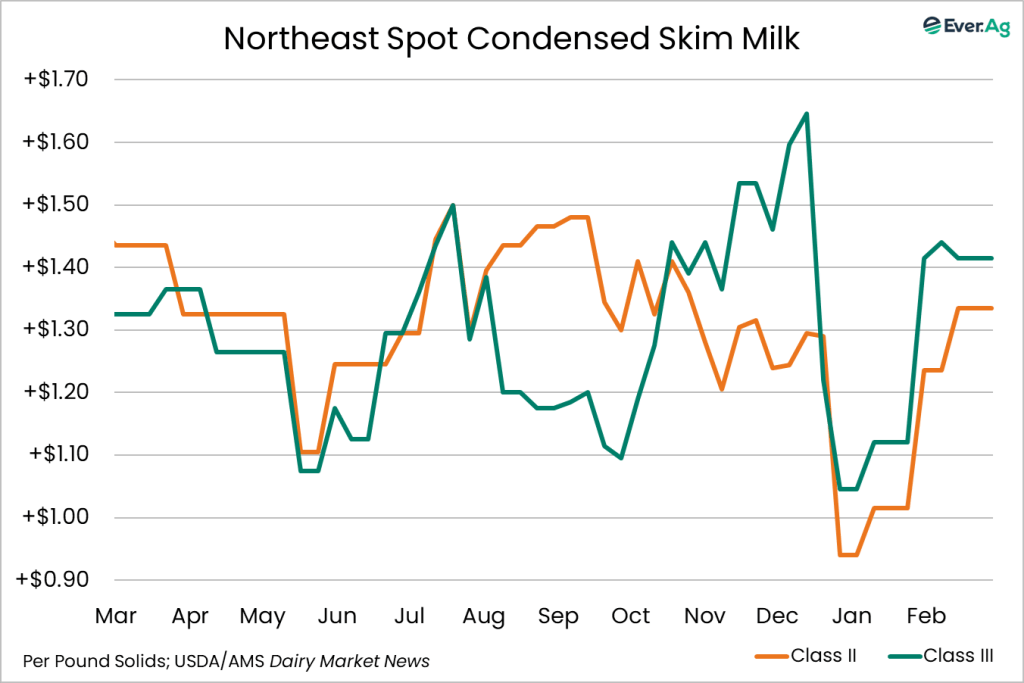
Milk production is seasonally strong across the East region. The National Agricultural Statistics Service (NASS) recently published January milk production results and the East region saw a 1.2% milk volume increase in January 2026 compared to January 2025. Georgia experienced the largest volume increase while Pennsylvania was the only state that experienced a decline in production. Class I production is strong, and bottlers are looking to secure spot loads of milk, specifically in the Southeast. Class II production is on the rise, and many facilities are securing spot loads of cream. Ice cream production is seasonally increasing and accounting for a large portion of the increased demand. Class III production is steady. Retail and food service demand is balanced and accounting for most of the production in the region, while domestic bulk sales are slower than anticipated. Class IV demand is strong. Milk demand is strong and inventories are tight, encouraging manufacturers to keep dryers running.
WEST
Milk production in California is strengthening. Spot loads are available and open processing time is tight. Handlers indicate milder winter weather in the state this season and cow comfort is good. Manufacturers remain busy working through milk intakes. Milk production in Arizona is strengthening as well. In New Mexico, farm level milk output is reported as steady. In the Pacific Northwest milk production is stronger. Handlers indicate milder winter weather conditions are contributing to improved cow comfort, but the lighter snowpack may bring some water resource stress in the summer months. Some manufacturers convey milk intakes are higher than anticipated volumes. Farm level milk output in the mountain states of Idaho, Utah, and Colorado, varies from steady to stronger. Stakeholders indicate spot milk loads are generally more available in the northern parts of the mountain state area. Colorado handlers convey snowpack has been lighter this winter, improving cow comfort in some cases. Class I demand is steady, Class II and III demands are stronger, and Class IV demand varies from steady to stronger throughout the region.
Questions or concerns? Please contact Ever.Ag Insights at insights@ever.ag