
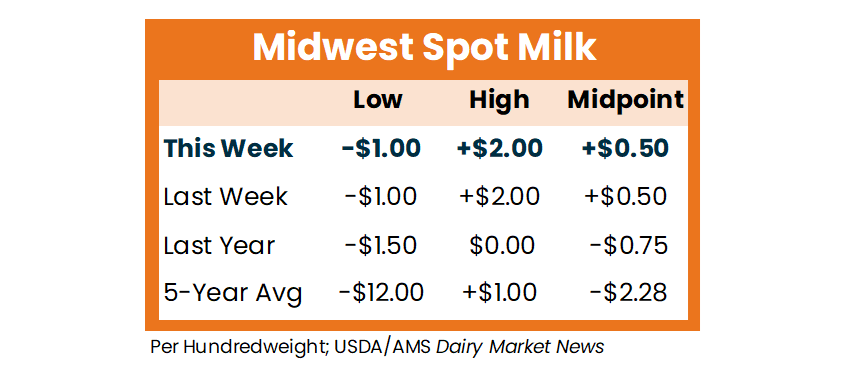
Here’s what USDA/AMS had to say:
Midwest:
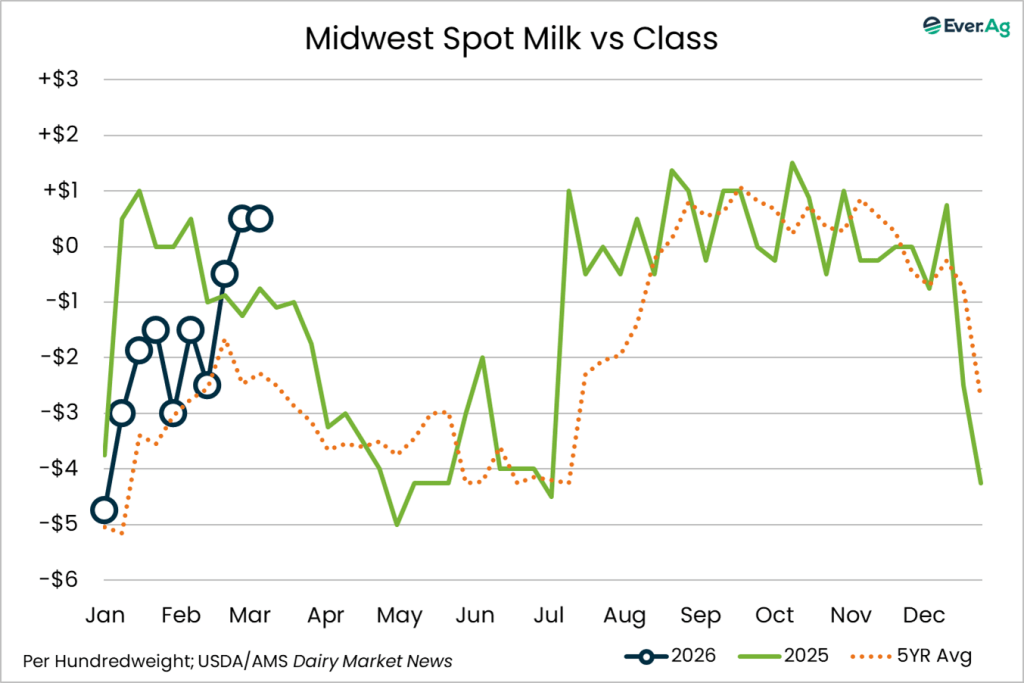
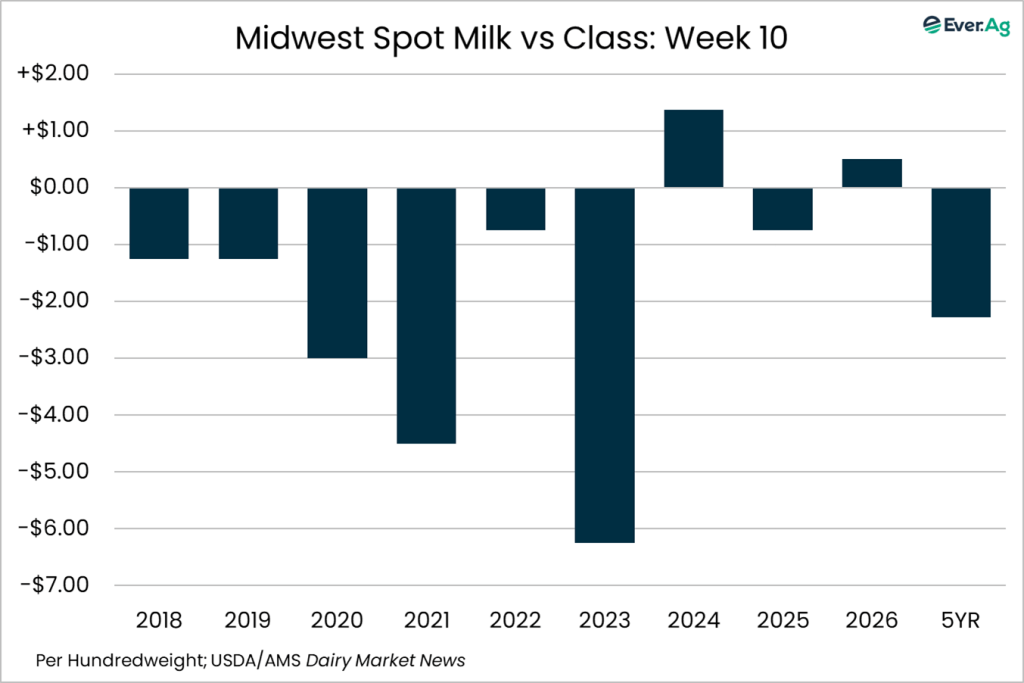
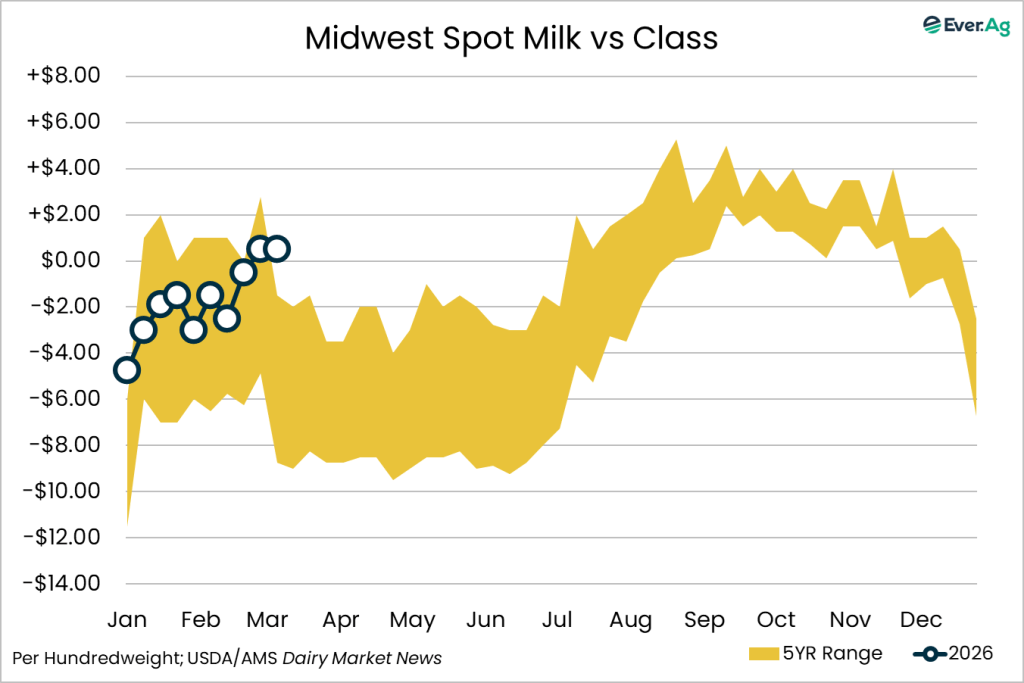
Milk production is increasing in the Central region this week. Contacts report steady demand from bottling operations. Class II and IV demand continues to strengthen ahead of the spring holidays. Spot prices for Class III milk are unchanged from last week, $1-under to $2 -over Class. Demand for Class III milk is steady, and some cheesemakers say they were offered additional spot volumes this week. Cheesemakers are primarily using internal milk volumes to run full production schedules.
EAST
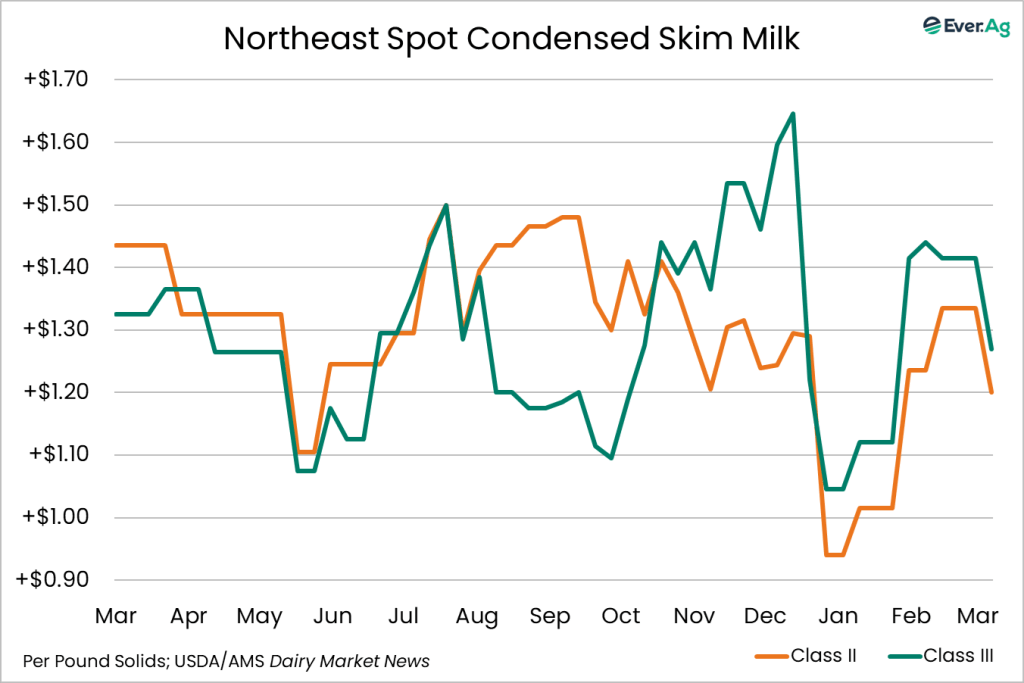
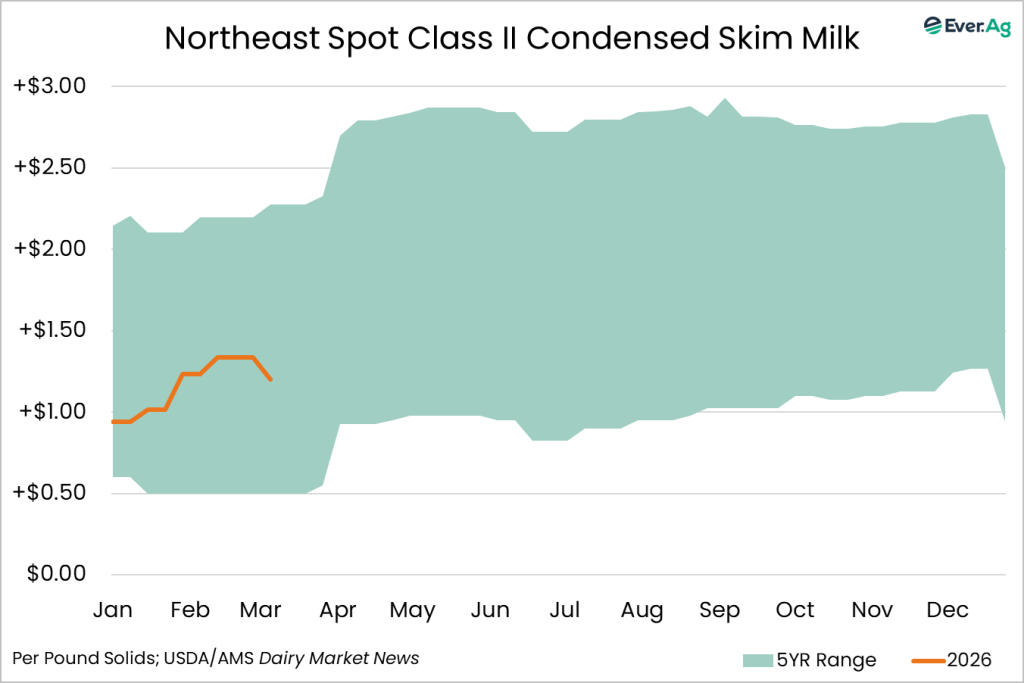
Milk production in the East region is seasonally strong. Some states are experiencing cooler weather, contributing to increased cow comfort and higher milk volumes. Milk components remain strong, providing ample amounts of cream for the market. Class I demand is steady, but some southern states are seeing a slight decrease in demand as educational institutions are preparing for Spring break. Class II production is increasing, and manufacturers are beginning to pull more cream to prepare for the upcoming spring holiday. Ice cream production is also on the rise. Class III manufacturing is steady in the Northeast. In most facilities, contracted milk quantities are sufficient to meet demand. Spot loads of milk for Class III use are difficult to find. Class IV production is strong.
WEST
California milk production is stronger as it makes its way towards peak spring volumes. Handlers report that February 2026 milk production is up year over year and compared to the month prior. Manufacturers note milk intakes are close to anticipated volumes. Stakeholders’ milk volumes are pushing production capacities, especially in the Central Valley. Spot milk loads are available. Stakeholders indicate cream volumes are somewhat heavy. Farm level milk output is seasonally strengthening in Arizona and New Mexico. The latest National Agricultural Statistics Service (NASS) milk production report shows New Mexico decreasing in the number of milk cows for January 2026 compared to the same month in 2025. Pacific Northwest milk production is mixed for week 10. Some manufacturers note milk intakes below anticipated volumes. Stakeholders relay some spot loads have been purchased, but in some cases delivery costs have inhibited spot load purchases. The latest NASS milk production report shows the number of milk cows decreasing in Washington in January 2026 compared to the same month in 2025. Farm level milk output in the mountain states of Idaho, Utah, and Colorado is generally showing seasonal increase. Colorado handlers indicate lighter snowpack and weather conditions this winter are making seasonal milk production changes less pronounced. Manufacturers indicate milk volumes are in good balance with processing capacities. The most recent NASS milk production report shows the number of milk cows increasing in Idaho for January 2026 compared to the same month in the prior year. No changes in Class I, II, III, or IV demands are reported this week.
Questions or concerns? Please contact Ever.Ag Insights at insights@ever.ag