
Here’s what USDA/AMS had to say:
Midwest:
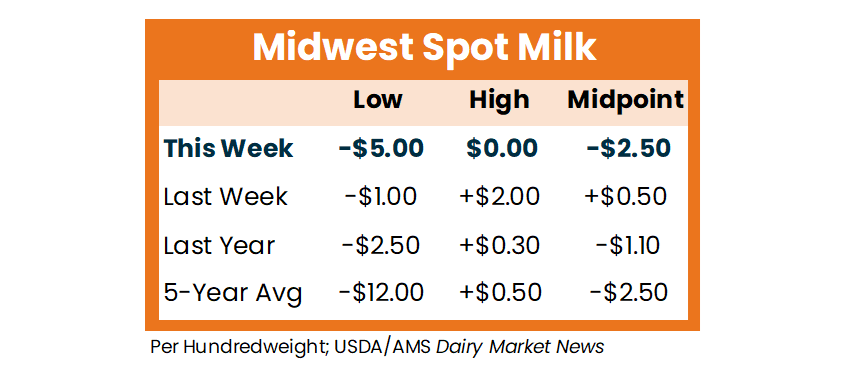
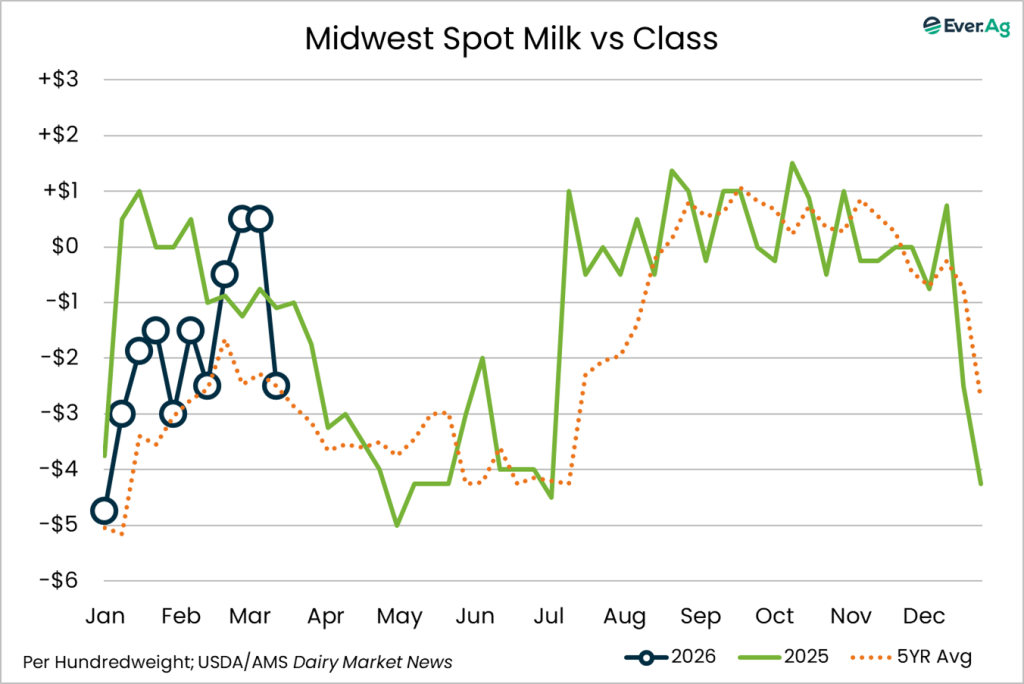
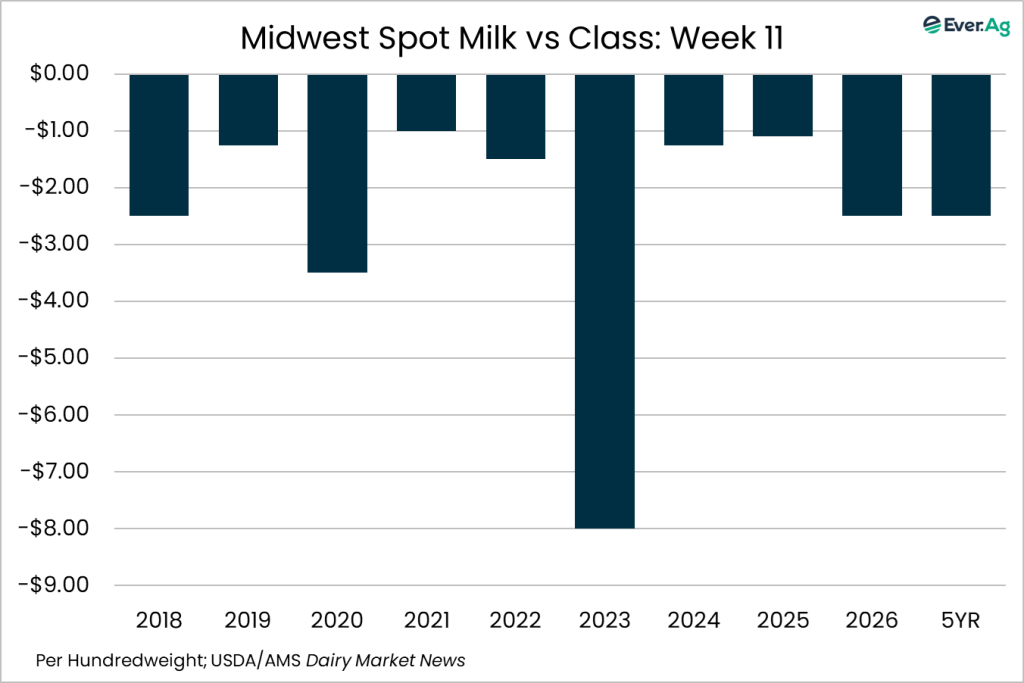
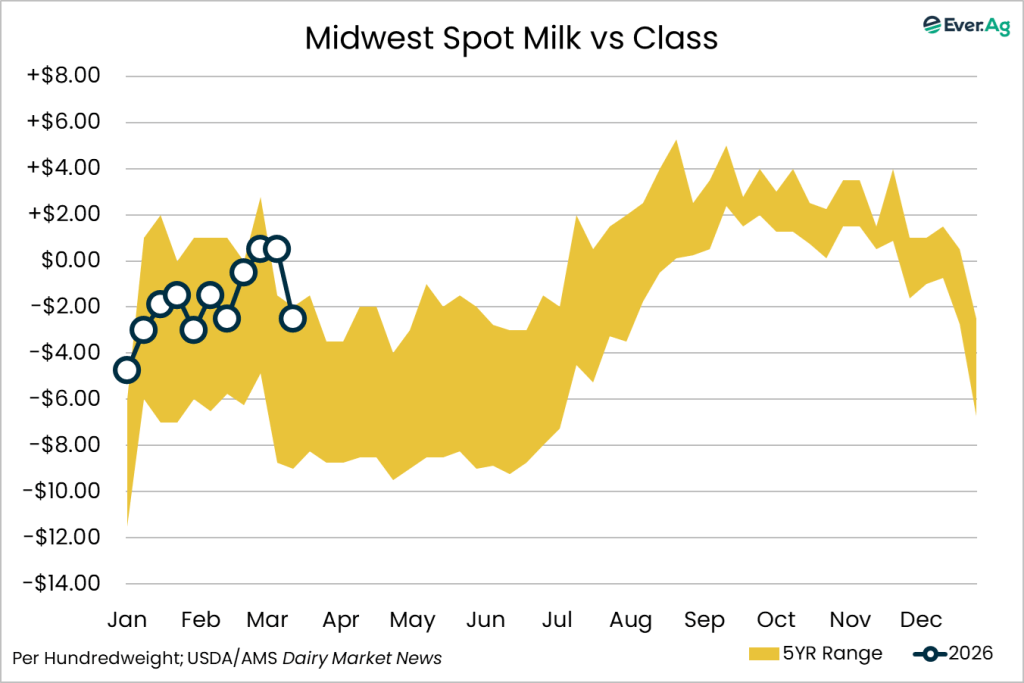
Contacts in the Central region say milk output continues to increase, and production is up from this time last year. Warmer weather is prevalent throughout the region this week, though forecasts show lows dropping to the single digits in the upper Midwest in the next week. Demand for Class I is unchanged, while Class II and IV demand is strengthening. Class III spot milk prices range from $5-under to flat, down from last week. Contacts say demand for Class III milk is unchanged, but cheesemakers with downtime are offering additional spot volumes of milk this week. Some cheesemakers say they are unable to take on additional volumes of milk, as they are already running full schedules with volumes they have internally. Milk component levels are down slightly from last month, but stakeholders say increased milk output is keeping cream production strong.
EAST
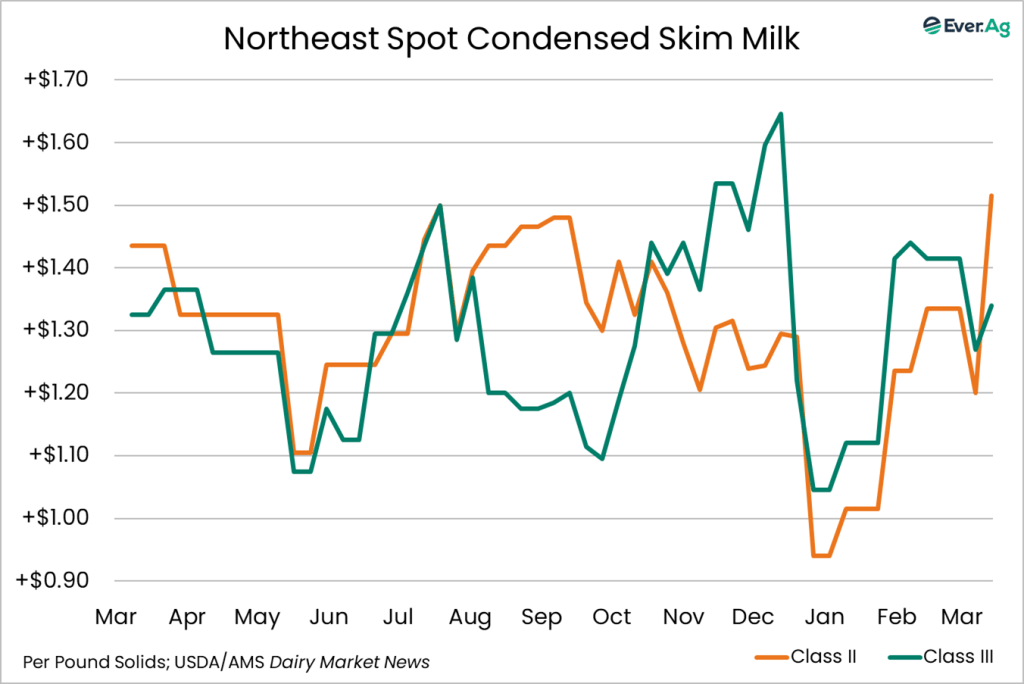
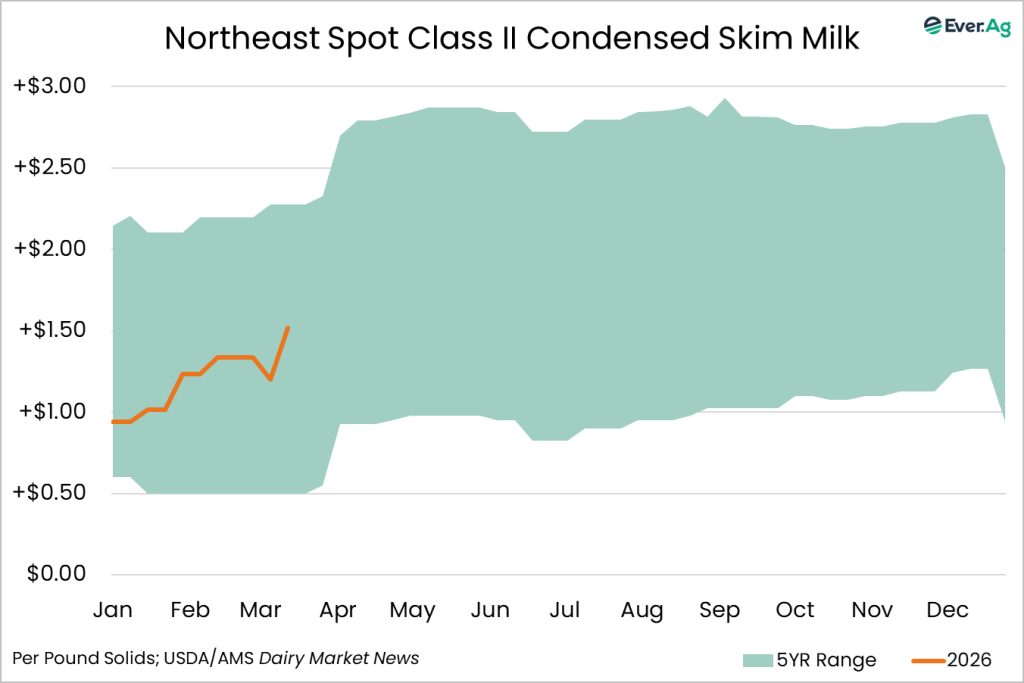
Milk volumes in the East region remain seasonally strong. Mild temperatures are contributing to increased cow comfort. Contacts mention milk components are lower than previous months but strong compared to previous years. Class I demand is steady. Bottlers anticipate a temporary drop in demand as educational institutions are in their spring breaks. Class II demand is strong. Increased ice cream production and the upcoming spring holidays are contributing to higher demand for spot volumes of cream. Class III production is steady in the Northeast. Cheese makers are utilizing contracted volumes of milk to meet demand. Class IV demand is strong. Butter and milk powder prices are on the rise and manufacturers are operating churns and dryers seven days a week to meet demand.
WEST
California milk production is strong. Handlers indicate milk volumes remain heavy relative to processing capacity, especially in the Central Valley. In some cases, buyers are passing up offers from sellers because of the cost of long delivery distances. Steady farm level milk output is reported for Arizona. Manufacturers indicate there is some open processing capacity and some spot milk loads being brought into plants. Handlers note steady milk production in New Mexico. In the Pacific Northwest, handlers convey cow comfort has been better than anticipated in March. Milk production is noted as steady or stronger. Some manufacturers report milk intakes are above anticipated volumes. Farm level milk output in the mountain states of Idaho, Utah, and Colorado is steady. Stakeholders indicate spot milk loads are available, but milk volumes are not high compared to production capacity. Class I demand varies from lighter to steady with spring breaks at educational institutions taking place mid-March. Class II demand is steady. Class III and IV demands vary from somewhat lighter to somewhat stronger.
Questions or concerns? Please contact Ever.Ag Insights at insights@ever.ag