
Here’s what USDA/AMS had to say:
Midwest:
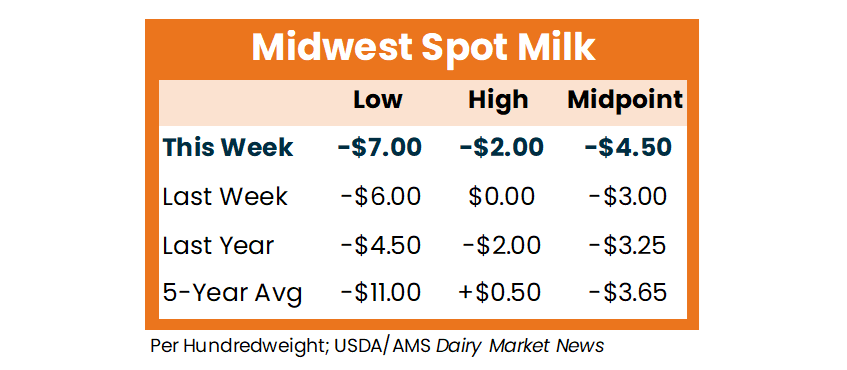
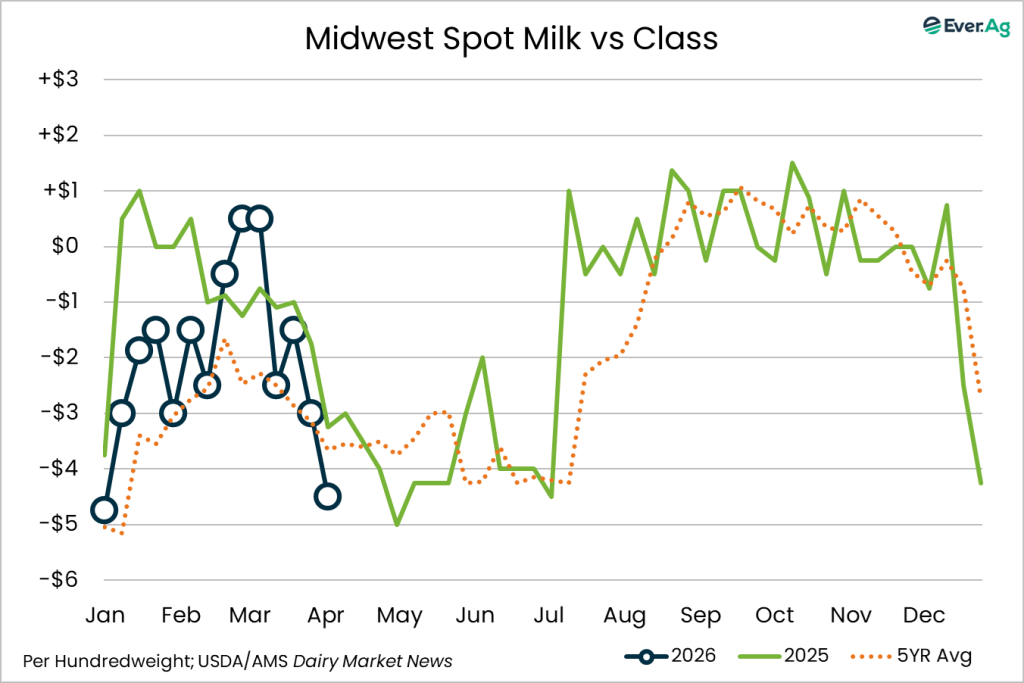
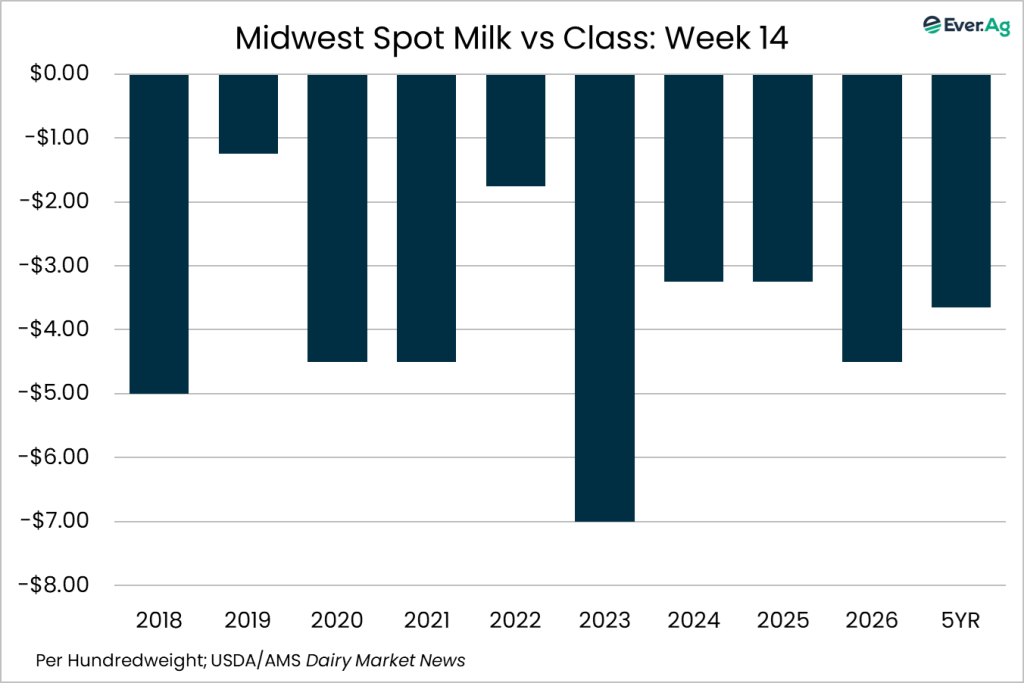
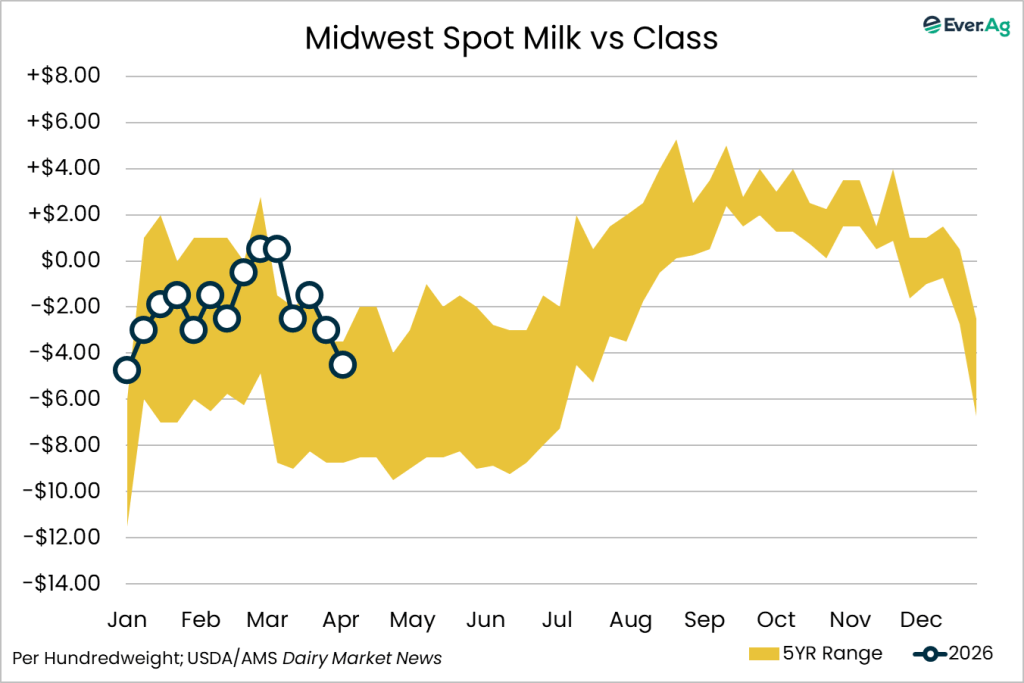
Milk production is increasing in the Central region, and contacts say output remains up from last year. Some plants have scheduled downtime due to an upcoming spring holiday, contributing to lighter demand for all Classes of milk. Contacts report light demand for Class I milk as some educational institutions are out for spring break. Contacts say they are receiving additional offers for spot milk due to downtime at plants in the region and increasing milk production. Some cheesemakers report securing additional spot loads of milk at discounted prices compared to previous weeks. Reported spot prices for Class III milk range from $7-under to $2-under. Contacts say demand from Class II and Class III processors is lighter this week, but inventories remain somewhat snug.
EAST
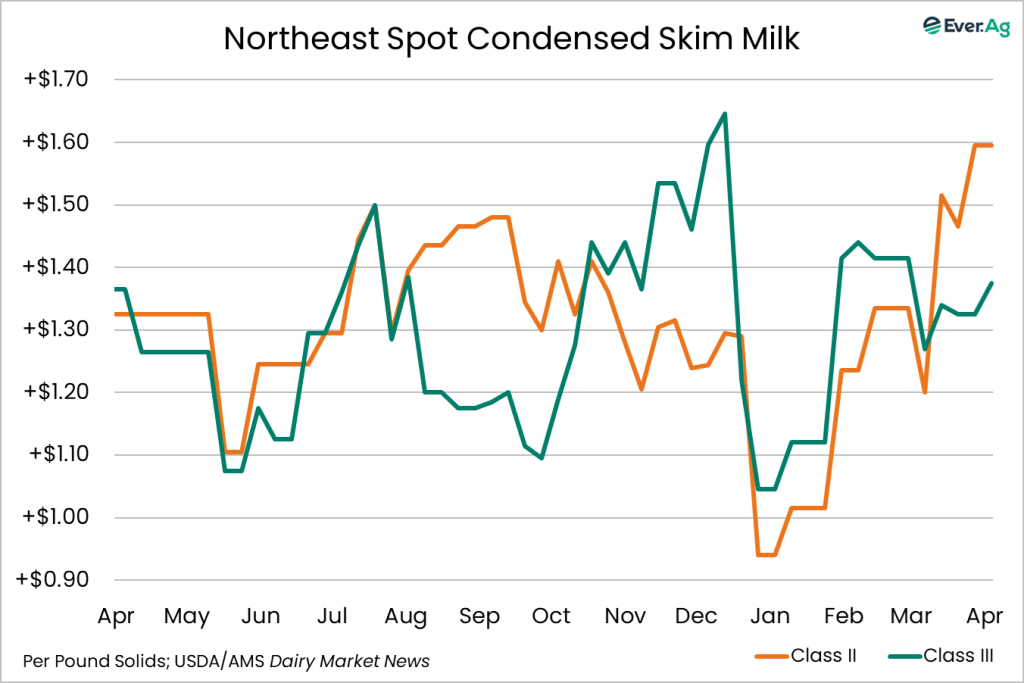
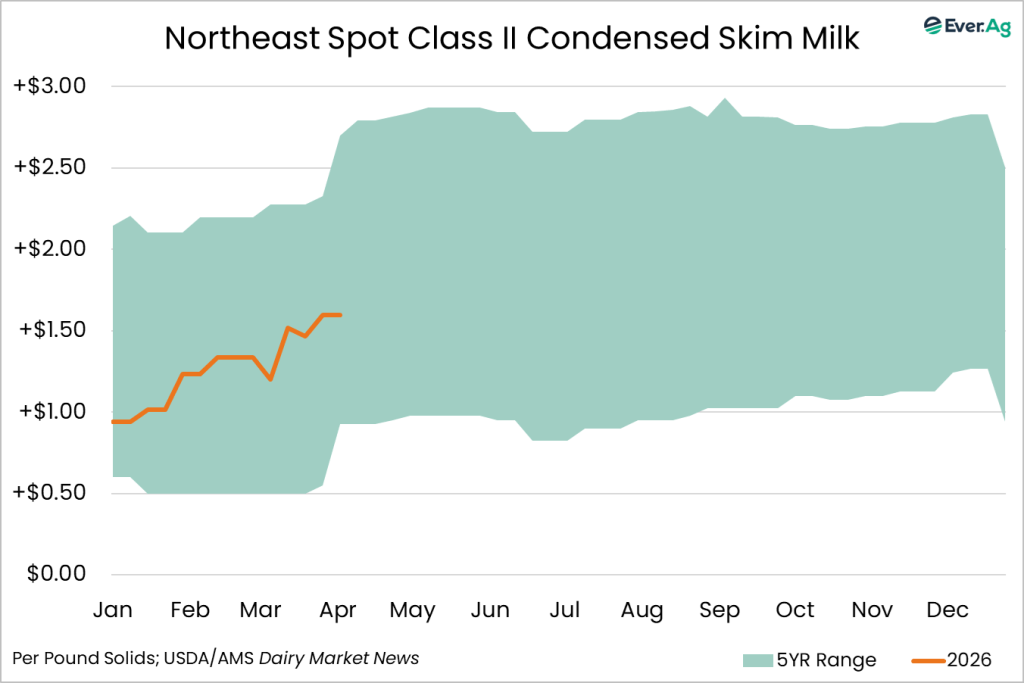
With an upcoming spring holiday, many manufacturers are planning some downtime this week, creating a situation where milk is moving between different facilities The spring flush is starting in some states providing ample volumes of milk for those facilities that are in full production. Class I demand is light this week, but it is expected to ramp up as many educational institutions resume classes after spring break. Class II demand is steady to strong. Some contacts reported heavy production at the beginning of the week that tapered as the week progressed. Class II demand for spot cream was strong early in the week. Class III demand is light. Downtime in several facilities kept production volumes low. Production is expected to pick up again after the holiday. Class IV demand remains strong. Powder demand remains strong amid high prices for nonfat dry milk and other milk powders.
WEST
Milk production is steady and cow comfort is stable in California. Central Valley manufacturers indicate milk output is pushing against processing capacities. Stakeholders indicate spot loads are available. Farm level milk output in Arizona is steady. Most stakeholders report being at the peak of spring production volumes, while some manufacturers have open processing capacities and are bringing in spot milk loads. Milk production is steady in New Mexico. Handlers in the Pacific Northwest report good cow comfort, spring weather, and stable milk production. Manufacturers note milk intakes are at anticipated levels, and some open processing is available. Milk production in the mountain states of Idaho, Utah, and Colorado varies from steady to stronger. Handlers describe New Mexico milk production at the peak of spring volumes. According to the latest milk production report by the National Agricultural Statistics Service (NASS), the number of milk cows has increased for Arizona, California, Colorado, Idaho, Oregon, and Utah, while decreases are shown for New Mexico and Washington. Demands for Class I, II, III, and IV varies from lighter to steady throughout the region with the holiday weekend approaching.
Questions or concerns? Please contact Ever.Ag Insights at insights@ever.ag