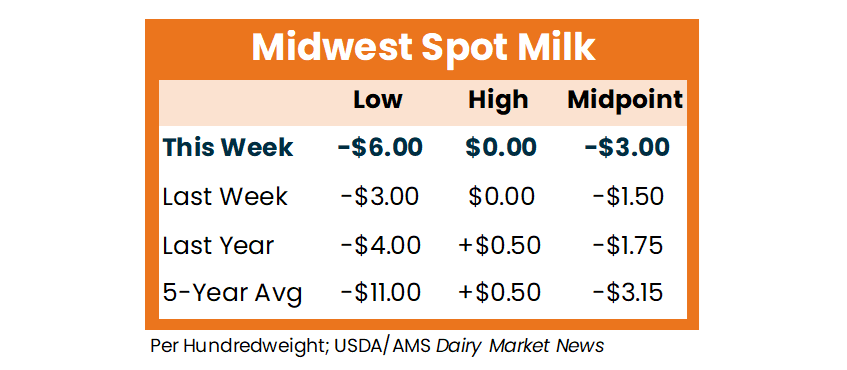
Here’s what USDA/AMS had to say:
Midwest:
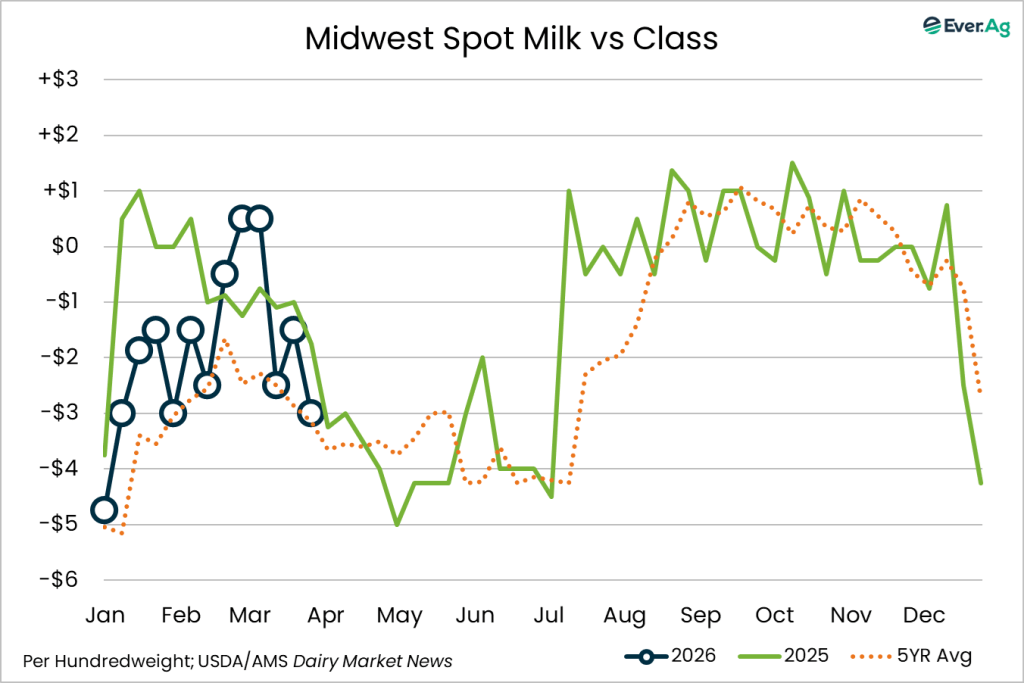
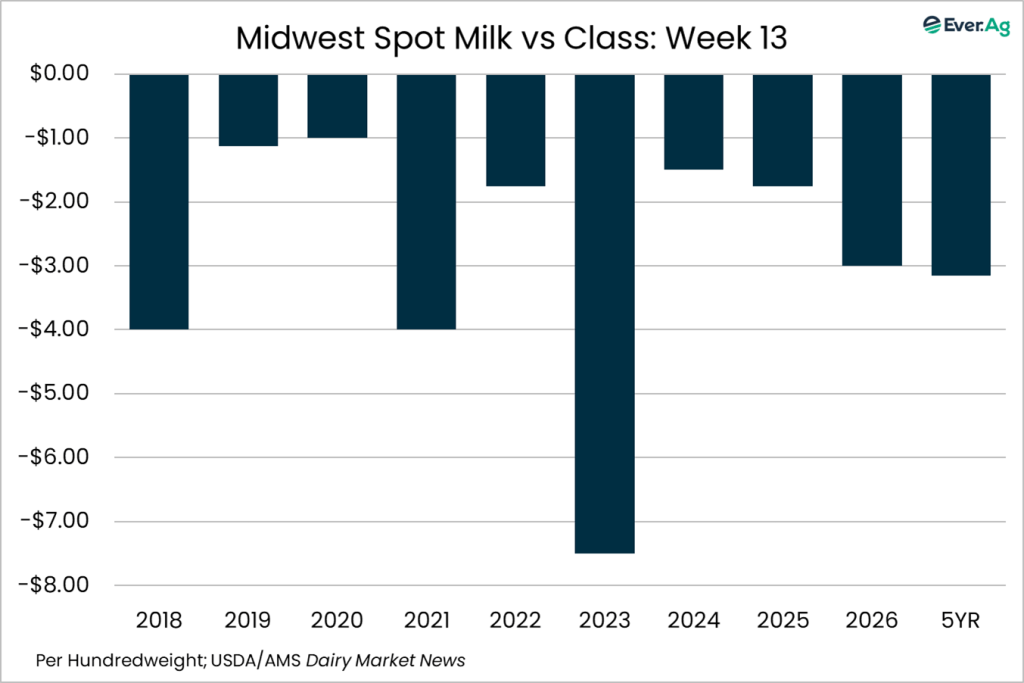
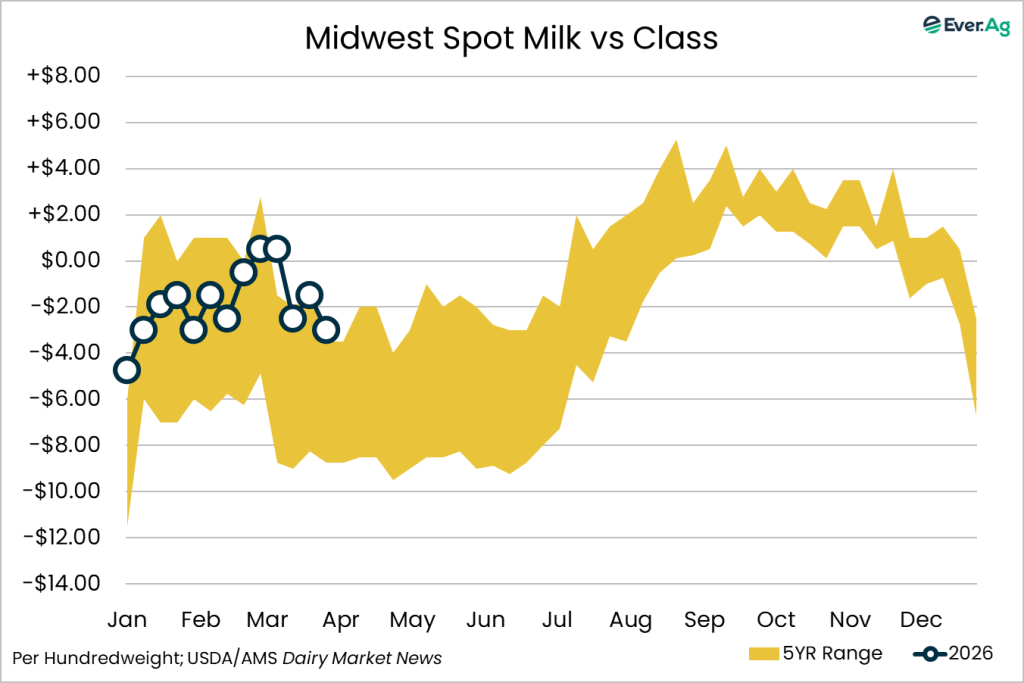
Contacts in the Central region say milk production is steady to higher. Demand for all Classes of milk was lighter last week, due to a snowstorm in the upper Midwest. Plant demand is stronger this week as plants resumed operations. Bottling operations are running busy production schedules in the Central region, though some plants are running lighter schedules while educational institutions are closed for spring break. Class II demand is strong, but some contacts suggest demand will soften in the coming weeks. Stakeholders say Class III milk is plentiful in the upper Midwest and some cheesemakers with downtime this week are selling additional spot volumes at below-Class prices. Spot prices for Class III milk range from $6-under to flat this week. Milk components remain up from this time last year and cream production is strong. Inventories are somewhat tight, due to strong Class II demand.
EAST
Milk volumes remain seasonally strong in the East region. Some areas, especially in the Southern part of the region, are experiencing spring flush. Milk components are declining marginally but remain higher than this time last year. Class I production is steady to lighter. Some bottlers are slowing production due to spring break and upcoming holidays. Class II demand is strong this week but expected to taper as the spring holidays get closer. Current production levels are elevated as many producers are planning down time during the holiday. Class III demand is steady. There is very little activity on the spot market for Class III use, but retail and bulk sales are keeping production levels steady. Class IV demand remains strong this week. There is less spot activity for butter use, but production schedules remain full. Drying facilities remain busy fulfilling contractual volumes of nonfat dry milk and other dairy powders.
WEST
California milk production is generally steady. Handlers report slight increases in milk output from last month and year over year milk production is up. Some handlers indicate peak spring volumes are at hand, while others indicate they are yet to arrive. Central Valley processors are taking in plenty of milk. Spot loads are available. Arizona stakeholders report stronger farm level milk output for March and stable year over year milk output. New Mexico milk production is steady. Stakeholders in the Pacific Northwest cite winter weather in the back half of March for reduced cow comfort. Farm level milk output varies from lighter to steady. Some manufacturers note lower than anticipated milk intakes. Milk production in the mountain states of Idaho, Utah, and Colorado is generally steady. Manufacturers describe milk volumes and processing capacities as mostly balanced with each other. Some spot milk loads are available. Class I demand is lighter as educational institutions enter their respective spring break weeks. Class II demand varies from steady to stronger. Class III and IV demands are steady.
Questions or concerns? Please contact Ever.Ag Insights at insights@ever.ag