
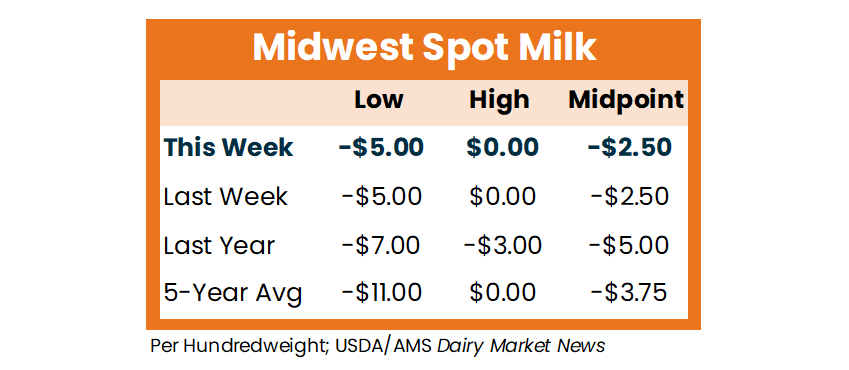
Here’s what USDA/AMS had to say:
Midwest:
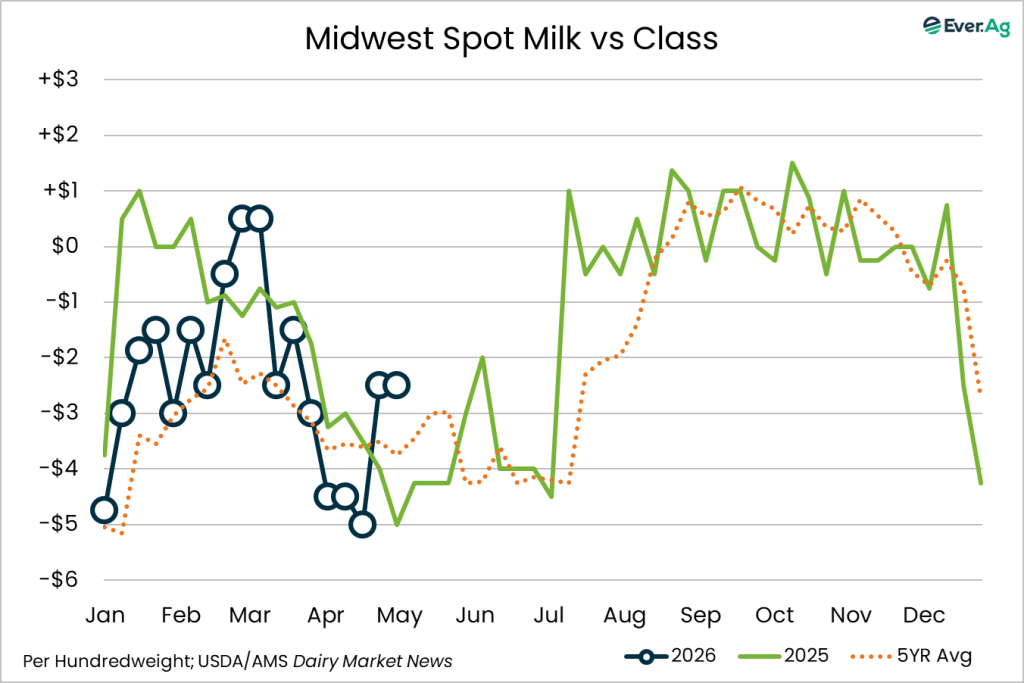
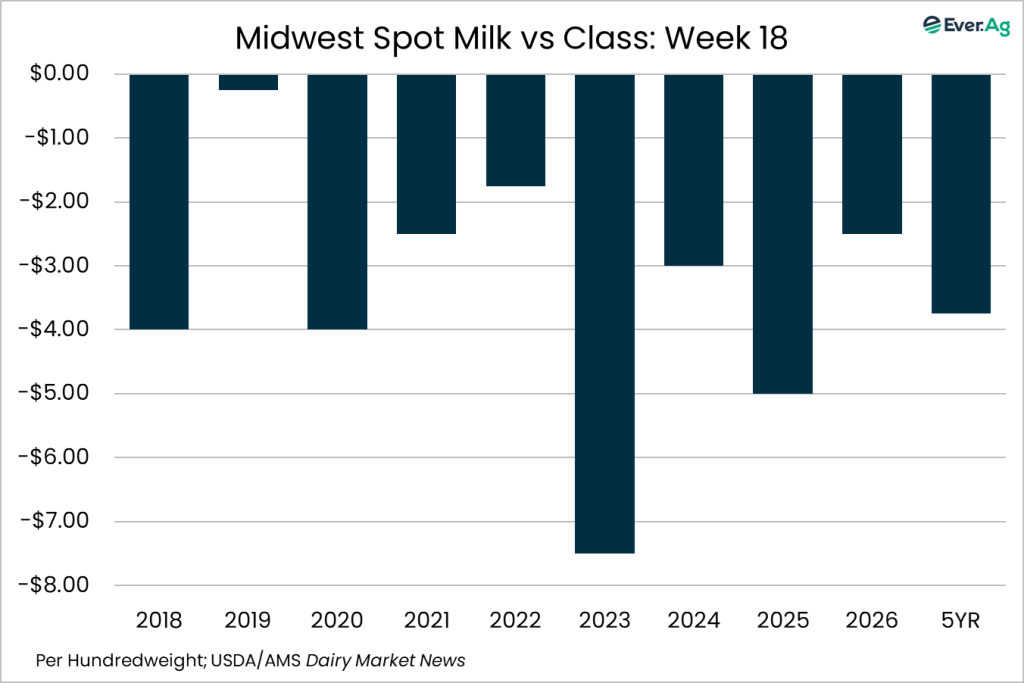
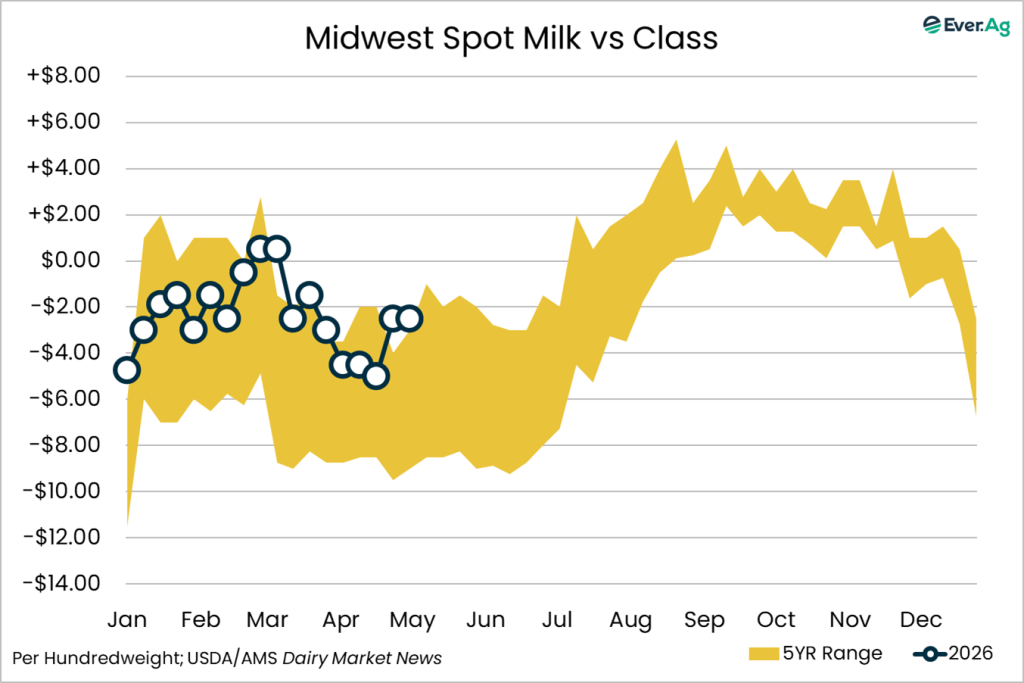
In the Central region milk production is steady, and contacts say output was up year over year in April. Processors are running busy schedules, and contacts say this is keeping spot volumes from becoming excessive. Demand for Class I milk is strong, though contacts note bottling will start to decline in May as the school year ends and educational institutions go on break for the summer. Class II demand is strong, and manufacturers are running busy schedules, as they try to keep up with strong market demand. Cheesemakers are running busy schedules but say they are primarily using volumes from within their networks for production, and they are purchasing few spot loads of milk. Reported prices for Class III milk range from $5-under to flat class this week. Demand for Class IV milk remains strong.
EAST
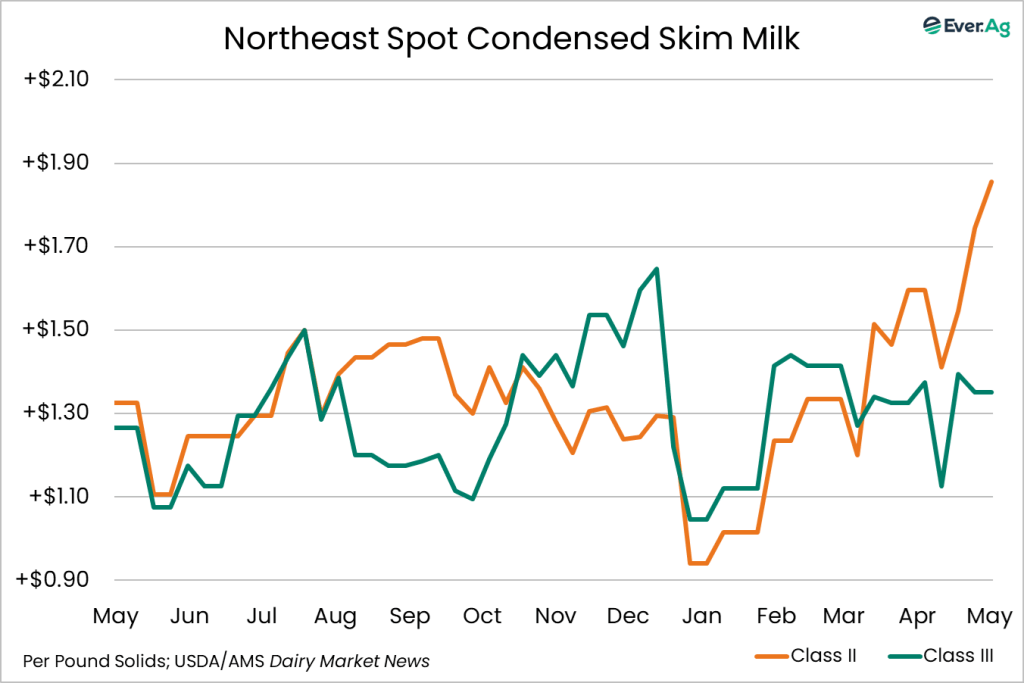
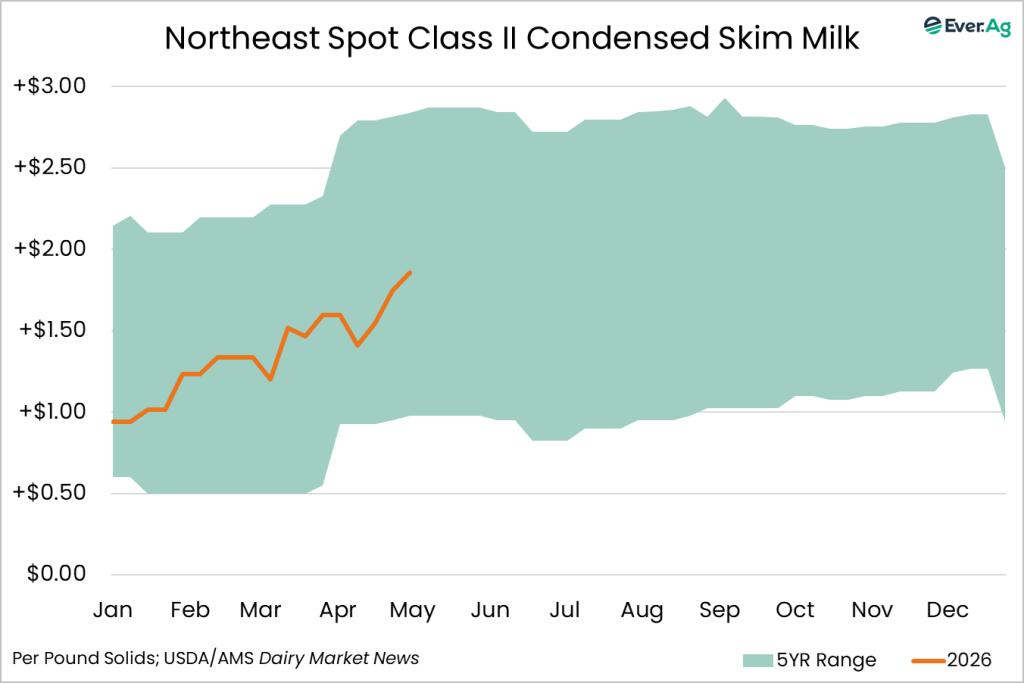
Milk volumes are plentiful in the East region. In the Northeast, the spring flush is in full swing and there is enough milk to meet processing demands. In the Southeast, increased temperatures are decreasing cow comfort, providing less milk, but enough to meet current demand. Class I demand is steady, with no noted week over week changes. Class II demand is strong. Demand for ice cream is rising, and several manufacturers are taking spot loads of cream. Class III demand is steady to strong. Cream cheese manufacturers are taking spot loads of cream to fortify production. Natural cheese producers are having difficulty finding condensed skim in the spot market. Class IV demand for powders is strong. Nonfat dry milk prices continue to rise, and manufacturers are struggling to make enough powder to meet demand.
WEST
In California, milk production is steady. Handlers report marginal changes for April 2026 compared to the prior month. Year over year production is up. For April, some manufacturers report larger than anticipated volumes of milk going into their production facilities. Spot milk loads are available. In Arizona, farm level milk output is steady. Manufacturers are securing spot milk loads for their production facilities. Milk production varies from steady to lighter in New Mexico. Handlers indicate week over week milk output is mixed in the Pacific Northwest. Spot milk loads are not abundant. Spring milk production in the Mountain States of Idaho, Utah, and Colorado is stable. Spot milk loads are tighter. Throughout the region, Class I and IV demands are steady, while Class II and III demands are strong. The newest milk production report from the National Agricultural Statistics Service (NASS) shows March 2026 milk production increases for Arizona, California, Colorado, Idaho, Oregon, and Utah. Decreases are shown for New Mexico and Washington.
Questions or concerns? Please contact Ever.Ag Insights at insights@ever.ag