
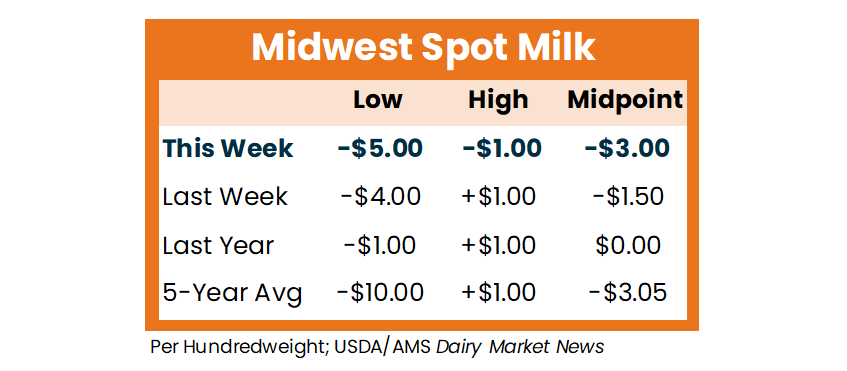
Here’s what USDA/AMS had to say:
Midwest:
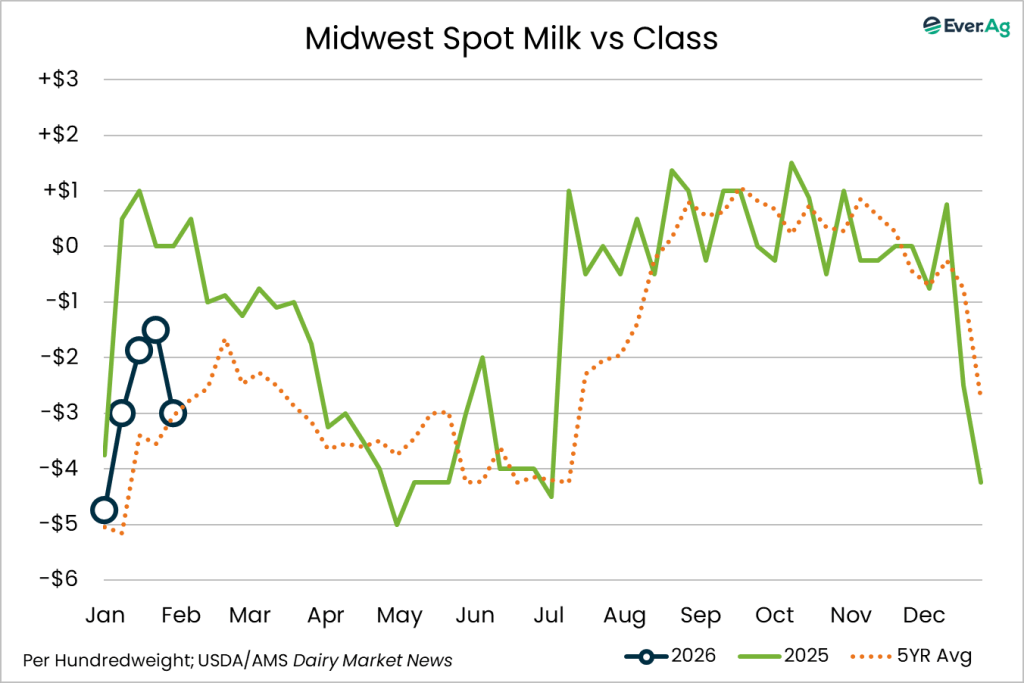
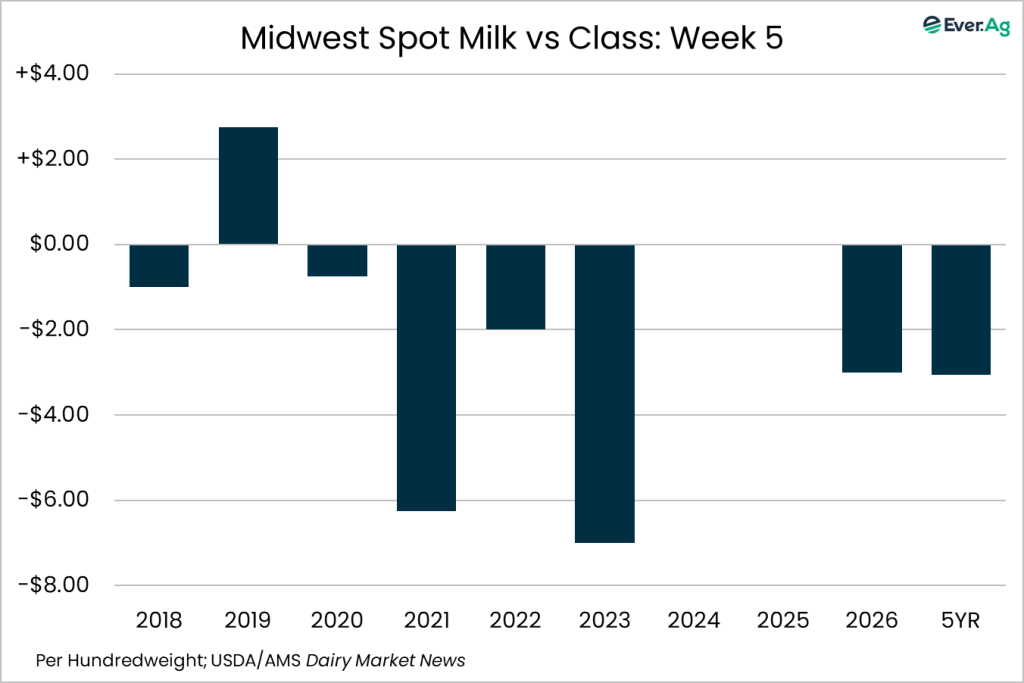
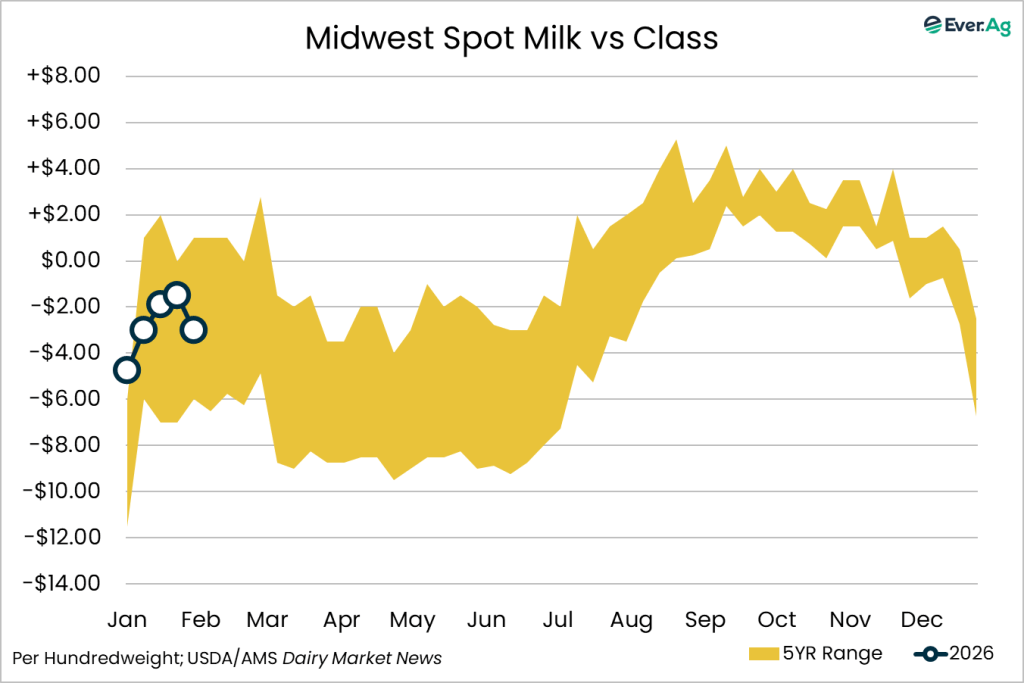
Milk output is steady in the Central region. Contacts anticipate the winter storm that hit the US over the weekend and brought snow and cold temperatures to the Central region will have a negative impact on milk production in the coming weeks. The storm caused transportation delays and downtime at some plants this week, contributing to lighter demand for all Classes of milk. Some contacts report road closures and milk haulers’ inability to get to farms caused some farmers in the Southwest and Midwest to dump milk. Some bottling operations were down early in the week due to limited staff availability, and plant managers say they were able to move some milk to nearby balancing plants. Lighter cheese production and less demand for Class III milk helped push spot prices lower as contacts report moving loads priced from $5-under to $1-under Class.
EAST
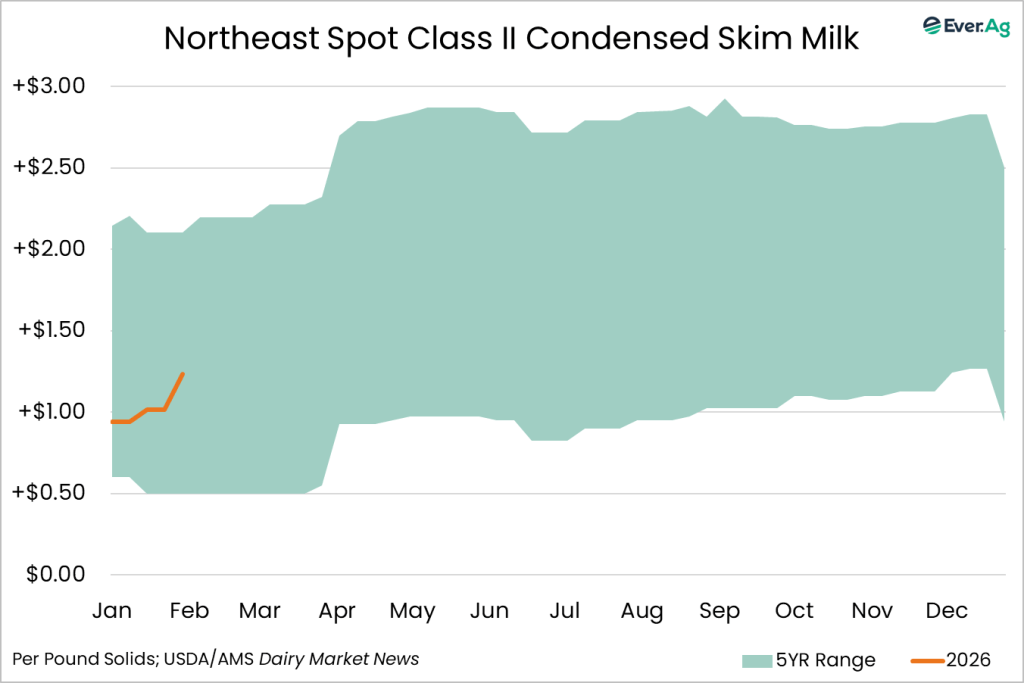
Milk production across much of the country remains disrupted this week with severe weather affecting farm-to-plant movement and processing schedules. Plants report unplanned downtime as haulers struggle to transport milk off farms, employees have difficulty reaching facilities, and truck availability remains limited. Bottling plants are operating at slower rates as weather conditions and school closures reduce demand. USDA’s December Milk Production Report shows year-over-year growth of +3.9% in New York and a decline of 2.4% in Pennsylvania, with herd head counts contributing to both states. Reported prices remain steady. Class II usage remains steady to light, with pulls remaining limited as the post-holiday slowdown continues. For Class III, cheese inventories in cold storage increased week over week, though levels remain below those reported at the beginning of the month. Condensed skim markets appear steady, with a broad price range reported. Earlier-week weather disruptions have led to widespread order cancellations or delays, though some previously ordered loads are being taken now as conditions improve.

WEST
California milk production is currently strong. Manufacturers convey open processing time remains tight as milk volumes are generally pushing against processing capacities. Stakeholders note spot milk loads being offered at prices below the Federal milk marketing order blend price. According to the California Department of Water Resources, as of January 27, 2026, the state has received 14.55 inches of precipitation for the current 2025-26 Water Year, up 2.61 inches from the historical mean. This is increasing reservoir levels and water resources for dairy farmers. Farm level milk output in Arizona and New Mexico is steady. Spot loads are available. New Mexico handlers note road closures and some downtime at dairy processing facilities due to winter weather related impacts, which has resulted in some distressed milk volumes. Handlers in the Pacific Northwest note cow comfort has improved, and milk output is back within anticipated volumes. Despite this, some manufacturers are continuing to secure spot milk loads. Farm level milk output in the mountain states of Idaho and Utah is strong. Stakeholders indicate a few processors had decreased intakes for a portion of January but are now receiving typical volumes again. Spot loads remain available. Farm level milk output in Colorado is steady. Class I and II demand is steady, while Class III and IV demand is mixed throughout the region.
Questions or concerns? Please contact Ever.Ag Insights at insights@ever.ag