
Here’s what USDA/AMS had to say:
Midwest:
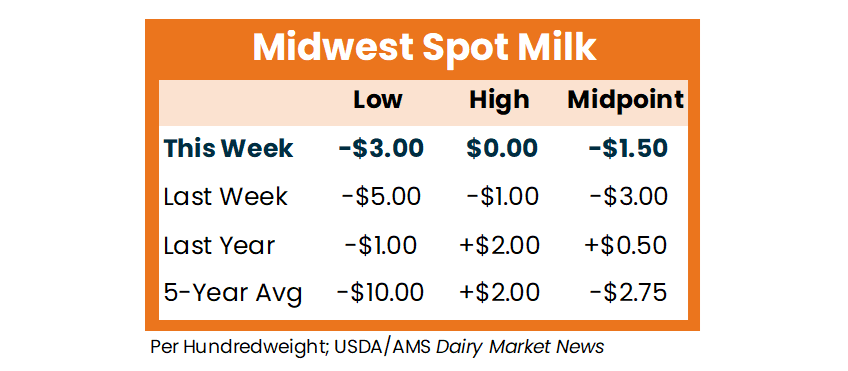
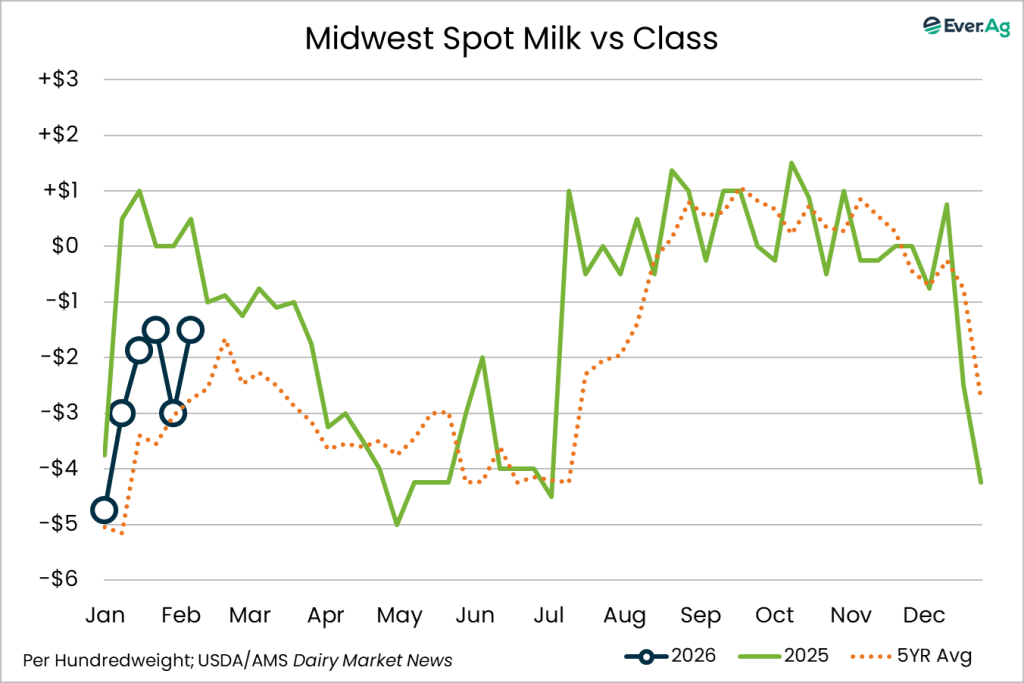
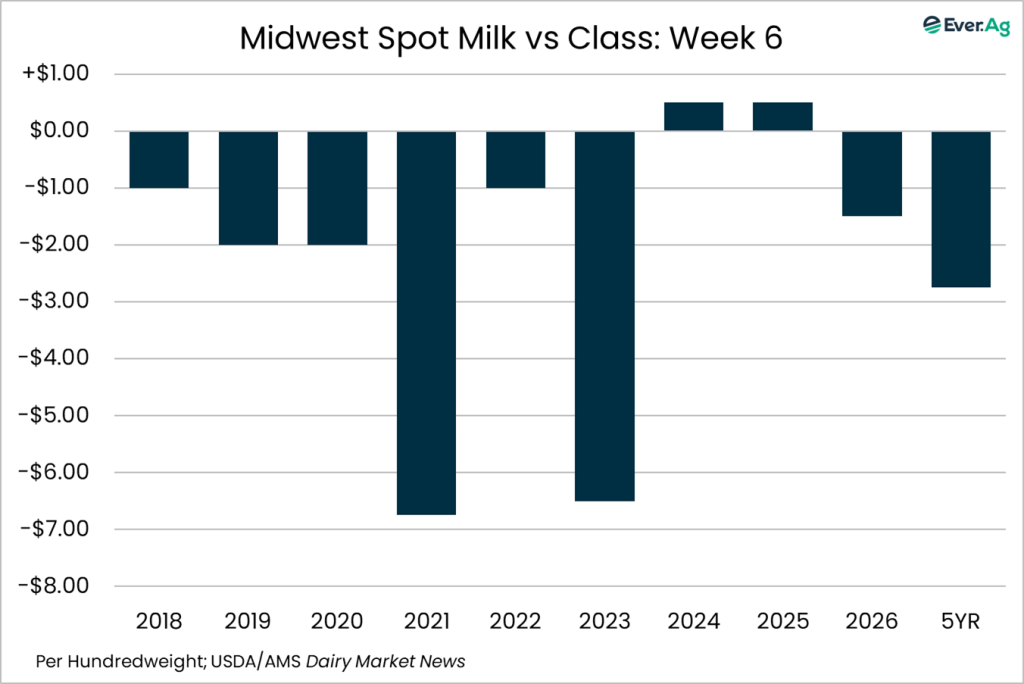
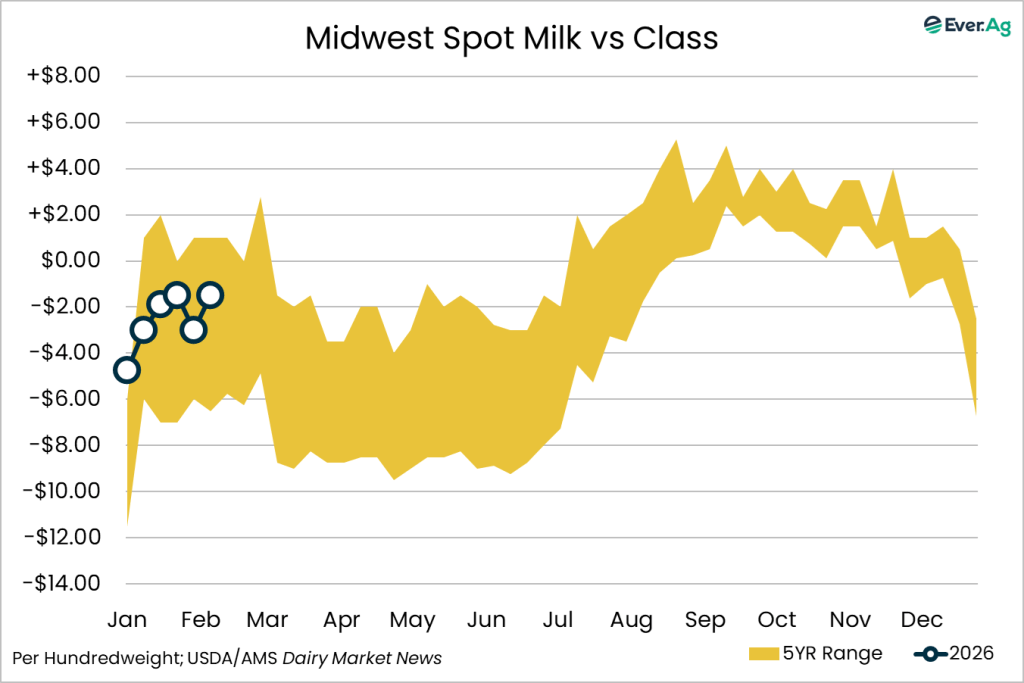
In the Central region, milk output is steady. Last week’s winter storm negatively impacted transportation and caused some down time at plants, but these issues were mostly resolved by the start of this week. Spot volumes of milk are available, but demand for all Classes of milk is strengthening. Bottling operations are running busy schedules to restock some retailers who sold their inventories last week. Cheesemakers are running busy schedules, and some report purchasing additional volumes of milk. Spot prices for Class III milk increased, and spot loads are trading from $3-under to flat.
EAST
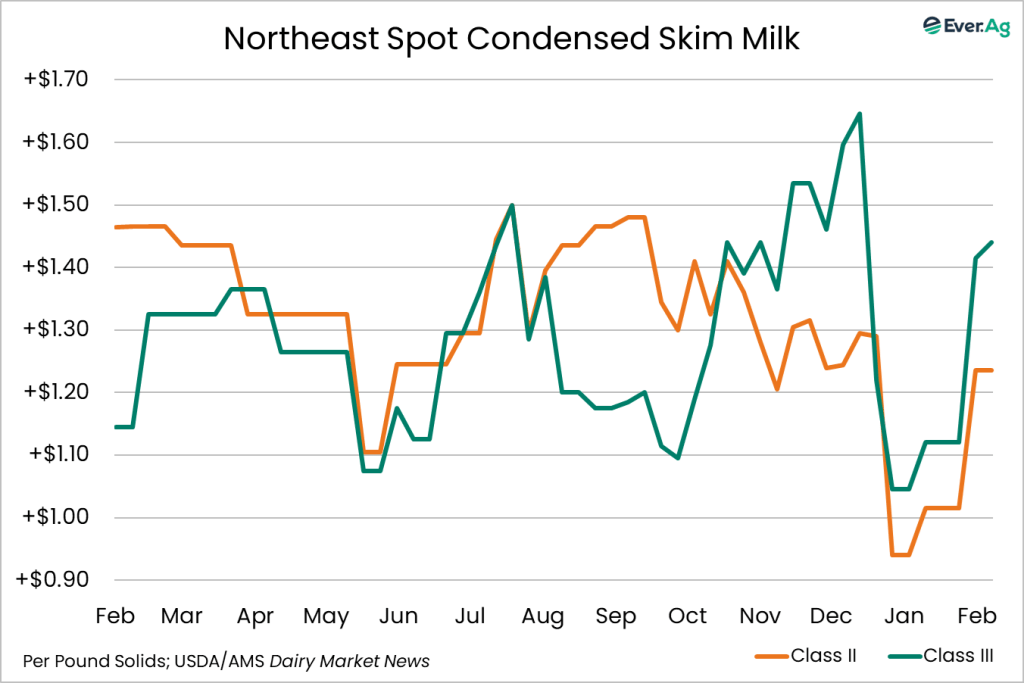
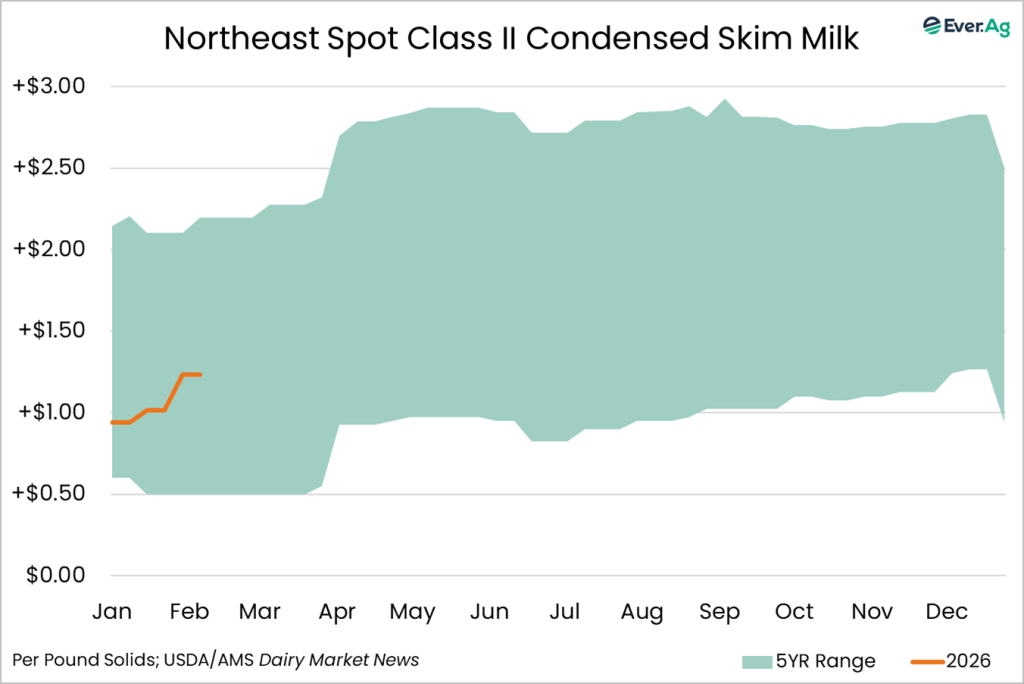
Milk production is stable this week, with the latest USDA Milk Production Report indicating continued growth in the Eastern Region. New York remains the primary driver of the increase, reflecting both increased herd size and improved per-cow productivity. Herd growth appears aligned with the need to expand dairy manufacturing capacity within the state, and pulls from New York remain steady as raw milk continues moving into ultra-filtered milk production. No weather impacts on milk deliveries were reported. Class II demand is reported as normal ahead of the seasonal draw on cream expected to begin near May. Fluid demand for Class III is adequate to keep facilities operating full schedules to meet steady bulk business and strong retail interest. Contacts report condensed skim demand is unseasonably elevated, with some contacts suggesting needs for later in the year are being pulled forward. While Class II utilization is described as normal, Class III utilization is unexpectedly higher.
WEST
California milk production is trending upward. Handlers indicate January 2026 milk output is up year over year and compared to December. Open processing time in the Central Valley is hard to come by. Some plant managers note it is challenging to manage milk volumes more than a few weeks ahead of time. Spot loads are available. Stakeholders indicate calf ranches are receiving some milk loads. Arizona and New Mexico handlers convey farm level milk output is steady. New Mexico processors indicate road closures, unplanned downtime, and distressed milk volumes have decreased. Milk production in the Pacific Northwest is steady. Some manufacturers are securing additional loads of milk for their production facilities. Milk production in the mountain states of Idaho, Utah, and Colorado varies from steady to stronger. Although some spot milk loads are available, manufacturers indicate milk volumes are decently balanced with production capacities. Class I and II demands are steady, while Class III and IV demands vary from steady to stronger throughout the region.
Questions or concerns? Please contact Ever.Ag Insights at insights@ever.ag