
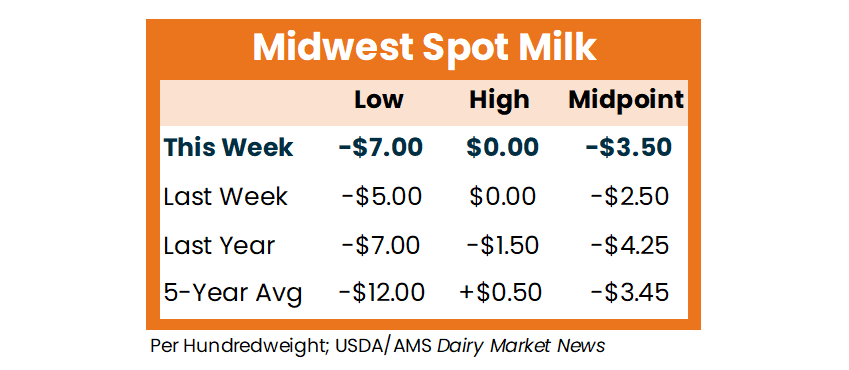
Here’s what USDA/AMS had to say:
Midwest:
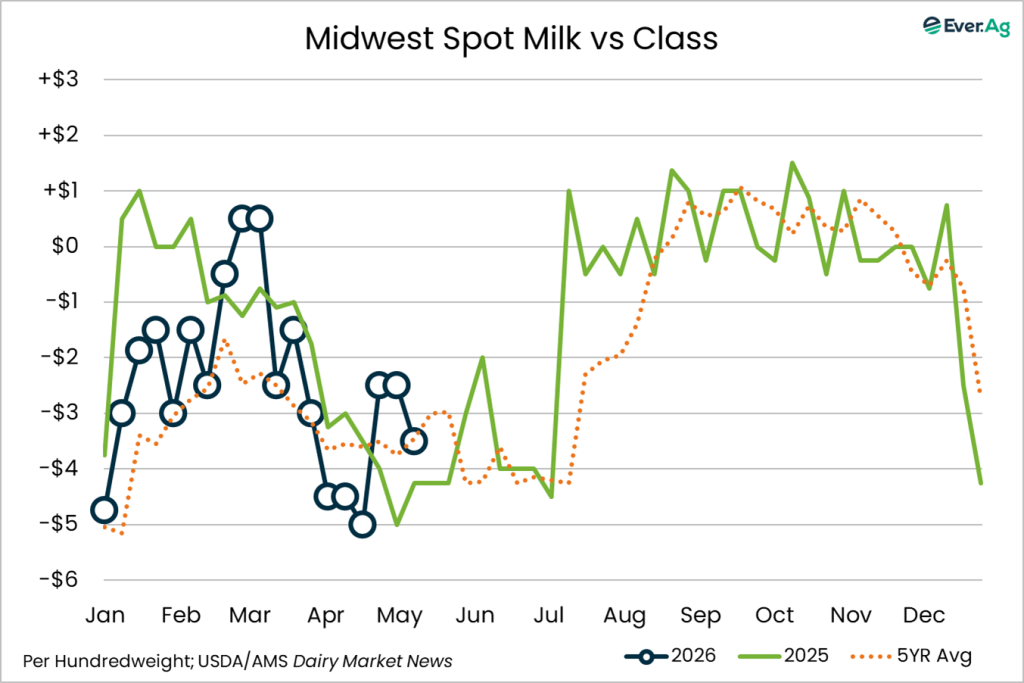
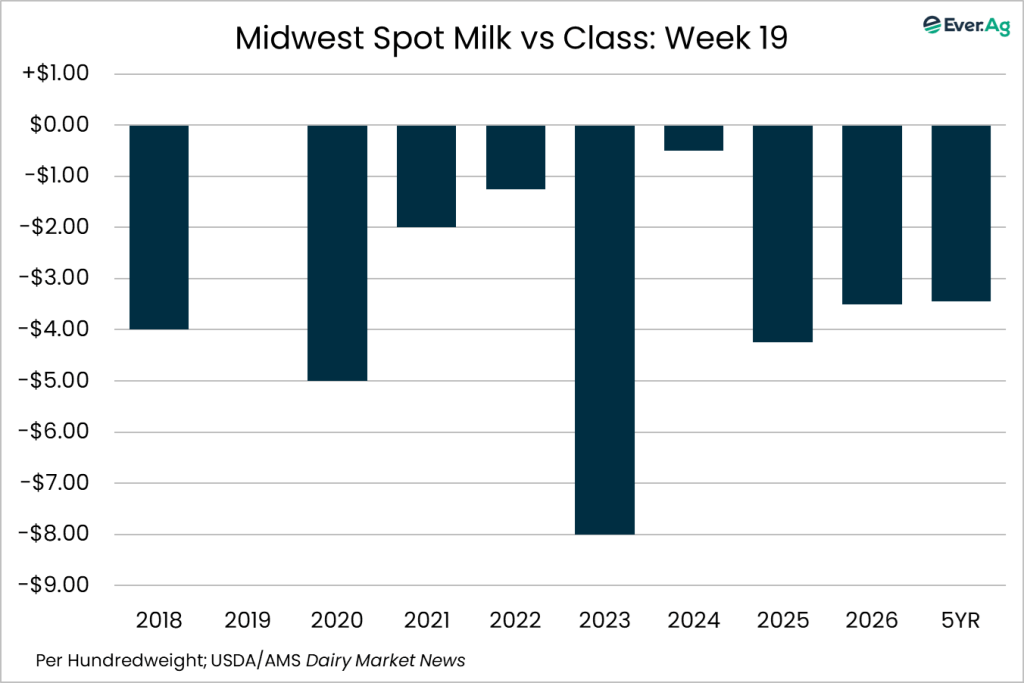
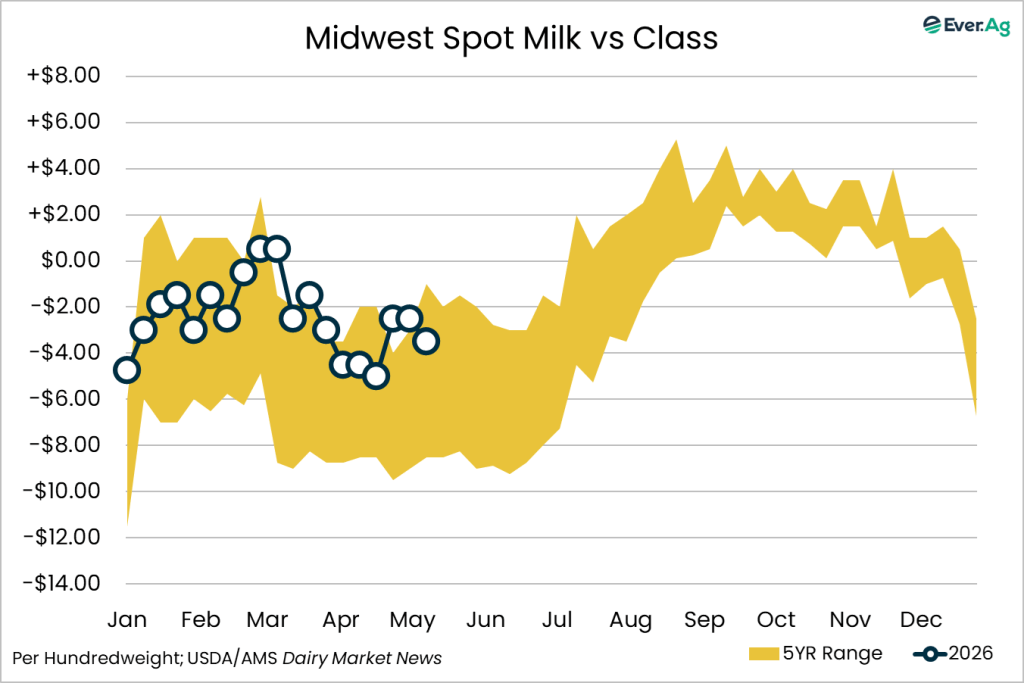
Farm level milk production is steady in the Central region this week. Contacts say output is up compared to this time last year, but strong demand is keeping volumes from becoming excessive. Class I demand is unchanged and contacts say bottling operations are pulling in milk ahead of summer break for educational institutions in the region. Demand for Classes II and IV is strong, and manufacturers say they are running busy schedules to keep pace with demand that is up from a year ago. Cheesemakers are running busy schedules, but demand for spot loads of Class III milk is somewhat tepid, though some cheesemakers say they were purchasing more spot milk this week. Spot availability varies. Some stakeholders say they were actively searching for spot loads of milk but were unable to find volumes. Meanwhile some purchasers in other parts of the region were, reportedly, offered spot loads from nearby plants at below Class prices, but were unable to take in these loads. Spot prices for Class III milk range from $7-under to flat, though contacts say most volumes are trading near the top end of this range. Milk component levels are declining but contacts say cream production is strong, due to the volume of milk being produced in the region.
EAST
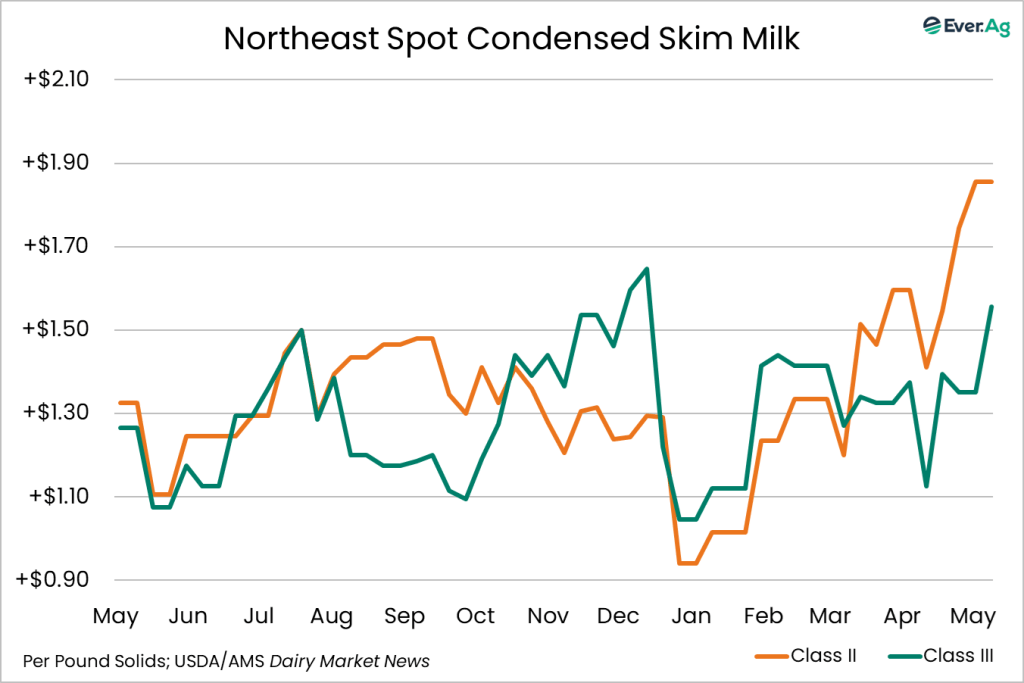
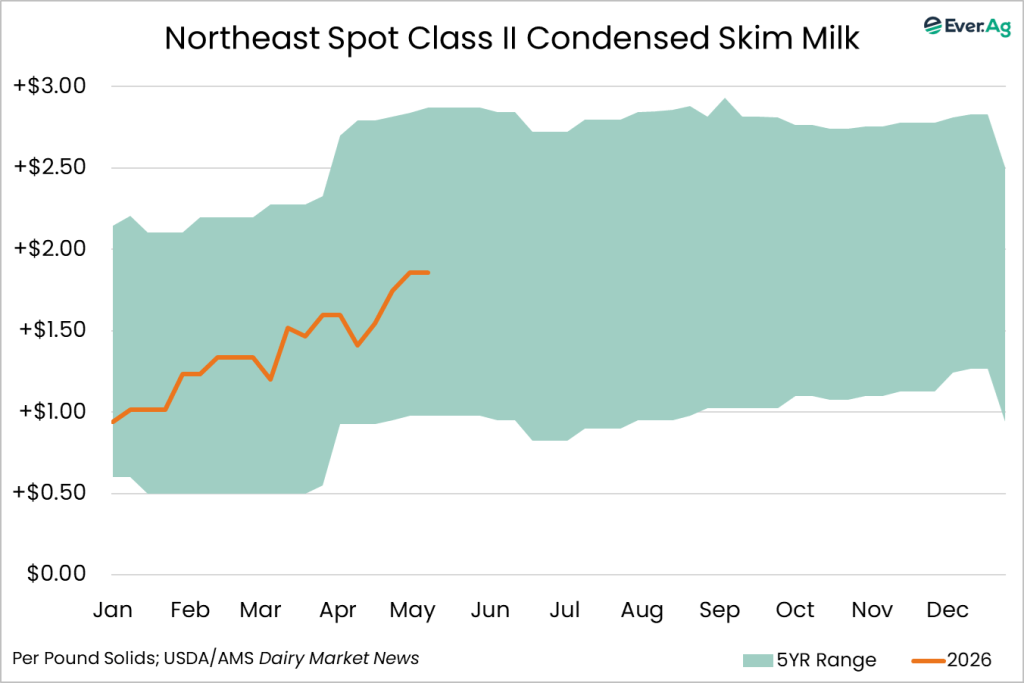
Milk production in the East region is steady. The Northeast is still in spring flush and milk volumes are plentiful. The Southeast is experiencing a slight drop in production, but output meets production demands. Class I demand is steady. Bottlers are maintaining busy production schedules but anticipate a drop in demand when educational institutions begin their summer breaks. Class II demand is strong. Class III demand is steady to strong. Class IV demand remains strong, predominantly from high prices of milk powders.
WEST
Milk production is steady in California. Handlers indicate spring milk production is maintaining good output volumes. Spot milk loads are available. Stakeholders indicate intakes at balancing plants are manageable. Farm level milk output is steady in Arizona and New Mexico. However, Arizona manufacturers are bringing in spot milk loads. Milk production in the Pacific Northwest is mixed this week. Manufacturers indicate plant managers are receiving contracted milk volumes, but spot milk loads are somewhat tight. Stakeholders convey increases in the weight limit for milk tankers are being considered in Oregon. Farm level milk output in the Mountain States of Idaho, Utah, and Colorado is stable. Colorado handlers note there has been more longevity to peak spring output volumes in the state this year. Milk volumes are meeting manufacturer needs in the Mountain States. Class I demands are steady, Class II and III demands vary from steady to stronger, and Class IV demands vary from steady to lighter throughout the region.
Questions or concerns? Please contact Ever.Ag Insights at insights@ever.ag