
Here’s what USDA/AMS had to say:
Midwest:
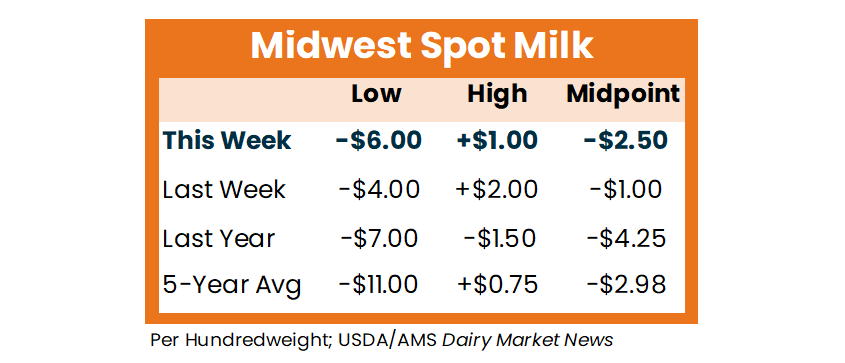
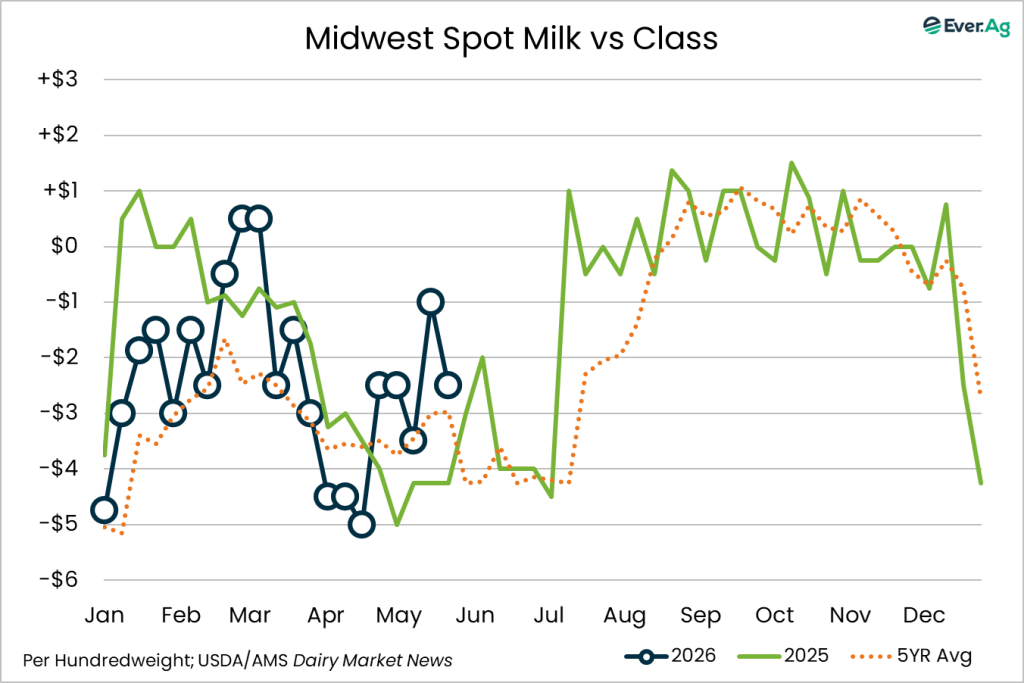
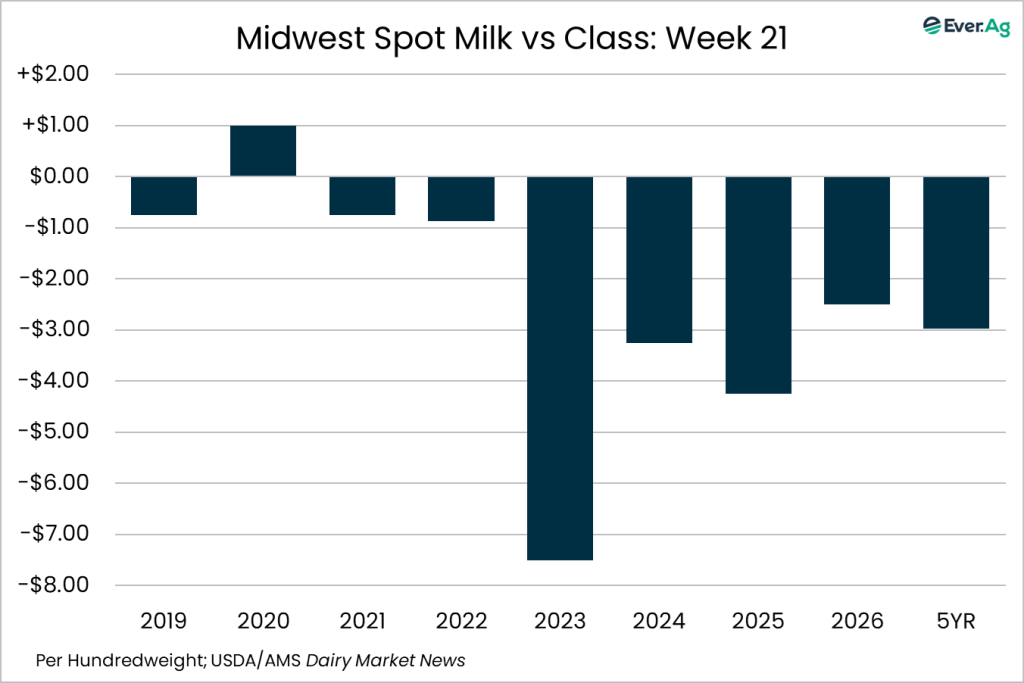
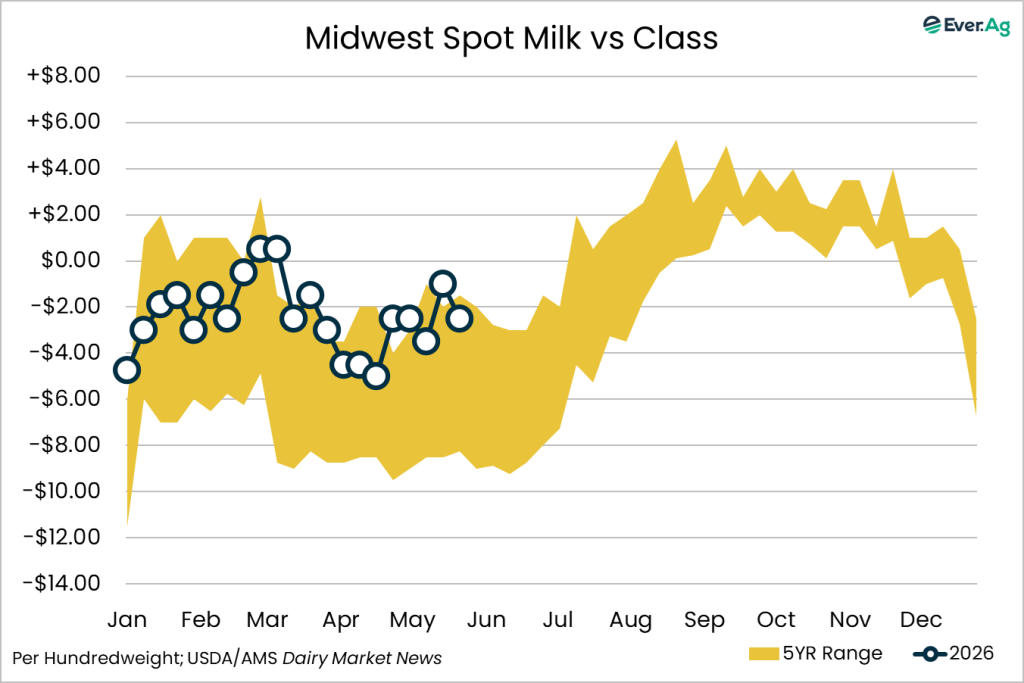
Contacts in the Central region say milk output is strong and is up from this time last year. Demand for Class I milk is beginning to soften in parts of the region, as summer break is starting at some educational institutions. Class II and IV processors are running busy schedules, amid strong demand. Contacts say these plants are pulling in large volumes of milk, keeping spot inventories manageable. Cheesemakers are running full production schedules ahead of Memorial Day weekend. Demand for Class III milk is steady, but somewhat mixed. Some plant managers say they are purchasing additional spot volumes of milk, while others say they are selling loads at discounted prices to prepare for the long weekend. Class III spot milk prices range from $6-under to $1-over this week.
EAST
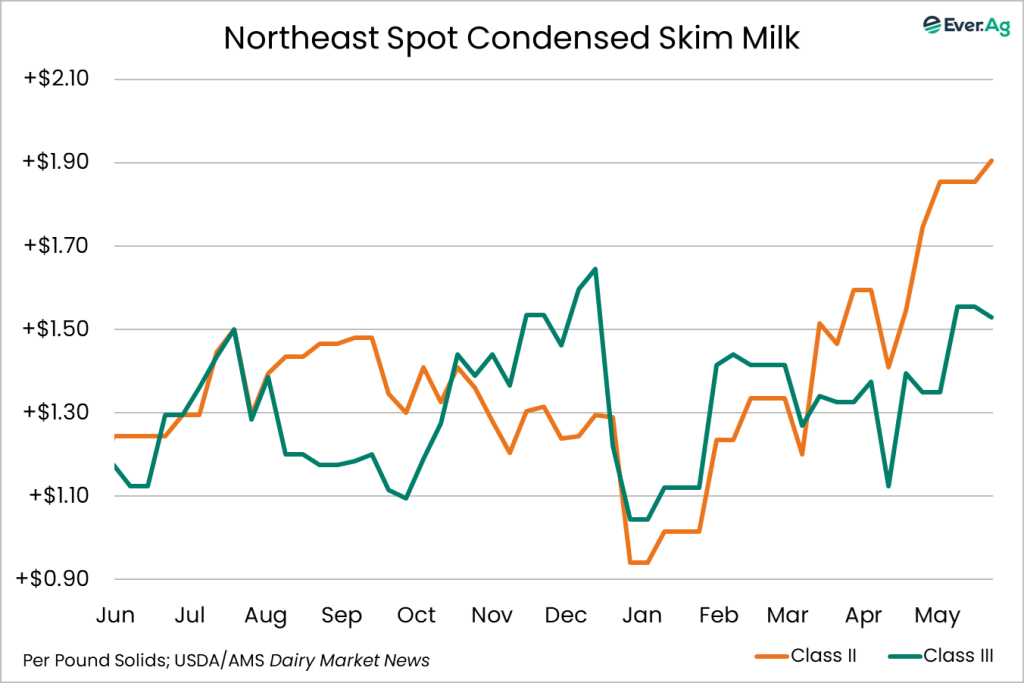
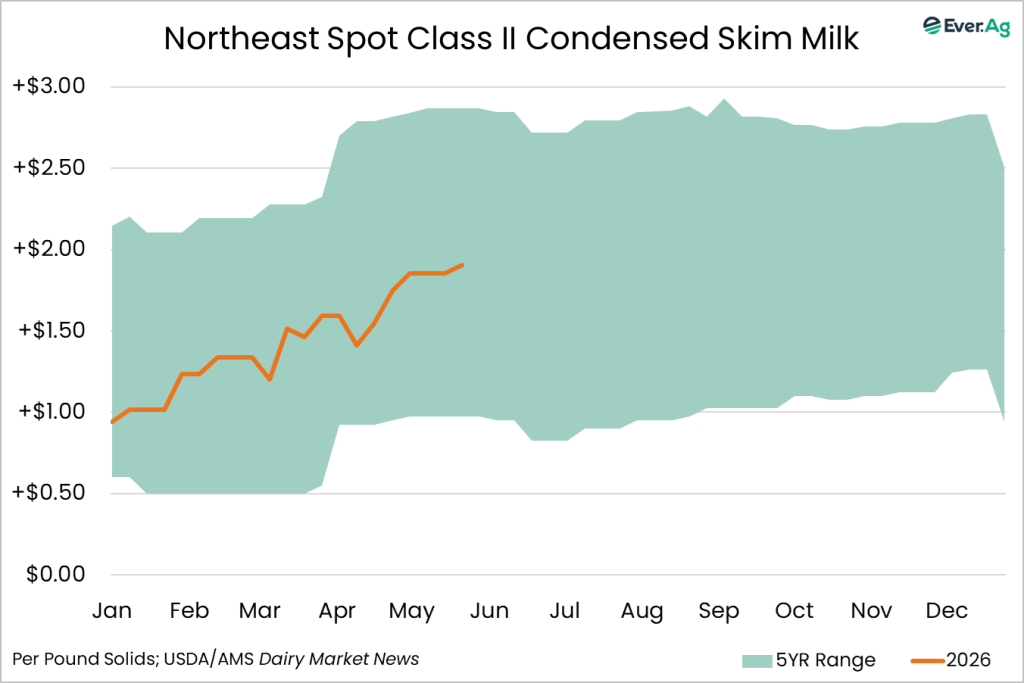
Milk utilization is increasing in the East region, keeping pace with seasonally strong milk volumes. The spring flush in Northern states continues, while Southern states are mostly through the flush, but farm production is steady. Class I demand is strong and contacts indicate bottlers are pulling more milk than usual, but those volumes are expected to drop as many educational institutions close for the summer. Class II demand is strong. Many facilities are purchasing spot loads of cream to bolster ice cream production. Class III production is steady in the region. Some facilities are taking spot loads of milk to keep production schedules full. Class IV demand is strong, particularly for milk powders.
WEST
California milk production varies from steady to lighter for week 21. Stakeholders indicate warmer temperatures are reducing cow comfort in some areas. May 2026 milk production is up slightly compared to last month. Milk output continues to be up significantly year-over-year. Manufacturers note milk intakes are above expectations but are manageable. Although spot loads remain available, Central Valley processors describe milk volumes as balanced. In Arizona and New Mexico, farm level milk output varies from steady to lighter. Some manufacturers are securing spot milk loads. Milk production in the Pacific Northwest is steady. Some stakeholders indicate milk volumes are somewhat tight. In the mountain states of Idaho, Utah, and Colorado, farm level milk output is steady. Idaho processors report plenty of milk is available to meet needs and components remain strong. Colorado processors report milk volumes remain balanced relative to processing capacities. Class I, II, III, and IV demands vary from steady to lighter throughout the region with the upcoming holiday weekend and summer breaks beginning at educational institutions.
Questions or concerns? Please contact Ever.Ag Insights at insights@ever.ag