Here’s what USDA/AMS had to say:
Midwest:
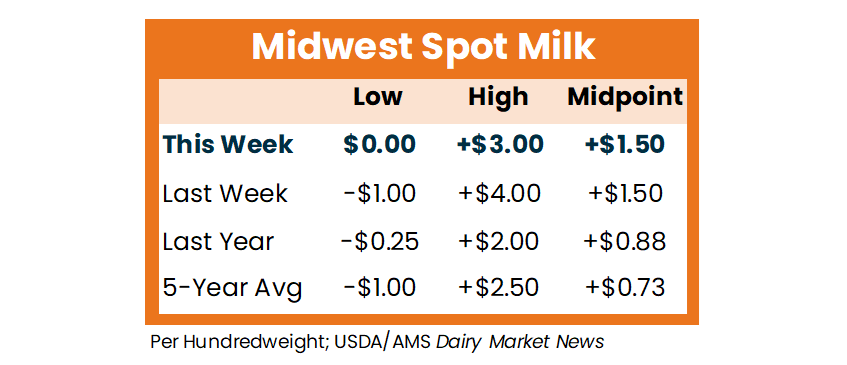
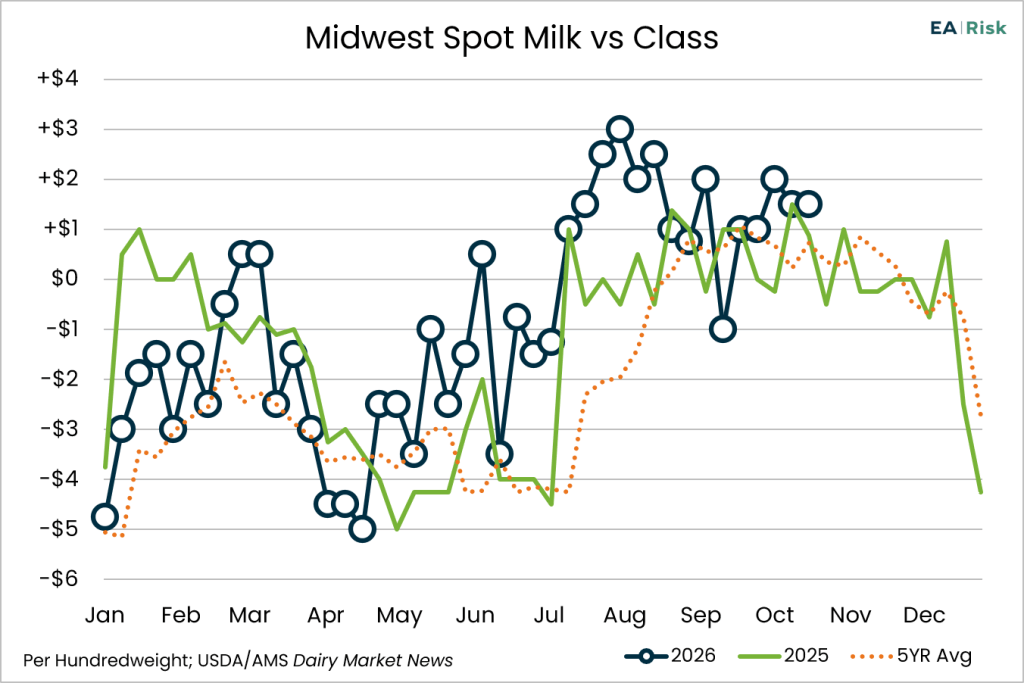
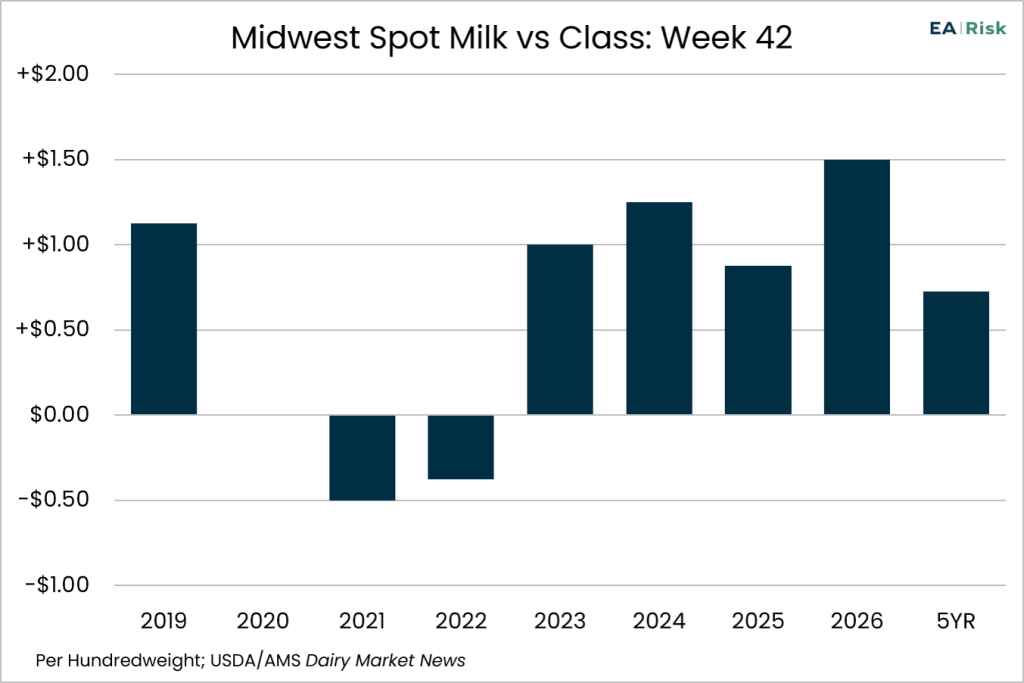
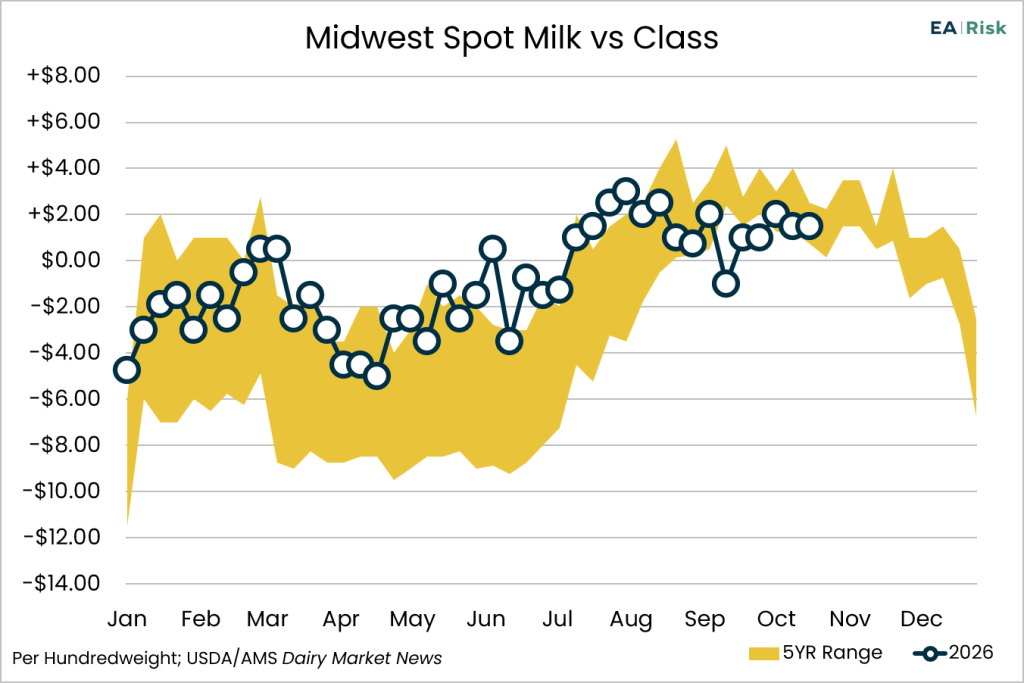
Milk supply is strengthening across the Central region as cooler weather moves into the area. Contacts report forecasted lower temperatures support improved milk output and increased overall milk availability. Despite the improvement in milk supplies, spot load availability remains limited as Class I and Class IV manufacturing continue to draw milk away from Class III processing. Reported Class III spot milk prices range from flat-class to $3.00-over Class. Elevated temperatures persist throughout much of the Southwest, and milk supplies remain tight. Cheese makers in the region indicate production remains steady. Butter manufacturers indicate churns are operating at steady schedules. Inventories of 80 percent butterfat butter remain ample, while supplies of 82 percent butterfat butter are reported as tight.
EAST
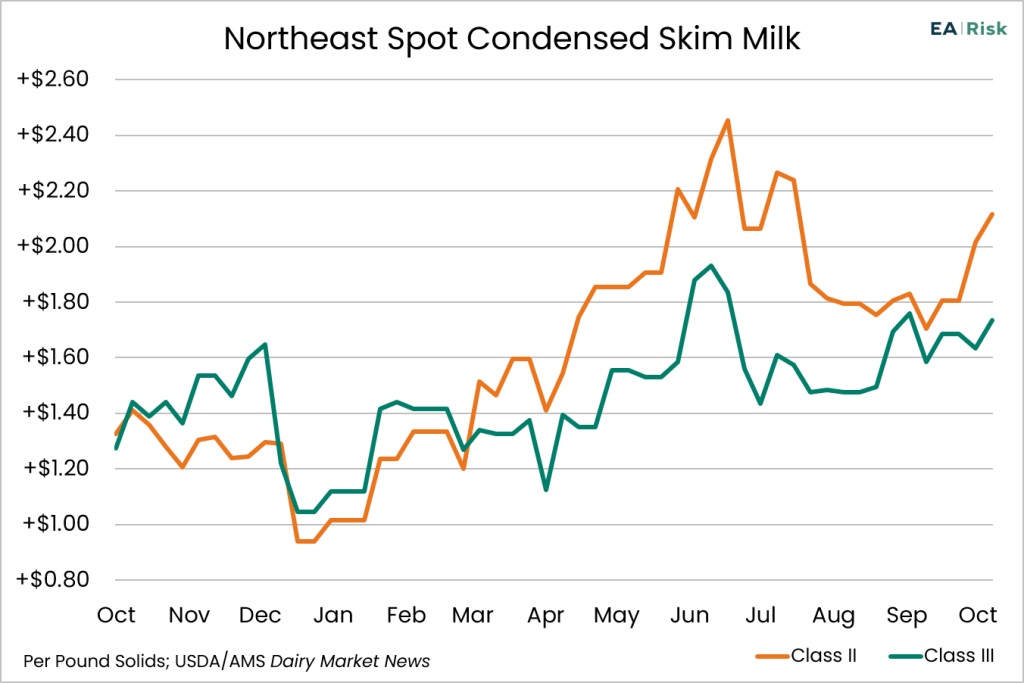
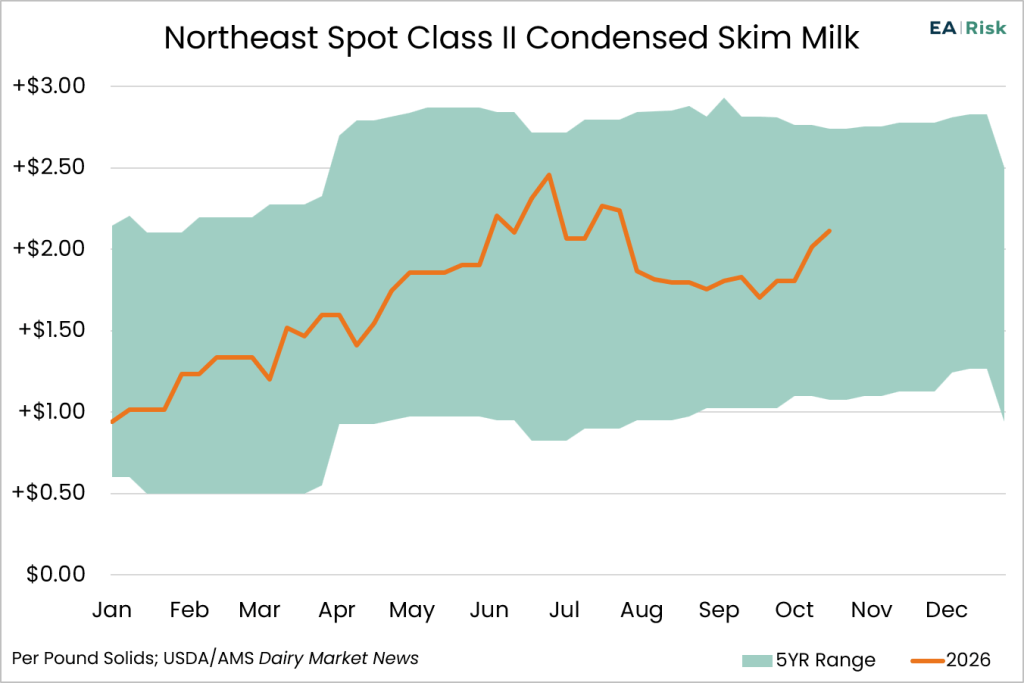
Milk supplies are heavy across the Northeast. Class I demand remains very good. Class II ESL cream manufacturing is increasing at some plants, while ice cream production is declining. Class III cheese production is steady, with cream cheese production increasing at some plants. Butter production is steady, with churns running six days a week. Market tone is steady.
WEST
Cooler weather is moving into the western region, strengthening milk production. Some contacts in California report year-over-year and month-to-month increases in milk output, though the overall supply situation remains somewhat tight due to high heat in Southern California despite cooler evenings. Arizona and New Mexico are experiencing some cooling, which is helping to keep milk production steady. The Pacific Northwest is seeing cool nights, good milk production, and available spot loads. Farms in Washington report positive Highly Pathogenic Avian Influenza (HPAI) tests in dairy cows. Producers are working closely with veterinary experts and regulatory agencies to ensure biosecurity measures are in place and to limit further transmission. No impact on overall milk output or availability has been reported at this time. Class I demand is steady with no week-over-week changes. Class II demand is up as holiday baking approaches. Class III remains steady with contractual loads being met. Class IV is marginally down due to increasing Class II and Class III processing, although butter manufacturers are not reporting any scheduling delays or issues receiving contractual loads.
Questions or concerns? Please contact EA Risk Insights at insights@ever.ag