Here’s what USDA/AMS had to say:
Midwest:
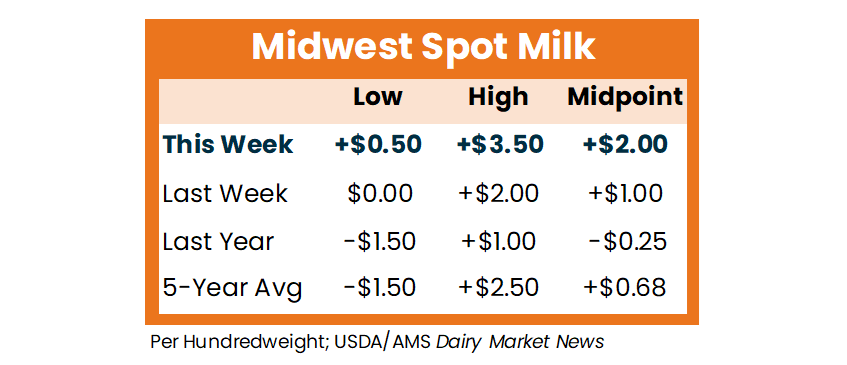
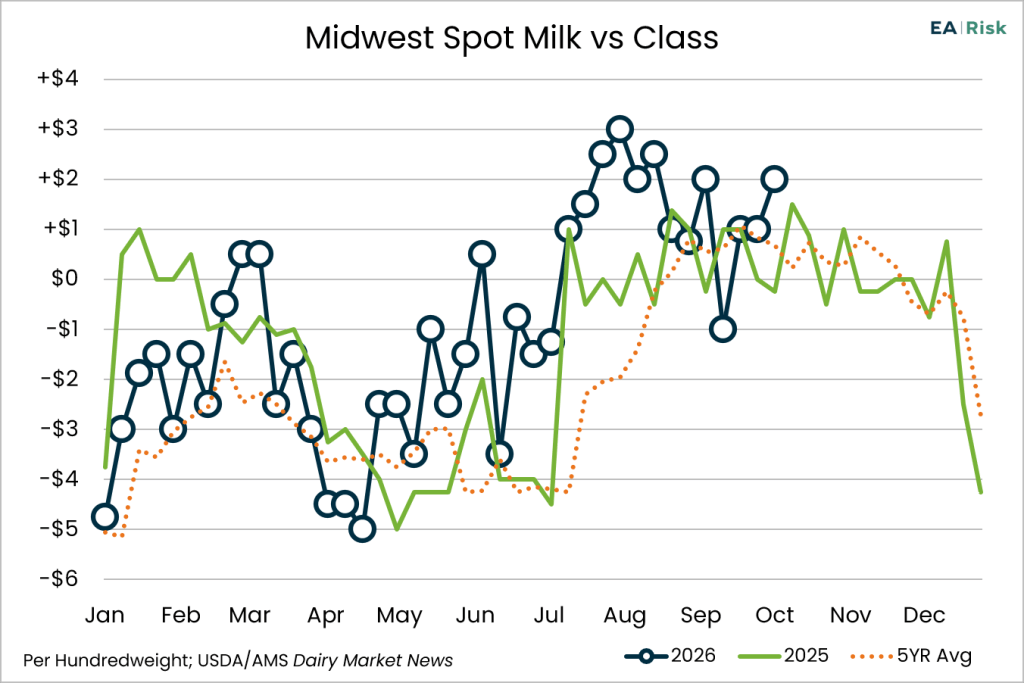
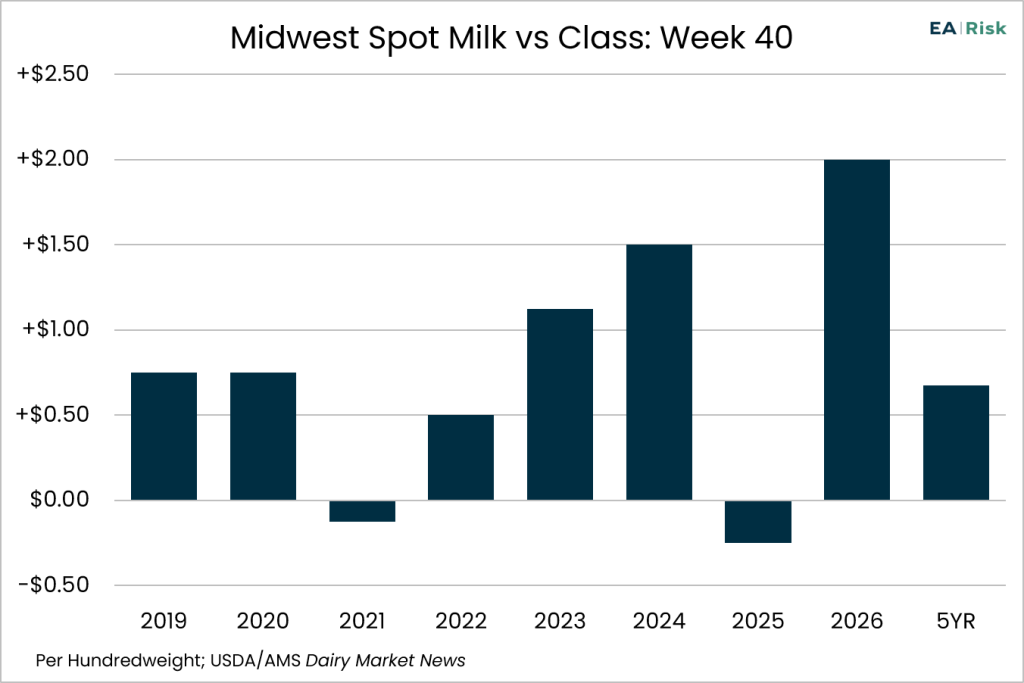
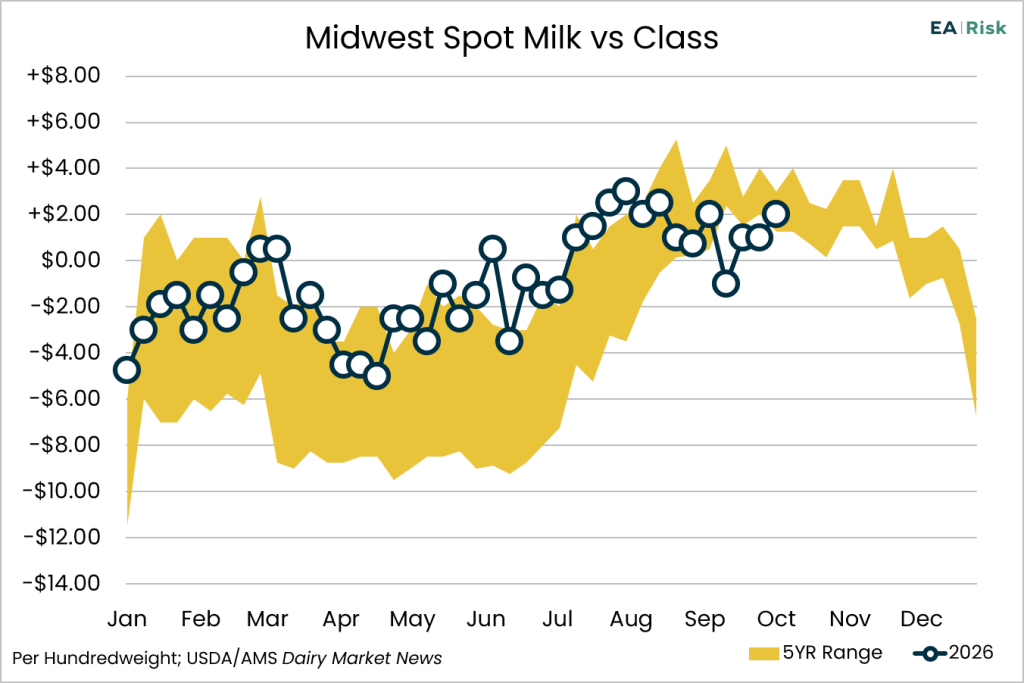
Milk supplies in the Central region are loosening. Contacts report ongoing distribution challenges nationwide, attributed to elevated fuel costs. Spot milk availability in the Central region remains limited. In the Upper Midwest, processors note milk component values are beginning to trend higher. Cheese manufacturers indicate that orders and sales are strong. Production schedules are steady, and inventories of colored cheddar remain elevated. Reported Class III spot prices in the Central region range from $0.50-over to $3.50-over. Butter makers note steady churn activity, and inventories of 80% butterfat butter remain high. Class II and Class IV demand hold steady, though some contacts anticipate a potential decline in Class II demand in the coming week.
EAST
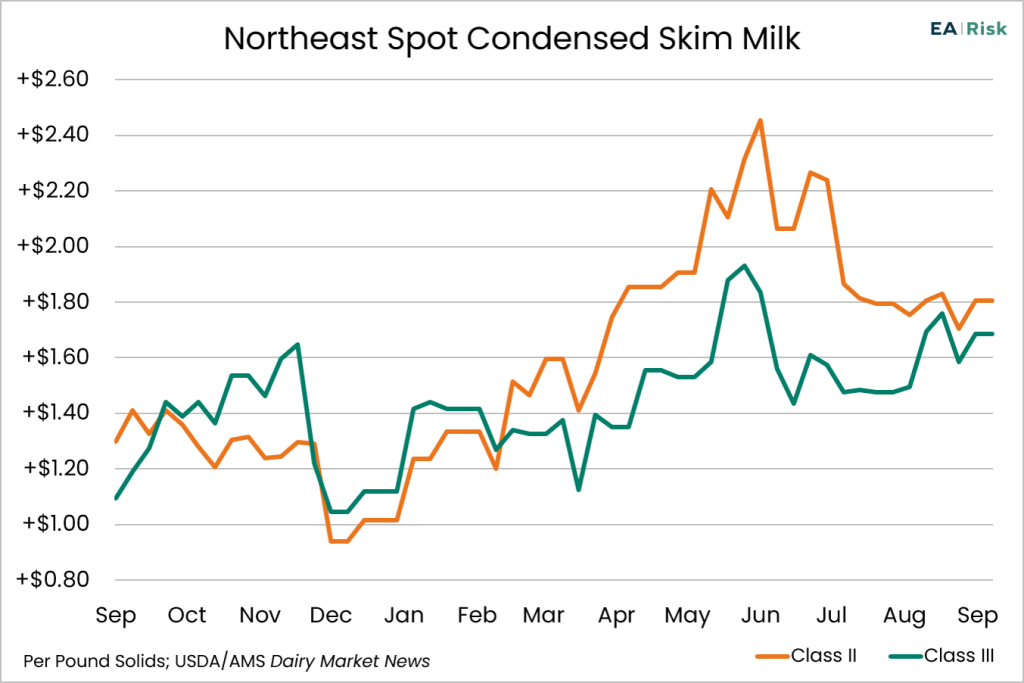
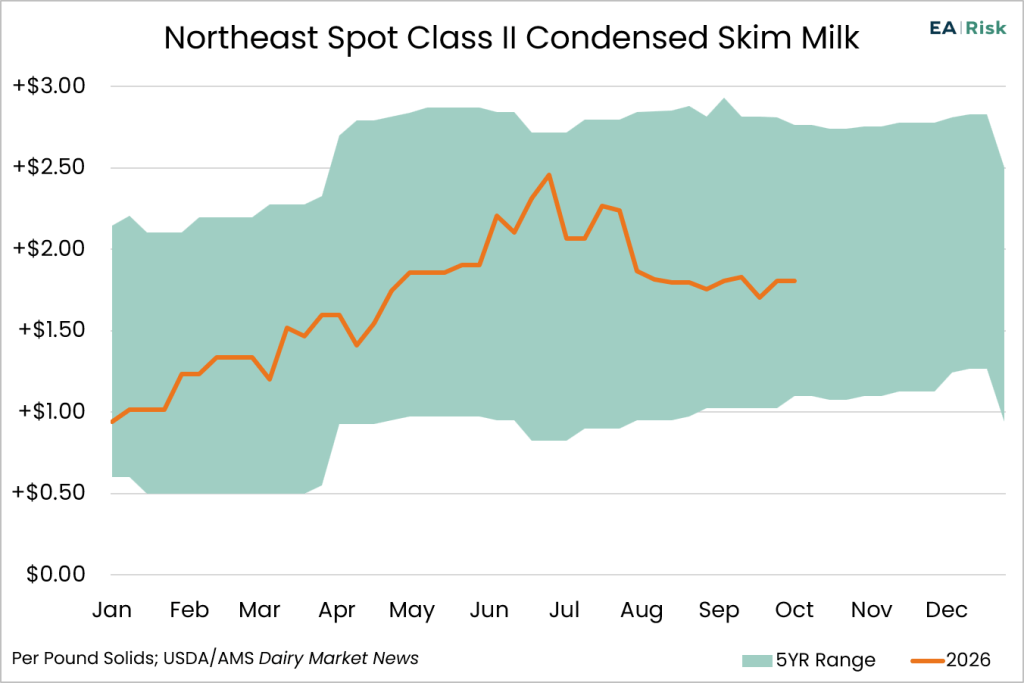
Milk supplies are heavy across the East. Temperatures are declining seasonally. Demand is unchanged for Class I, Class II, and Class III. Yogurt demand is supporting Class II. Cheese production is ongoing, supporting Class III demand. Class IV butter churns are active in front of the holiday seasonal demand. Overall, the market tone is steady.
WEST
Milk production in the West region is generally steady. Seasonal weather changes are not yet bringing major upticks in milk output. Many handlers indicate 2026 milk production is up. In California, spot milk loads are neither loose nor tight. Stakeholders note some spot loads are traveling to neighboring states. In Arizona, milk volumes are tight. Manufacturers report bringing in both spot loads of milk and condensed skim milk. In the Pacific Northwest this week, industry sources describe milk production as balanced with processing capacities. In Idaho, spot milk loads are somewhat available. 2026 dairy commodity production investments by some manufacturers in the state are putting further draws on farm level milk output this year. Spot loads are not abundant in the lower areas of the mountain states, but industry sources also note spot milk demand in Colorado is light. According to the latest National Agricultural Statistics Service (NASS) milk production report, August milk production was higher year-over-year for Colorado, Idaho, and Oregon. It also shows milk production milk production was down for Arizona, California, New Mexico, Utah, and Washington when comparing August 2026 to August 2025. Class I and II demands are stronger, while Class III and IV demands are steady. Stakeholders indicate increasing hauling rates are presenting more challenges.
Questions or concerns? Please contact EA Risk Insights at insights@ever.ag