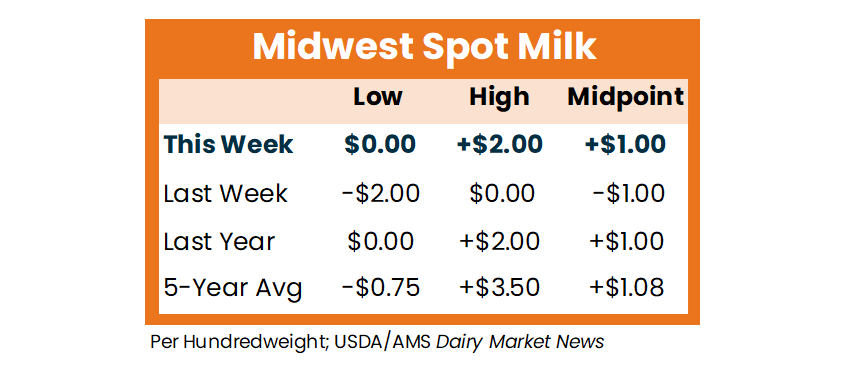
Here’s what USDA/AMS had to say:
Midwest:
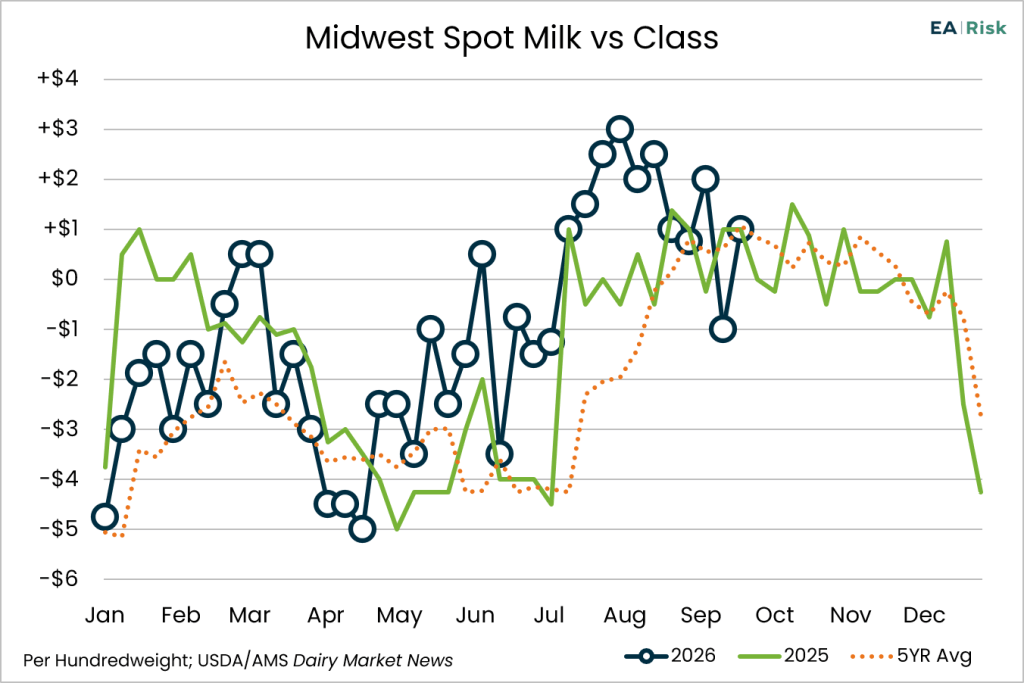
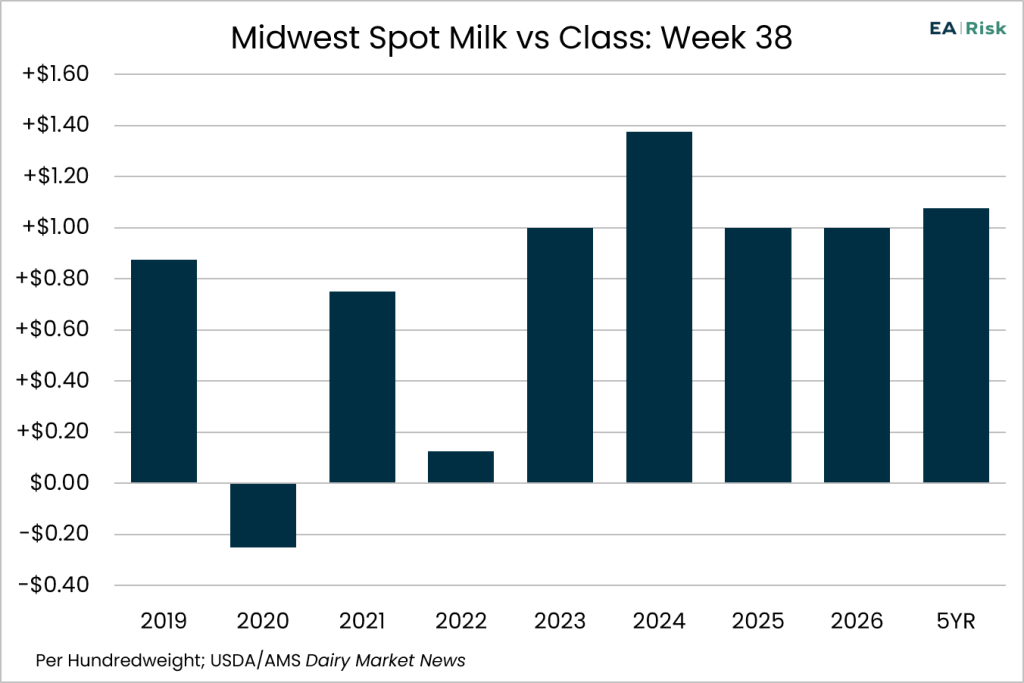
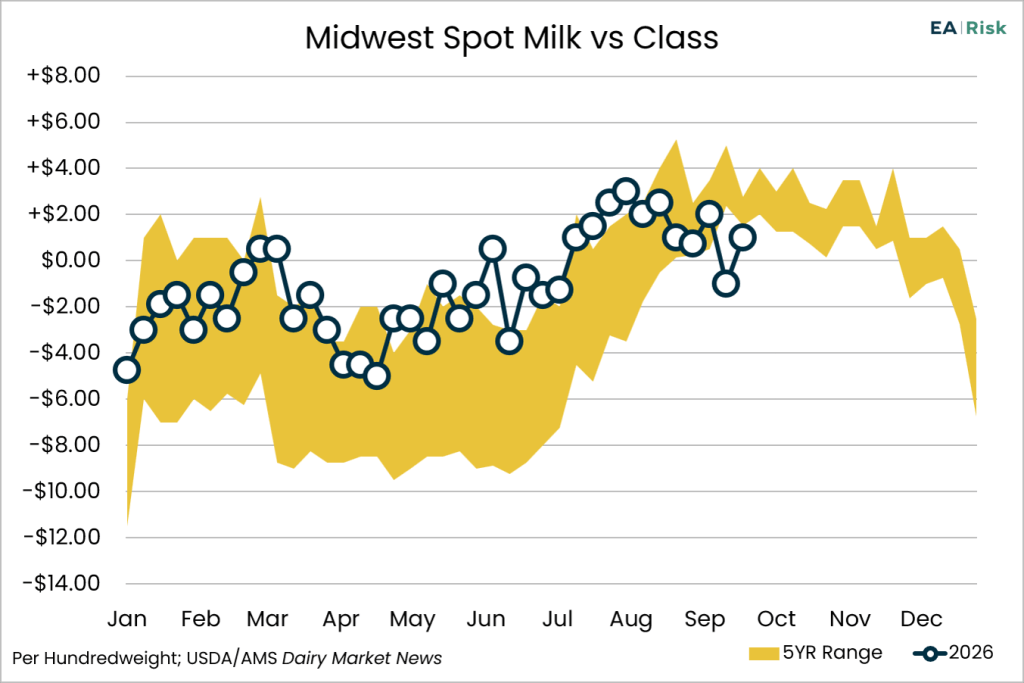
Central region milk supplies tightened further this week. Class I demand continues to limit spot load availability, and most handlers report little to no excess milk on the market. Contacts anticipate that over-class premiums may move higher, though some expect cooler weather to help relieve current supply constraints. Contacts noted shipping challenges as well, attributed to elevated diesel costs across the country. Limited spot milk trades were reported, ranging from flat-class to $2.00-over. Cheese manufacturers in the region indicate that plant operations remain steady with consistent production schedules.
EAST
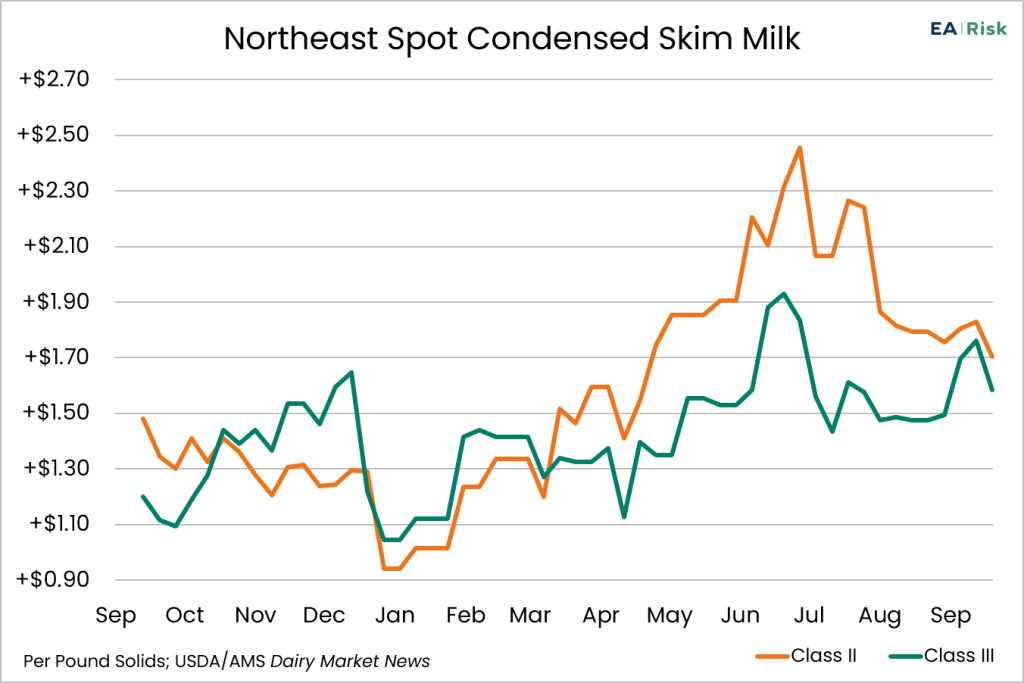
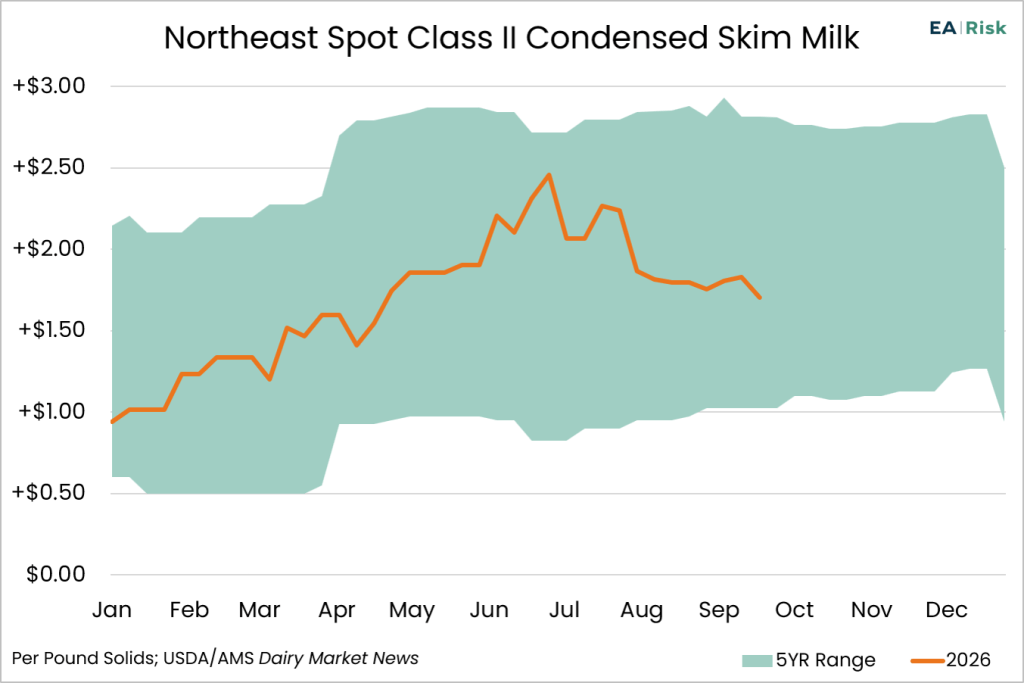
Milk production across the Northeast is stable as the region moves into cooler weather, according to contacts. Fluid supplies are sufficient for current draws and contractual obligations, though spot milk is tight in the East. Ultrafiltration pulls remain strong, and Class I handlers are seeking additional loads. Class II continues seasonal draws. Class III cheese plants report sufficient milk, and some are scheduling maintenance downtime. Class IV butter churns are running six days per week for both branded and private label production. Overall, the market tone is steady.
WEST
The fluid milk market tone in the West is firm to tight. Milk supply remains generally consistent, with minor declines reported in California and Arizona due to warm temperatures; contacts expect this to be short-lived. Milk availability is also tightening in the West because of increased Class I milk movement to the Midwest and Northeast regions. Contacts report that buyers are offering premium prices, but express concern about how long this will be sustainable given rising freight costs. Class I demand is up, with a marked increase week over week. Some contacts also anticipate contractual changes in milk demand due to geopolitical shifts in 2027, which may alter long-term milk-draw needs from the West. Class II demand is steady, with plants kept full for ice cream and cheese production. Class III demand remains stable. Class IV demand is consistent, and contacts report manufacturing facilities are operating at full capacity.
Questions or concerns? Please contact EA Risk Insights at insights@ever.ag