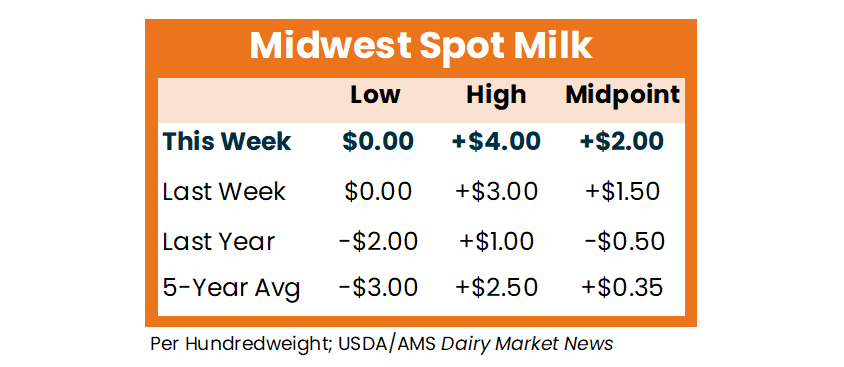
Here’s what USDA/AMS had to say:
Midwest:
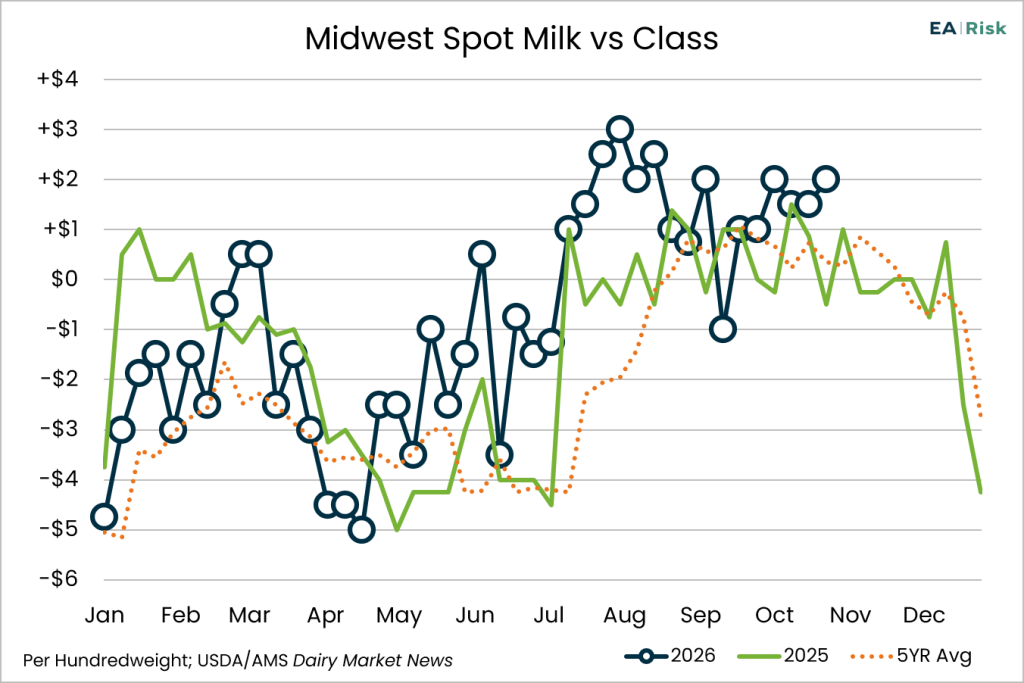
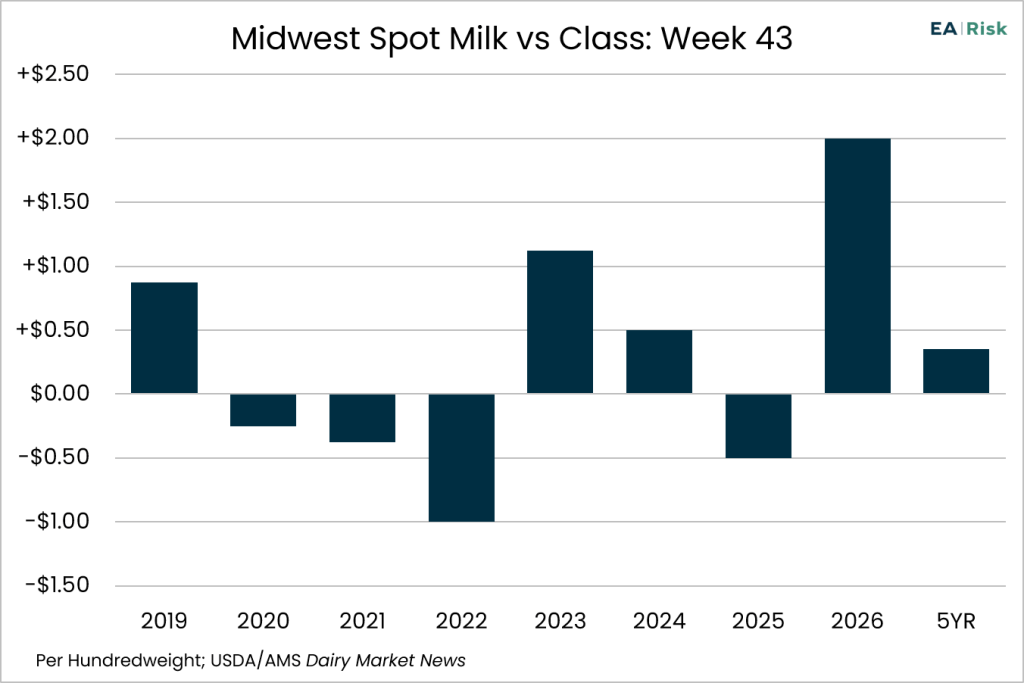
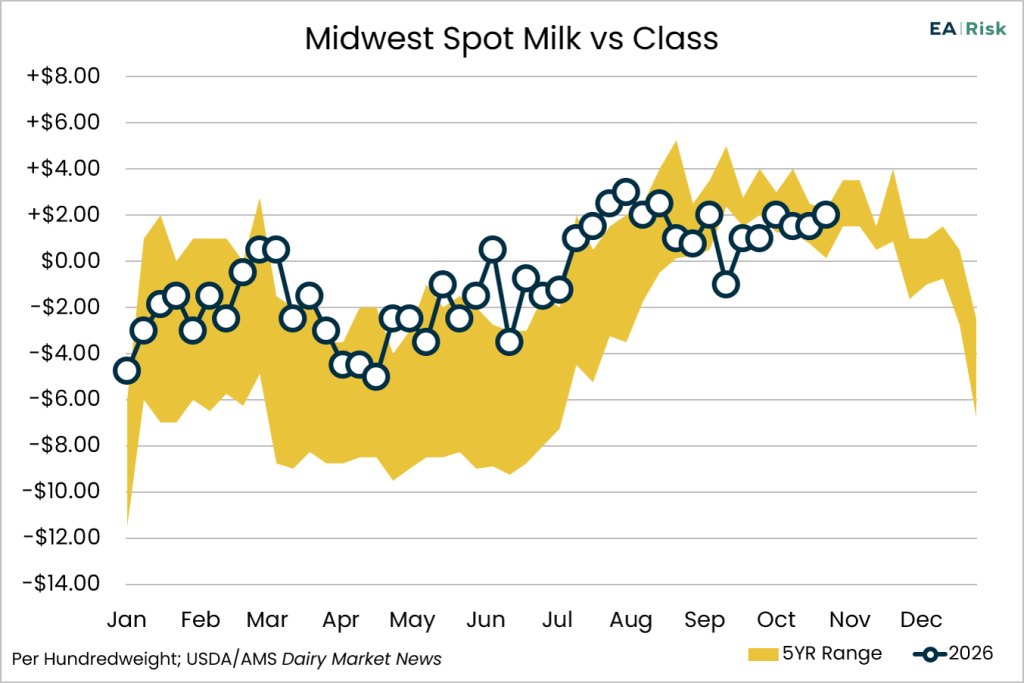
In the Central region, cooler weather seasonally increases milk output, and supplies remain good and steady. In the Southwest, contacts report milk supplies are improving somewhat due to seasonal changes although market conditions remain tight. Despite increased milk volumes, spot load availability for Class III producers remains limited as Class I and Class IV production increases. Contacts continue to report distribution constraints across the region. Cheese manufacturers report good mozzarella demand and steady production. Cheddar production slows due to plant downtime and quality concerns.
EAST
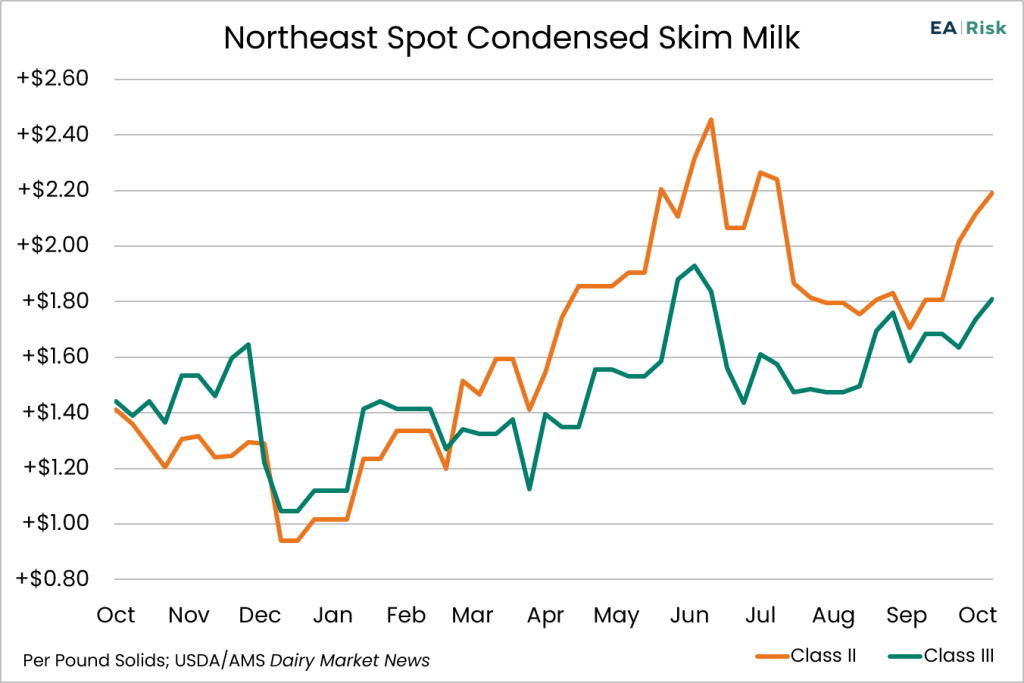
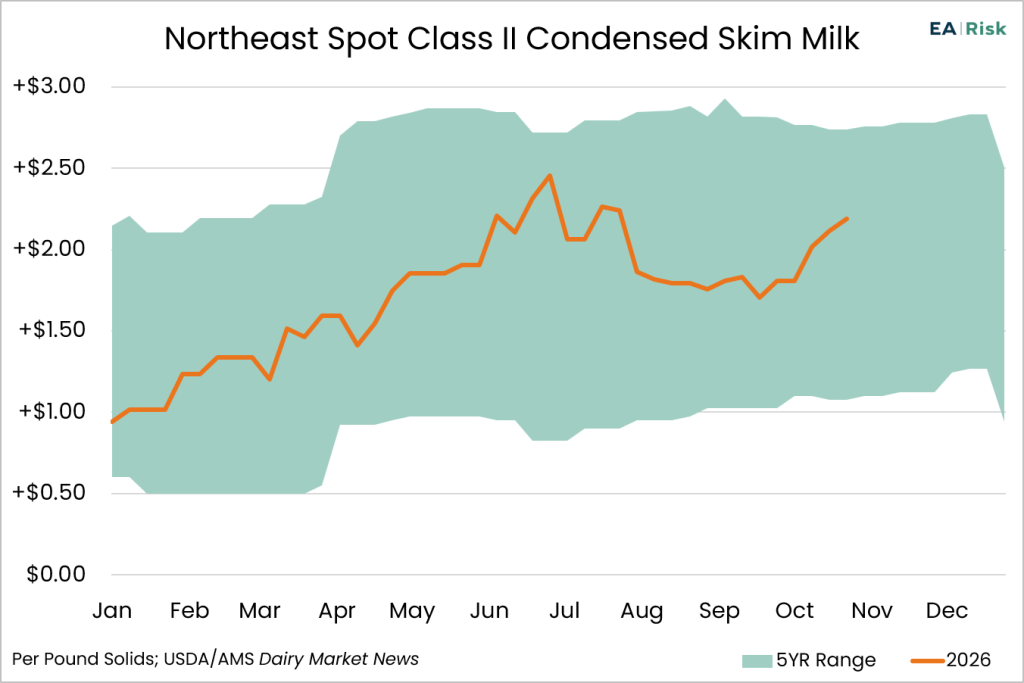
Milk supplies in the region are steady this week. Contacts report Class II production is steady. Class III cheese production is steady to firming, with Class III cream cheese production ramping up seasonally. Class IV butter production is steady, and Class IV cream purchases continued. Market tone is steady.
WEST
In California, milk production is strengthening, while stakeholders indicate demand for spot milk loads is up this week. Handlers report milk production is bouncing back from higher than typical temperatures during the first week of October. However, some processors indicate October 2026 milk production is down somewhat compared to October 2025. Farm level milk output is stronger in Arizona and New Mexico. In the Pacific Northwest, milk production varies from steady to stronger. According to the latest milk production report from the National Agricultural Statistics Service, August 2026 milk production for Oregon is up 7.7 percent compared August 2025. Seasonal fall conditions have progressed more in the mountain states and farm level milk output is strengthening. Spot loads are available in the mountain states and Idaho stakeholders indicate inquiries have been more frequent. No changes in Class I, II, III, or IV demands are noted this week.
Questions or concerns? Please contact EA Risk Insights at insights@ever.ag












September 50-state milk production at 19.4 billion pounds, with daily output up 2.6% … Read more