Here’s what USDA/AMS had to say:
Midwest:
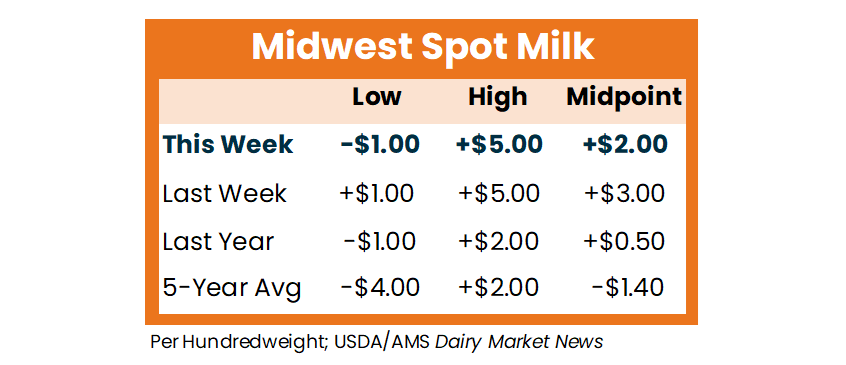
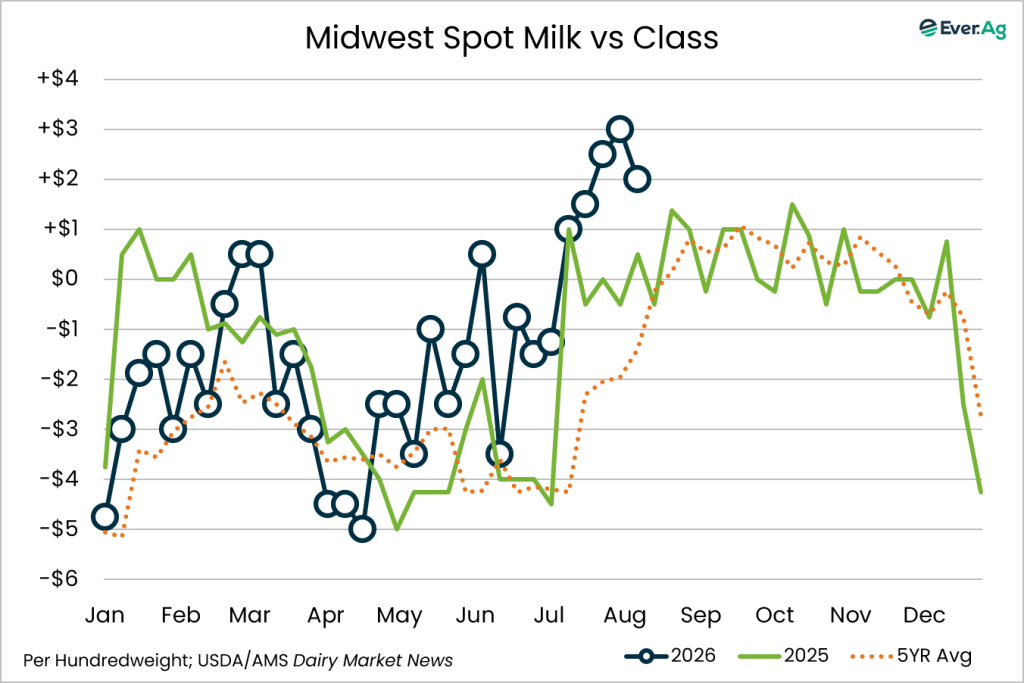
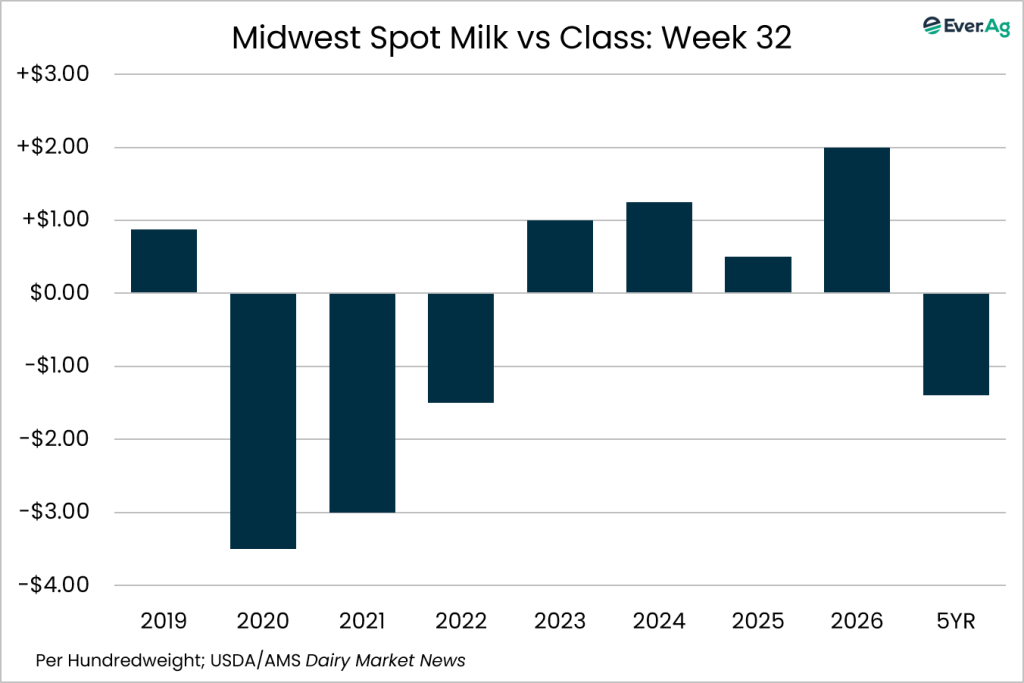
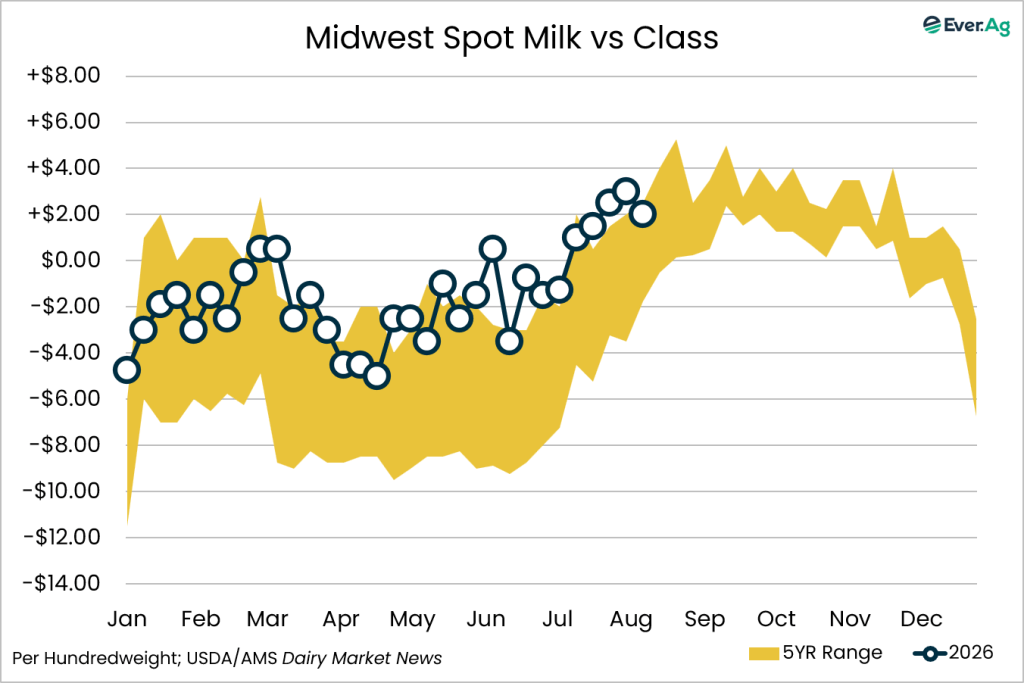
Milk production in the Central region is rebounding as cooler temperatures have returned, offering increased cow comfort. According to contacts, milk volumes are nearly back to the levels observed before the recent spell of higher temperatures. This increase in production comes with a rise in Class I milk demand, as the region prepares for schools to reopen and processors ramp up. Class III milk output remains steady, with spot loads available over the weekend, due to unexpected downtime at some processing facilities. This opened some availability in the spot market. Cheesemakers report stable production and indicate demand for mozzarella is particularly strong. Spot prices for Class III milk range from $1-over to $5-over Class, reflecting ongoing stability
EAST
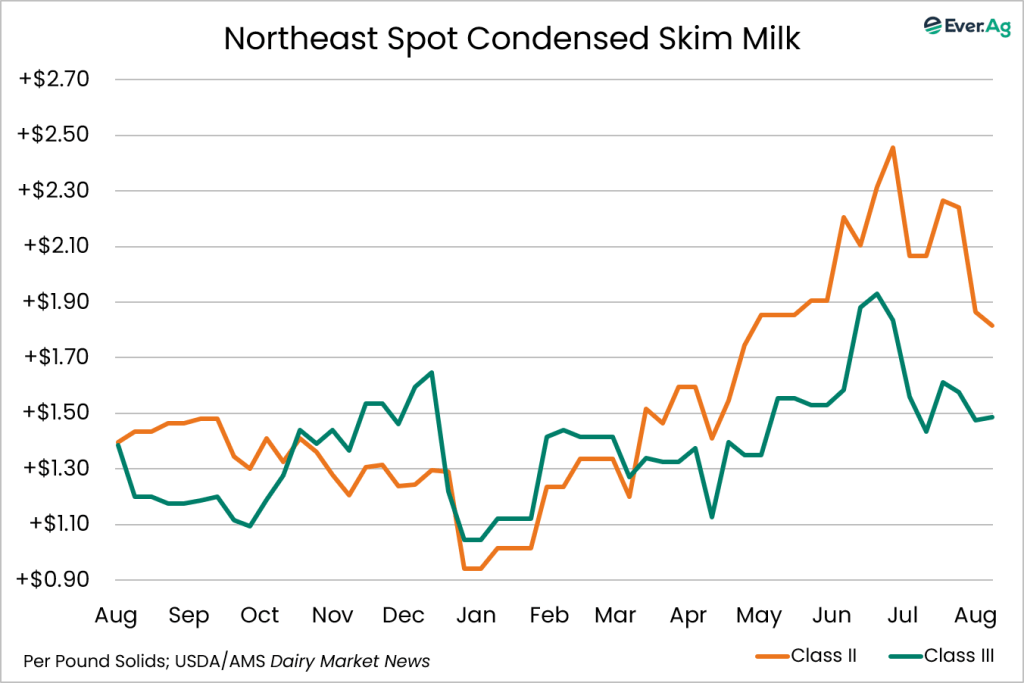
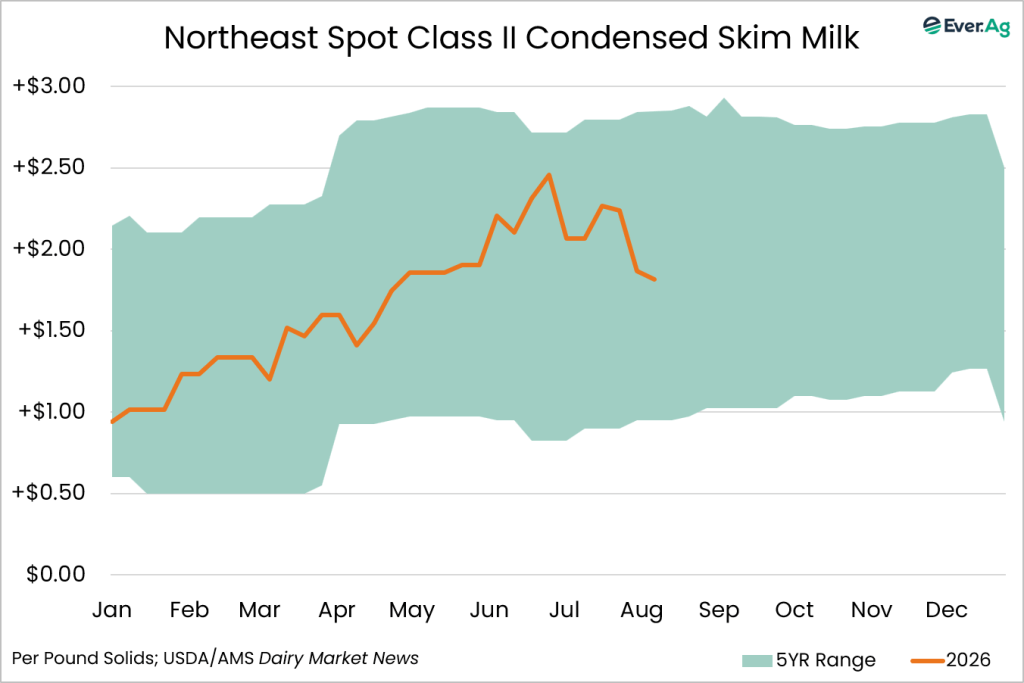
Milk supplies improved this week as recently shut-in facilities returned to near previous capacity. With those plants back online, balancing facilities reported additional room for intakes, and milk flows stabilized across the region. Class I demand is starting to increase as schools prepare to reopen, though there are no reports of Class I drawing milk away from other uses. Bottlers note whole milk demand for school programs may rise once schedules resume, but current effects on component availability remain minimal. Class II demand is steady. The region is now moving out of the primary ice cream production season. As seasonal ice cream manufacturing tapers, the strong summer pull on cream is easing. Nevertheless, Class II users continue active cream and condensed skim purchasing for cultured and frozen dairy products. Class III supplies are steady, as cheese demand remained unchanged across retail, bulk, and foodservice channels. Class IV cream supplies for butter were ample, allowing churns to run consistent production schedules.
WEST
No changes in milk production are reported this week for California. Spot milk load availability is tighter. Processors in the Central Valley are busy handling milk intakes at their production facilities. Farm level milk output in Arizona and New Mexico is lighter. Some production downtime in the area is reported, loosening spot milk load availability. Milk production in the Pacific Northwest is lighter. Some stakeholders report smoke from fires is negatively impacting milk output/dairy operations, while others indicate the fires are not near the cows. Manufacturers note milk supplies as tighter. Farm level milk production in the mountain states of Idaho, Utah, and Colorado is lighter. Smoke from fires in Oregon is negatively impacting cow comfort in Idaho for some dairy farmers. Colorado handlers note hotter overnight temperatures are negatively impacting cow comfort. Milk supplies are tighter in the mountain states. Class I demand is stronger, with some educational institutions starting soon. Class II, III, and IV demands are steady. Stakeholders describe cream supplies as balanced or tighter.
Questions or concerns? Please contact Ever.Ag Insights at insights@ever.ag