Here’s what USDA/AMS had to say:
Midwest:
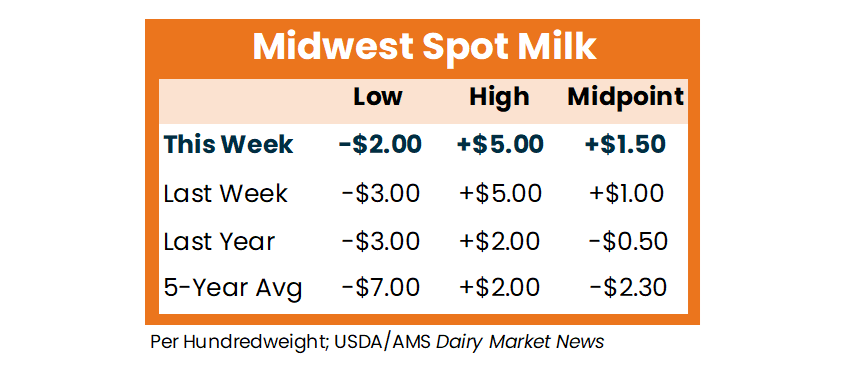
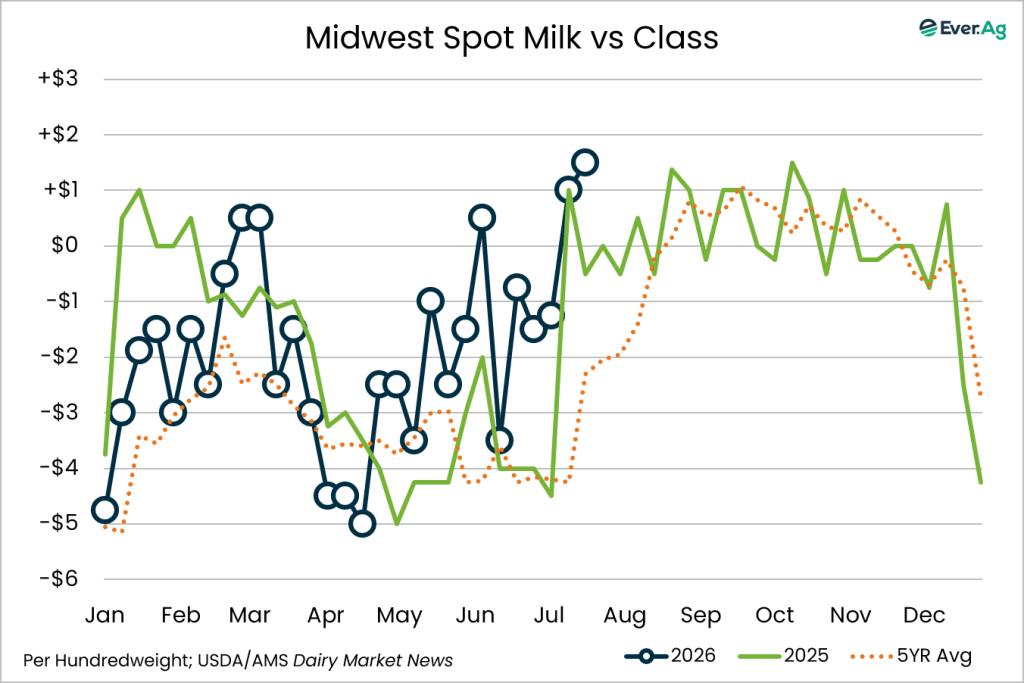
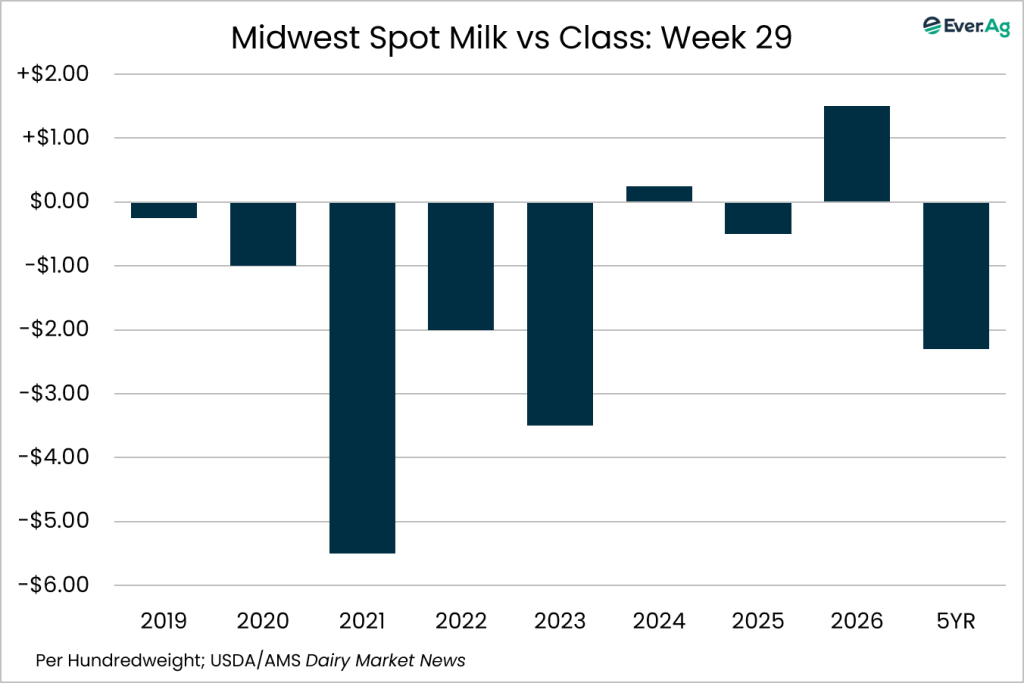
Summer heat continues to negatively impact milk output in the Central region. Some contacts report that downtime at plants is leaving some spot milk available in local markets but offers are lighter overall this week. Demand for Class I milk is steady to lighter, as some plants in the region have unplanned downtime this week. Demand is strong for Classes II and IV. Some cheesemakers in the region say they are looking for additional spot milk, to maintain full production schedules while milk output continues to decline in the region. Class III spot milk offers are limited, though some plant managers say they continue to secure spot volumes at discounted prices from nearby plants with downtime. Class III spot milk prices range from $2-under to $5-over this week. Milk component levels are declining, negatively impacting cream production.

EAST
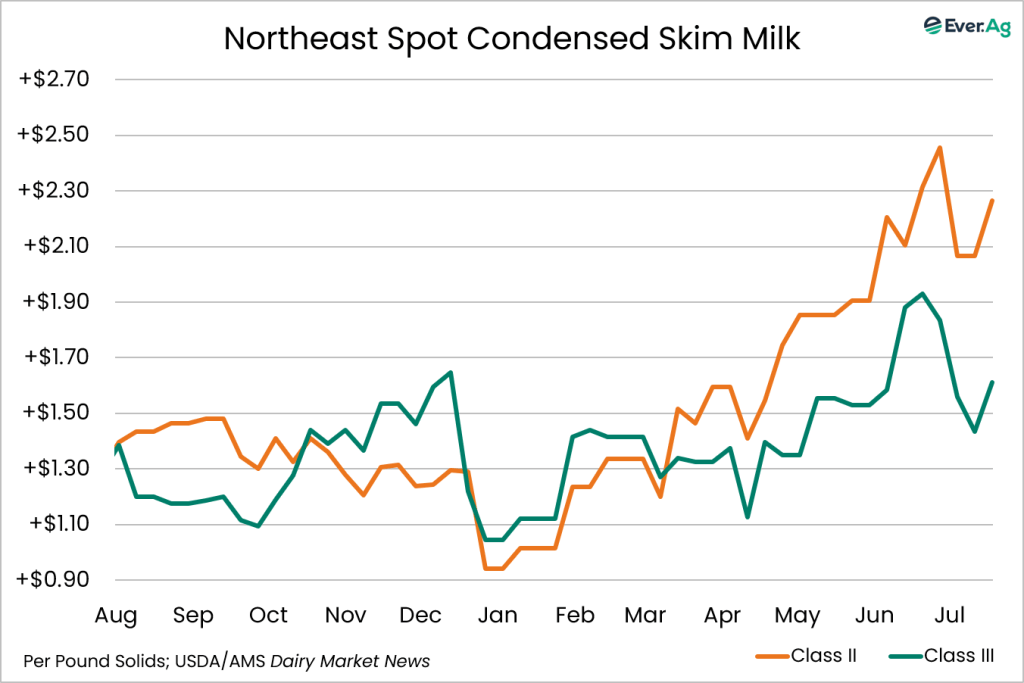
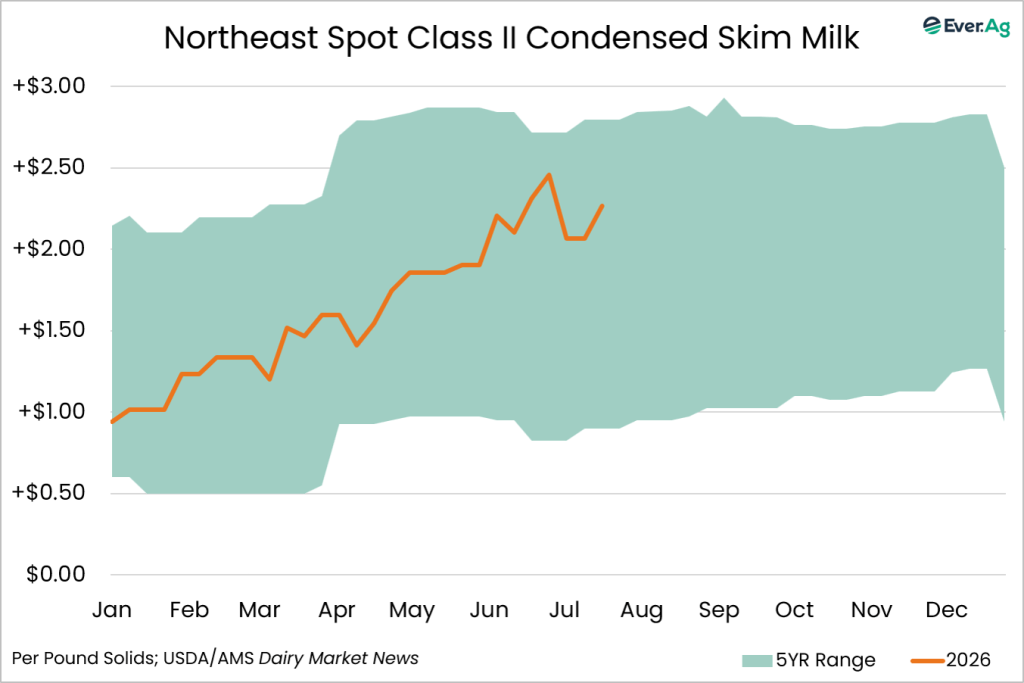
Milk production in parts of the eastern dairy region is being affected by an abnormally high heat wave, particularly in the PA area, creating some uncertainty in short-term output. Multiple facilities in the region are experiencing unplanned downtime, resulting in milk and cream being diverted to other processors. Class II is absorbing much of the available cream as ice cream manufacturing continues through July at peak seasonal levels, and yogurt demand remains steady. Within Class III, fluid supplies remain adequate for cheese production, which is experiencing its usual seasonal reduction in July. Class IV fluid availability is seasonally lighter as summer cream demand for butter continues to ease, with churns now operating five days a week.
WEST
California milk production changes are mixed for week 29. Some processors report milk intakes are above expectations for July. Year over-year milk production is up. Manufacturers in the state report some facilities are running into production issues, which is making spot milk loads more available. In the Central Valley, open processing capacity is tight. In Arizona and New Mexico farm level milk output is lighter. Open processing capacity is tighter as some equipment issues are being worked through. Week-to-week milk production in the Pacific Northwest varies from steady to lighter. According to the latest milk production report from the National Agricultural Statistics Service, the number of milk cows increased for Oregon and decreased for Washington in May 2026 compared to the same month last year. The report also shows a 7.1 percent milk production increase for Oregon. Handlers in the mountain states of Idaho, Utah, and Colorado, report farm level milk output is past peak volumes. Idaho had its hottest weekend of 2026, which processors indicate take a toll on cow comfort, milk output, and milk components. Spot milk loads are tighter. Some manufacturers’ production schedules are lighter this week in the mountain states. Class demands are steady throughout the region.
Questions or concerns? Please contact Ever.Ag Insights at insights@ever.ag