Here’s what USDA/AMS had to say:
Midwest:
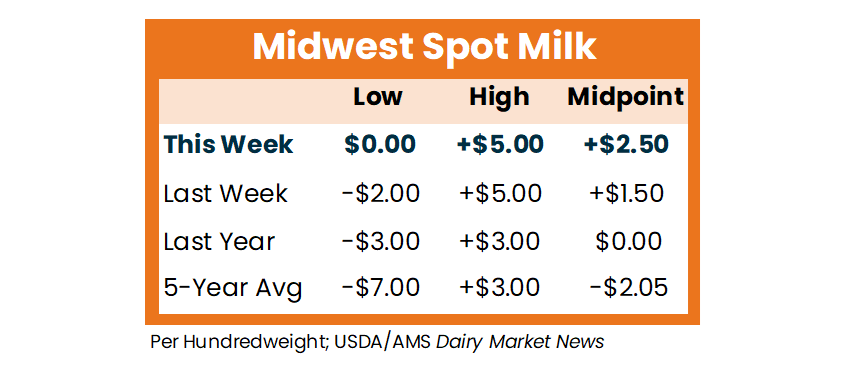
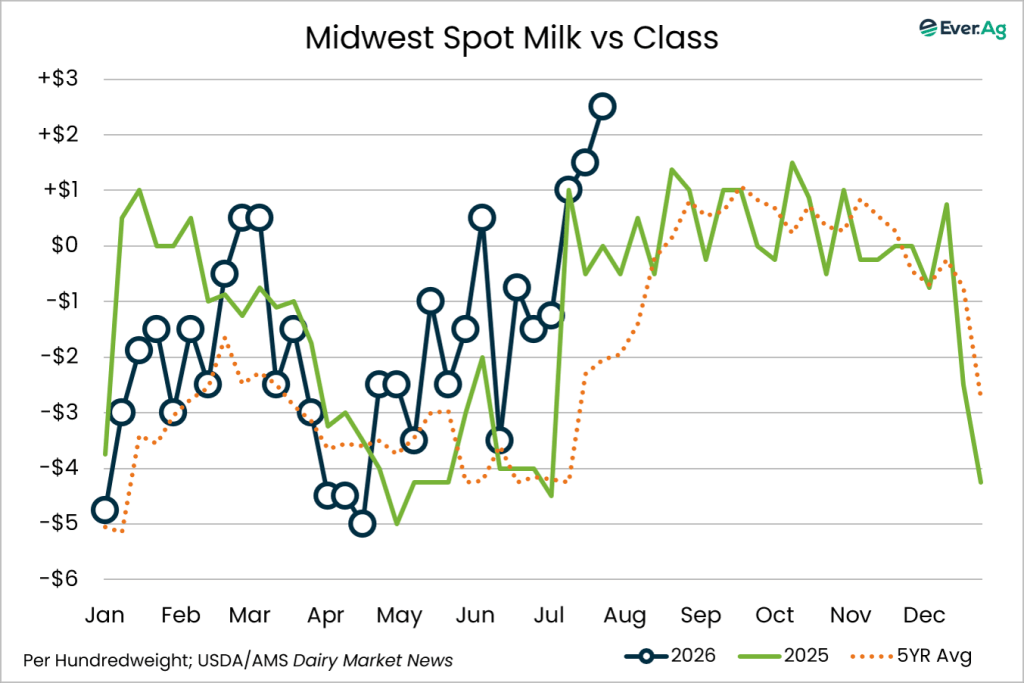
Milk output is seasonally declining in the Central region. Stakeholders say there is less spot milk available compared to last week. Class I demand is light, but some contacts say it will pick up in the coming weeks as bottlers prepare for school children to return from summer break. Contacts report strong demand for Classes II and IV. The spot market for Class III milk is quieter, as cheesemakers say there are not many loads available. Prices for Class III spot milk range from flat to $5-over Class. Some cheesemakers say declining milk output has negatively affected their ability to run full schedules this week.


EAST
Milk production is low in the East region, but temperatures are returning to seasonal norms from the extreme heat in previous weeks. Milk is heavy into balancing plants this week, as some facilities experienced unplanned downtime, pushing additional volumes to available processors. Class III milk supply is mixed this week as some facilities were unexpectedly down, pushing milk to other facilities Production and demand from Class IV operations were reported unchanged from last week.

WEST
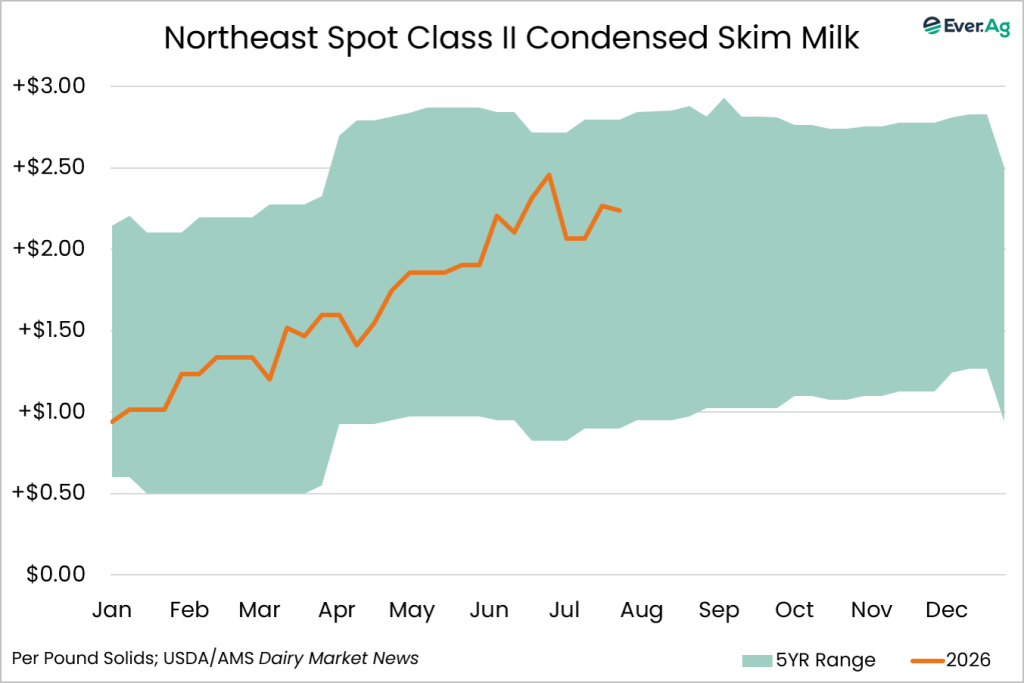
Milk production in California is lighter this week. Manufacturers report they are receiving contracted milk. Spot milk loads remain available. In the Central Valley, open capacity continues to be tight. Farm level milk output in Arizona and New Mexico is lightening as well. Spot loads are more available due to unforeseen pauses in production schedules. A few manufacturers note selling condensed skim milk loads due to inventories building from processing equipment issues. Milk production in the Pacific Northwest varies from steady to lighter. Spot milk loads are generally tighter. According to the newest milk production report from the National Agricultural Statistics Service, the number of milk cows again increased in Oregon and decreased in Washington in June 2026 compared to the same month last year. The report also shows an 8.1 percent milk production increase in Oregon. Temperatures remain hotter, reducing cow comfort and lightening farm level milk output in the mountain states of Idaho, Utah, and Colorado. Idaho handlers note 2026 milk output as stronger than 2025 milk output thus far, but also that milk volumes are manageable. Demand for all Classes is steady throughout the region.
Questions or concerns? Please contact Ever.Ag Insights at insights@ever.ag