Here’s what USDA/AMS had to say:
Midwest:
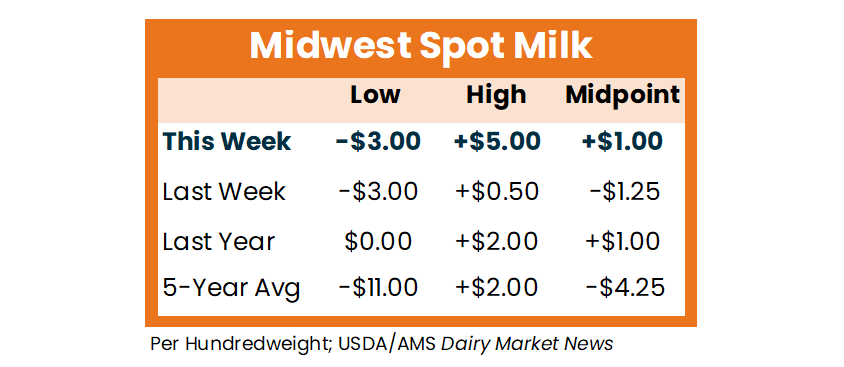
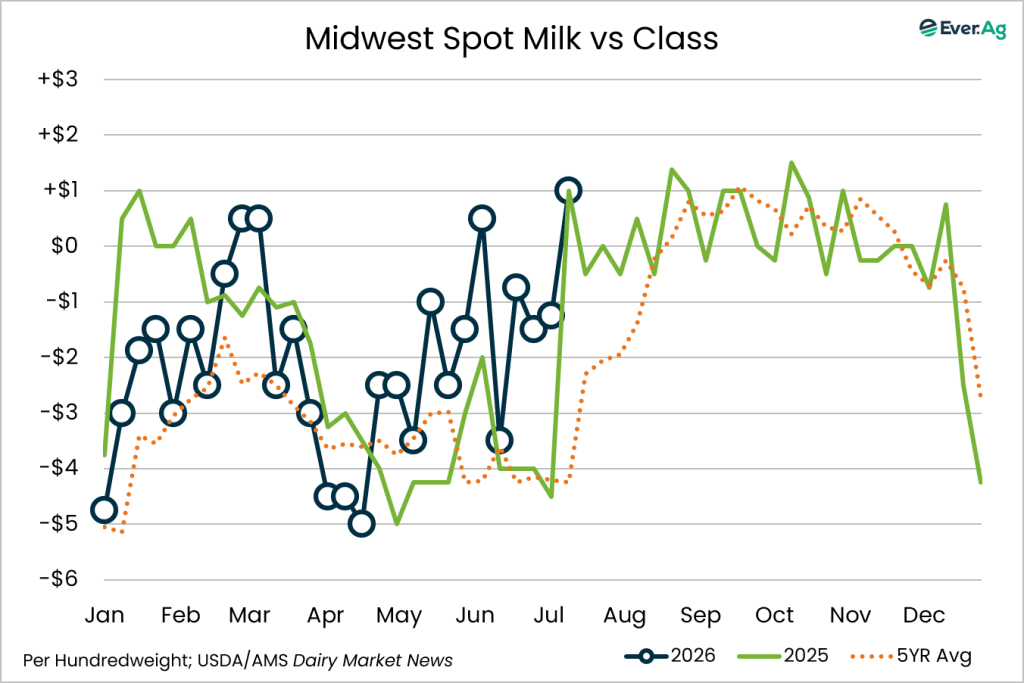
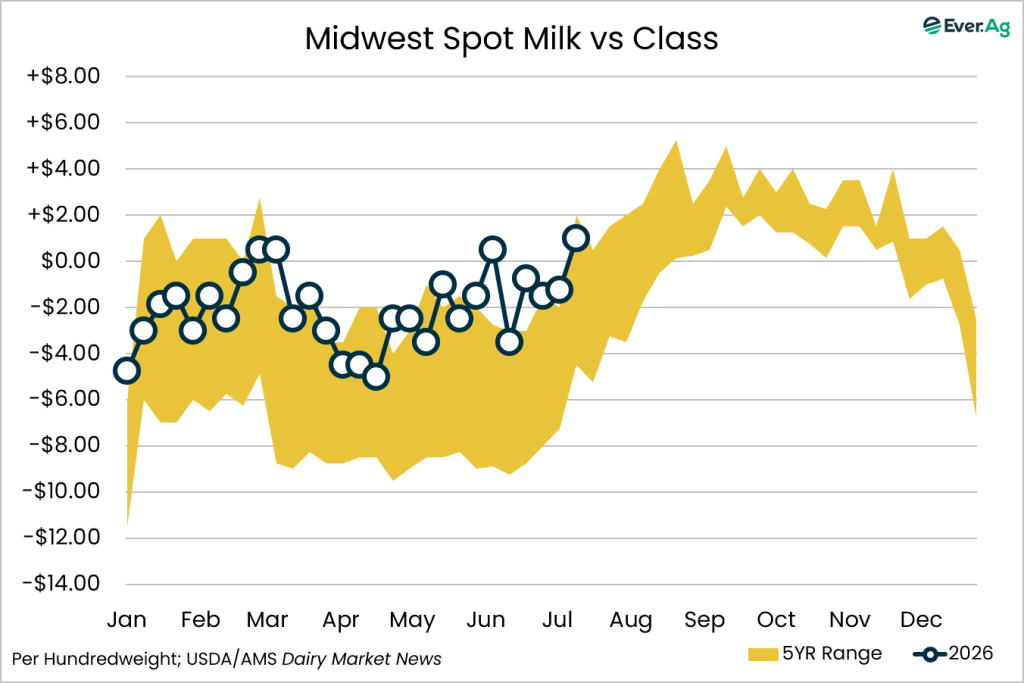
In the Central region high temperatures are contributing to declining milk output. Some plants had downtime for Independence Day last week but are running full schedules this week. Class I demand remains seasonally light, while demand for Classes II and IV is unchanged. Class III demand is increasing. Some cheesemakers in the region are searching for additional spot loads of milk, but volumes are difficult to find, limiting spot trades this week. Spot prices for Class III milk range from $3-under to $5-over Class. The top of the range increased from last week as some cheesemakers are hesitant to sell spot loads. Cheesemakers are running full production schedules, but some say they will need additional spot milk in the coming weeks. Milk component levels are declining in the region, negatively impacting cream production.

EAST
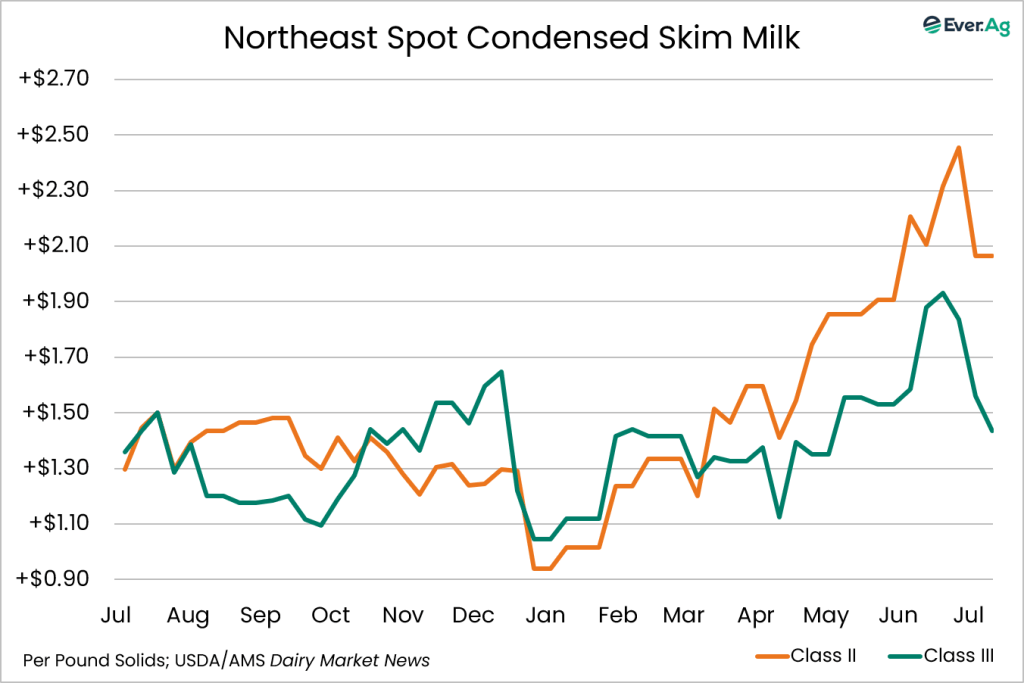
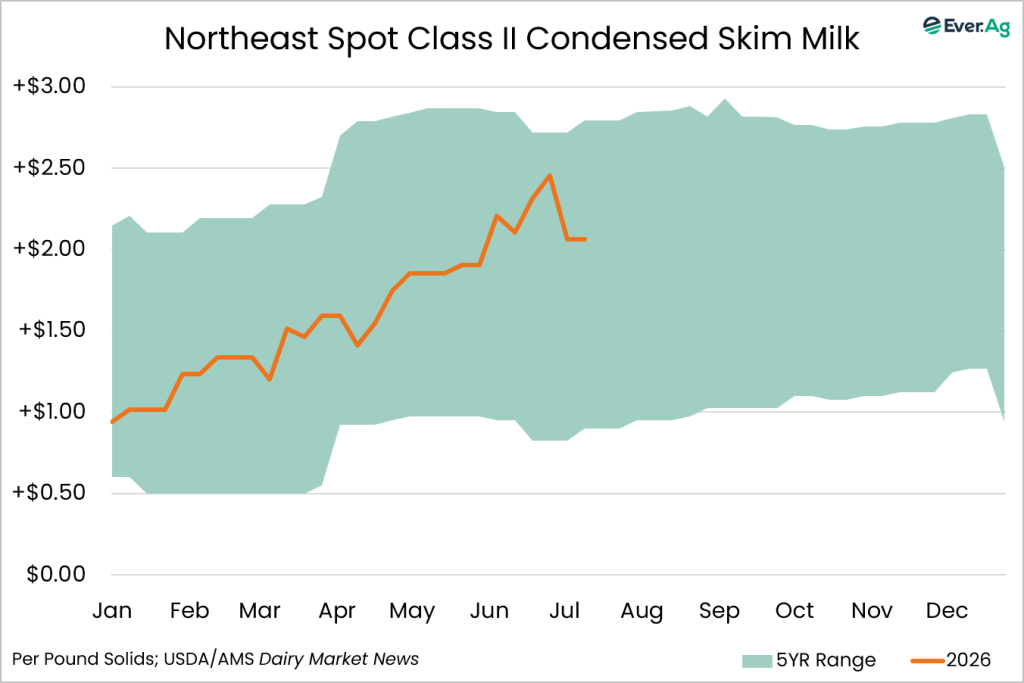
Milk processing is returning to more typical levels this week after last week’s holiday. Reports indicate that heat is affecting milk volumes, component levels, and transportation, with some tankers being rejected for temperature issues, when moving milk and cream long distances. Class II is absorbing most of the available cream as ice cream manufacturing continues through July, and yogurt demand remains steady. Ice cream manufacturing is currently at its peak. Within Class III, cheese demand is reported as declining, typical for July. Reduced demand is also being influenced by the conclusion of contracts from buyers in the Midwest. Class IV to make cream for butter manufacturing is seasonally declining. Buyers of condensed skim benefited during the holiday week from excess supplies, which are returning to more restrictive volumes again.
WEST
California milk production is seasonally decreasing but still supplying the needs of dairy commodity manufacturers. Processors report milk and cream production is high enough to push back any anticipated equipment downtime at their facilities. Stakeholders indicate no changes to spot milk load availability. Farm level milk output is lighter in Arizona. Some processing equipment issues are reducing manufacturing capacity, making spot loads of milk more available. Farm level milk output is lighter in New Mexico. Milk production in the Pacific Northwest is seasonally lighter. Manufacturers report contractual intakes are being received, but spot loads of milk are tight. Stakeholders note temperatures are heating up for dairy farms east of the Cascades and triple digits are forecasted for at least parts of Idaho, anticipating a toll on milk production. Utah and Colorado handlers indicate week-to-week milk production varies from steady to lighter. Spot loads of milk are available in the mountain states. Class I, II, III, and IV demands are steady.
Questions or concerns? Please contact Ever.Ag Insights at insights@ever.ag