Here’s what USDA/AMS had to say:
Midwest:
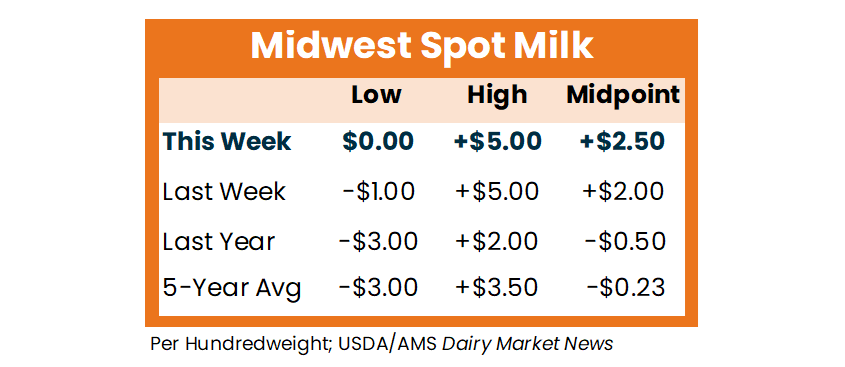
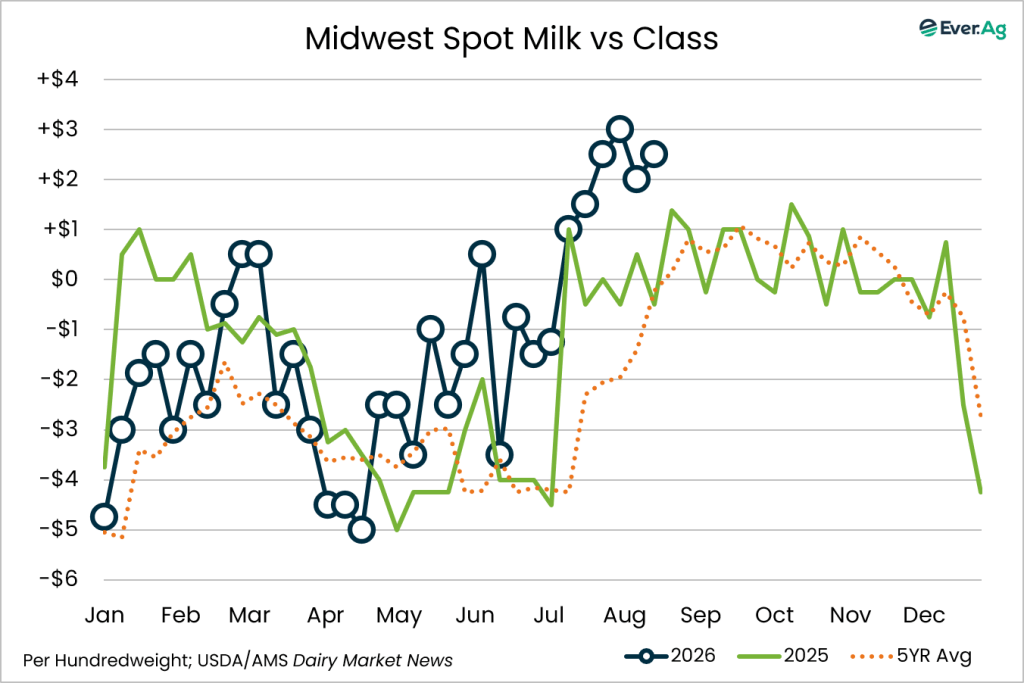
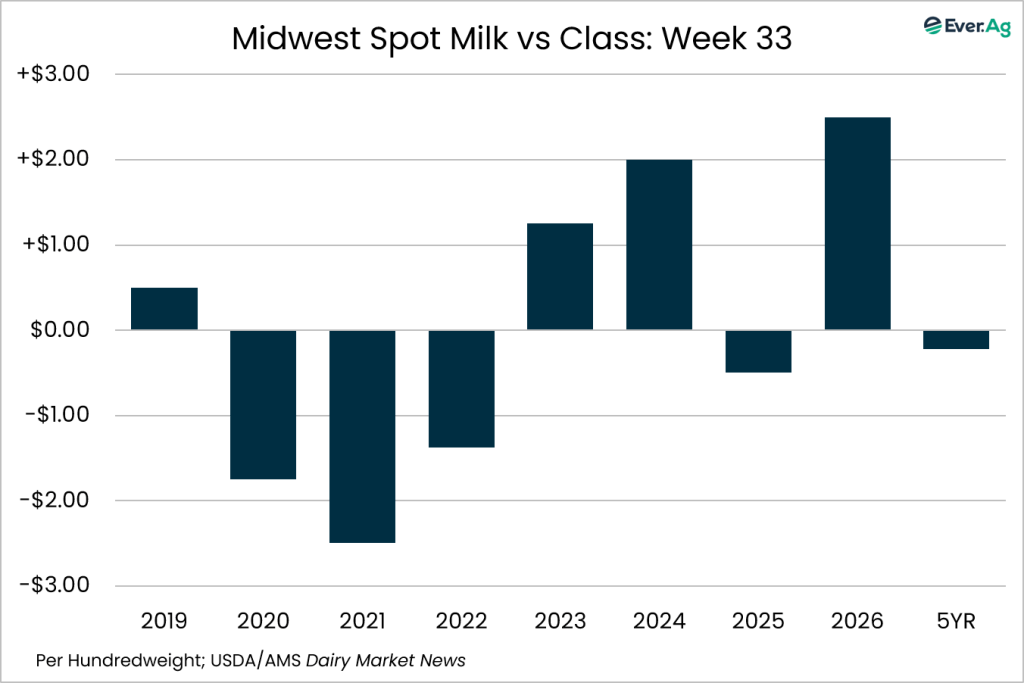
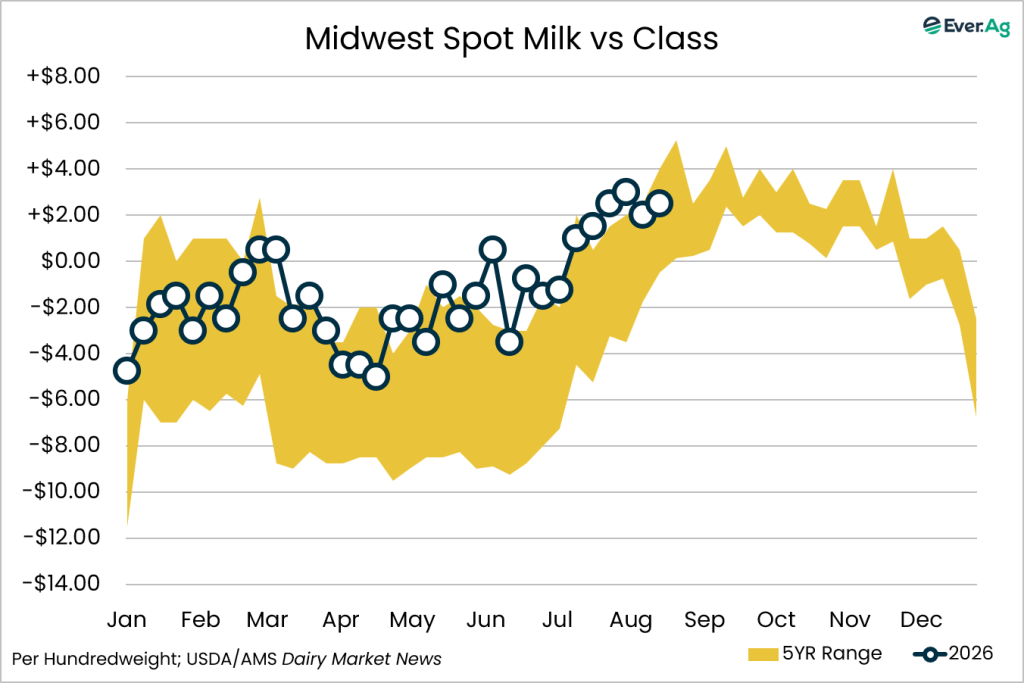
Contacts in the Central region report recent mild weather has improved cow comfort, contributing to steadier milk volumes. Class I demand is strengthening as bottlers prepare for upcoming school openings, keeping spot availability tight. Some processors note slightly long spot milk volumes, with a few loads moving at class price. Spot milk pricing moved higher at the bottom of the range, while the upper end held firm at flat-Class to $5.00 over. Despite gradually tightening milk supplies, cheese production remains active, supported by firm demand. Class II and Class IV demand remain strong across the region.
EAST
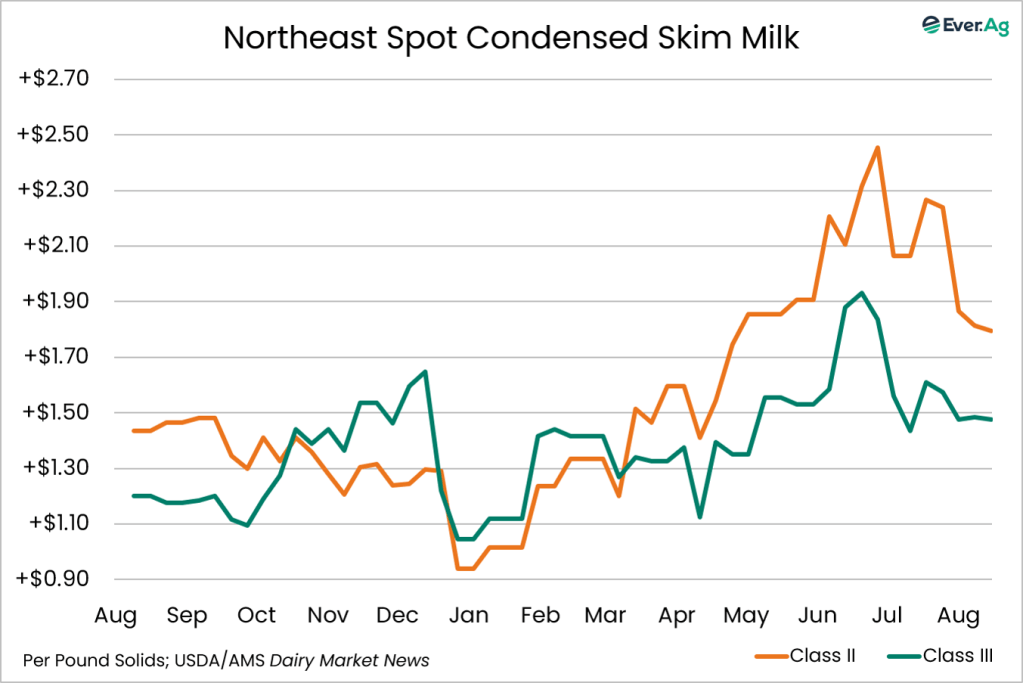
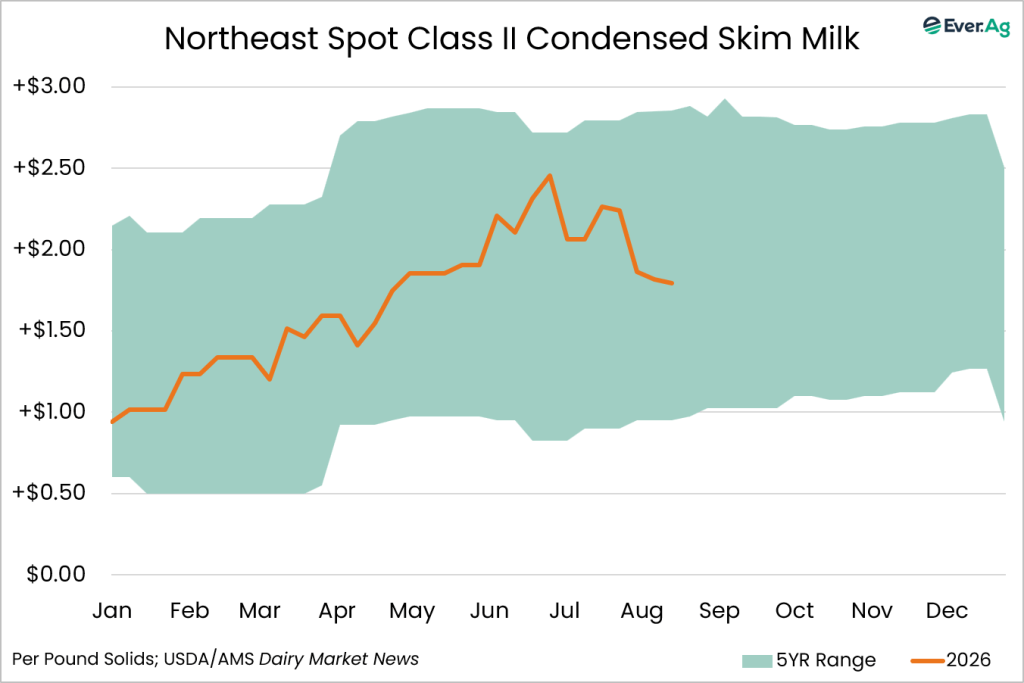
Fluid availability remains sufficient across the Eastern Region and, according to contacts, has not been notably affected by the recent hot weather. Class I demand is trending upward as schools reopen on a staggered schedule. Earlier starts in Lower Eastern and Southern districts are already underway, Philadelphia is scheduled to open later this month, and New York City and Boston are set for early September. Despite the gradual increase in Class I bottling, no significant volumes are reported to be pulling fluid away from manufacturing channels. Handlers note that whole milk demand may climb as school calendars normalize, though current impacts on components remain minimal. Class II demand is steady, supported by ample supply, with manufacturers continuing to purchase cream and condensed skim for cultured and frozen products. Class III supplies are steady, supported by consistent cheese operations, while Class IV cream supplies remain abundant, allowing churns to run uninterrupted ahead of the typical late-season supply and demand imbalance tied to holiday demand.
WEST
Milk and cream production are mixed in the West, and output is being affected by hot weather, fires, and smoke. California milk production is showing small increases week-over-week, with some producers reporting planned maintenance. In the mountain states, high temperatures persist and are not cooling off at night. Farm-level milk output in Idaho is tight, while contacts in Utah report heavy milk production despite ongoing fires and smoke. Production in the Pacific Northwest is steady. Class I demand is increasing as schools reopen. Class II demand is soft, while Class III and IV demands remain steady.
Questions or concerns? Please contact Ever.Ag Insights at insights@ever.ag