Here’s what USDA/AMS had to say:
Midwest:
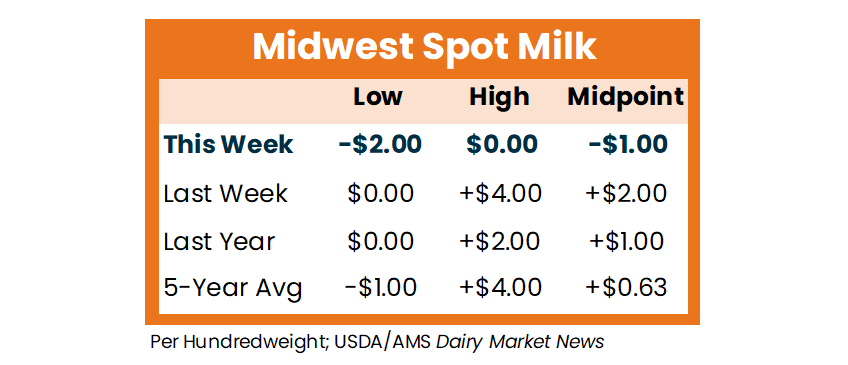
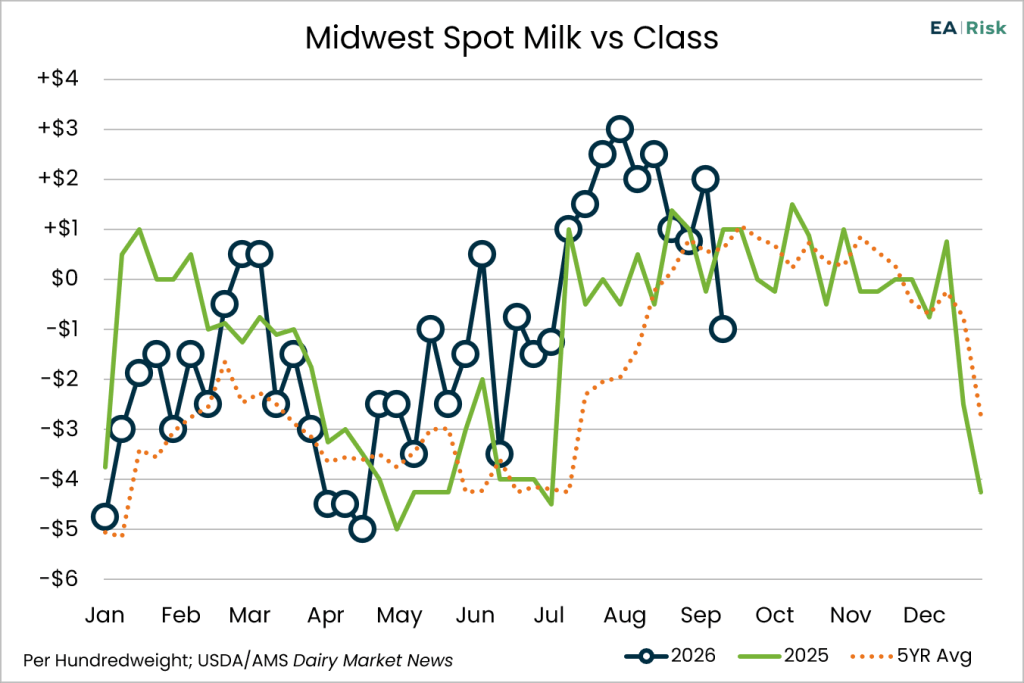
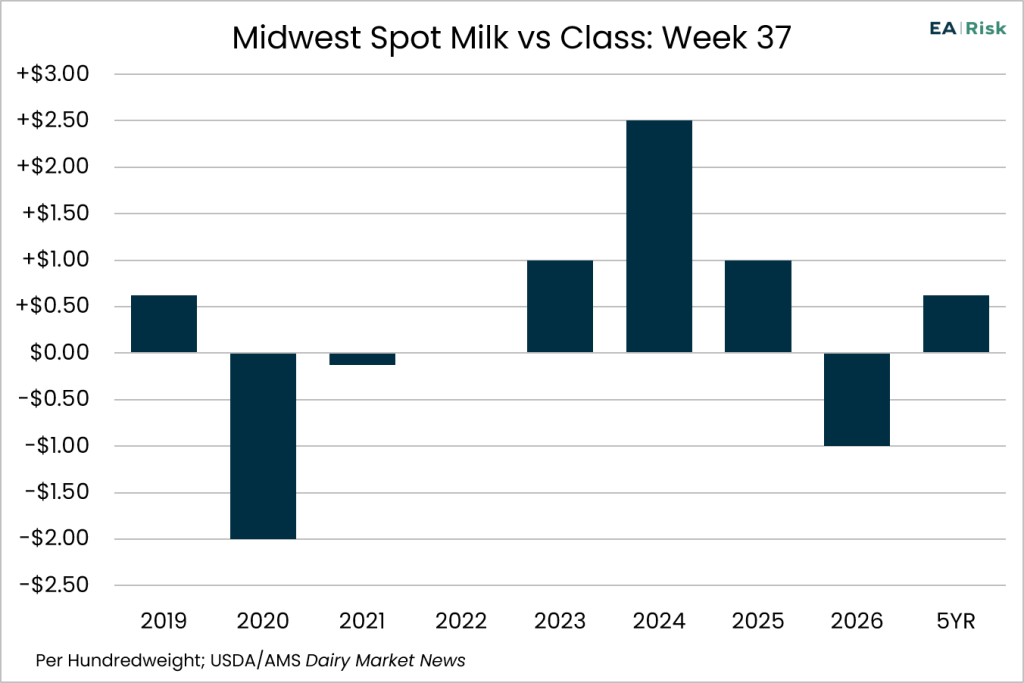
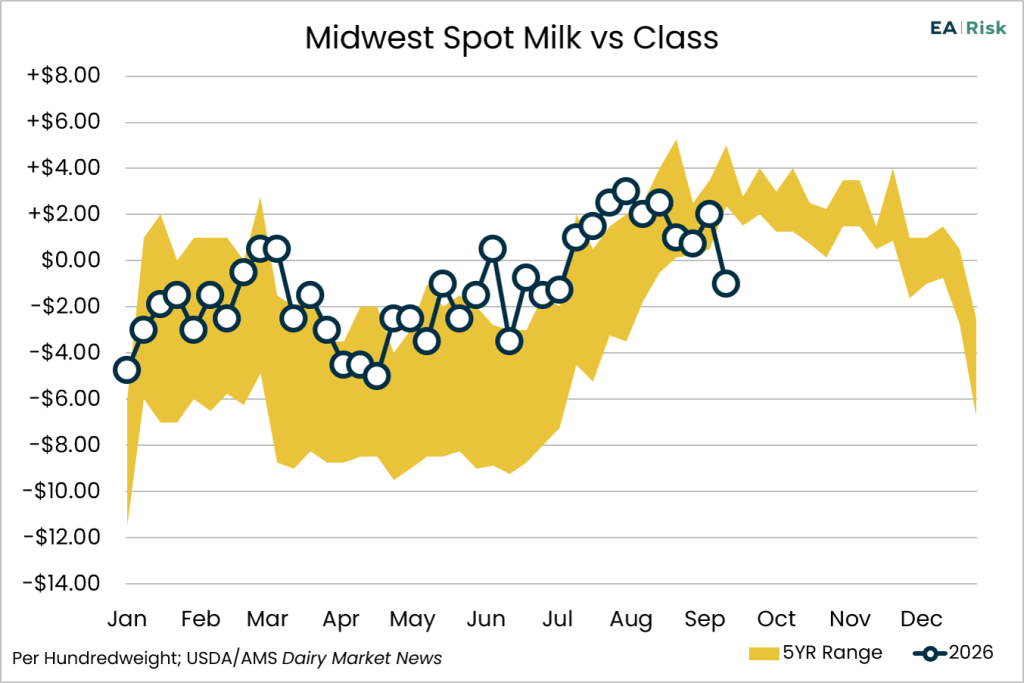
Milk supply in the Central region tightened slightly this week, as another stretch of warmer temperatures impacted the region. Class I processors continue to procure portions of the spot loads in the region. Stakeholders report they can meet current demand using internal milk supplies. Early-week downtime for Labor Day, led some plant managers to offer discounted spot loads. In the Southwest, milk supplies are notably tighter, and contacts report an absence of spot load offerings. Spot milk prices were reported from $2.00 under to flat-class. Cheesemakers note production across the region is steady.
EAST
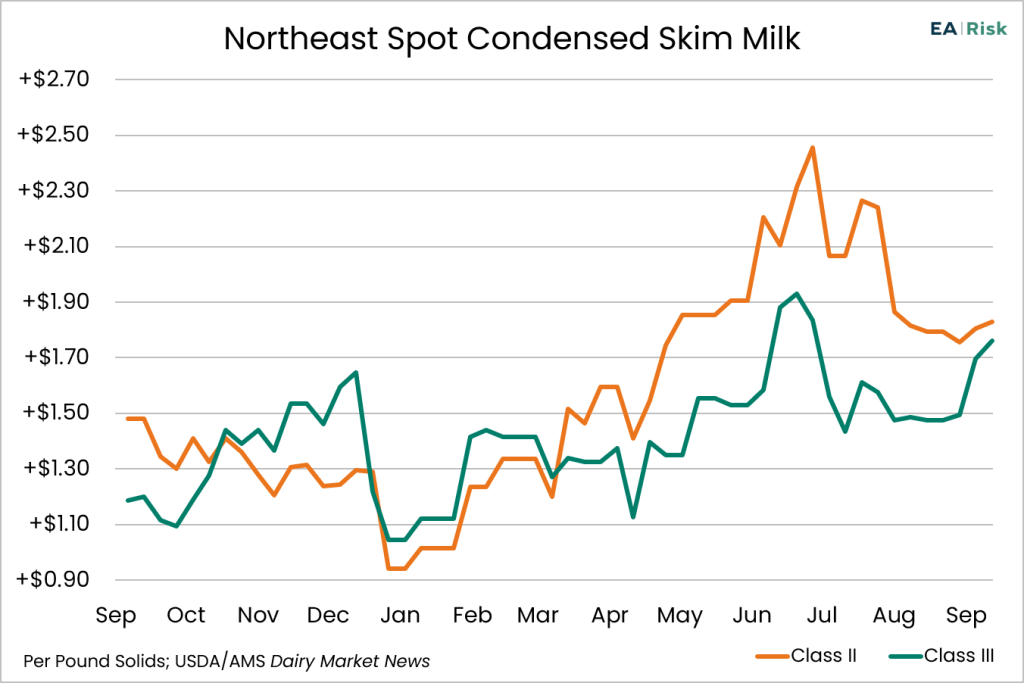
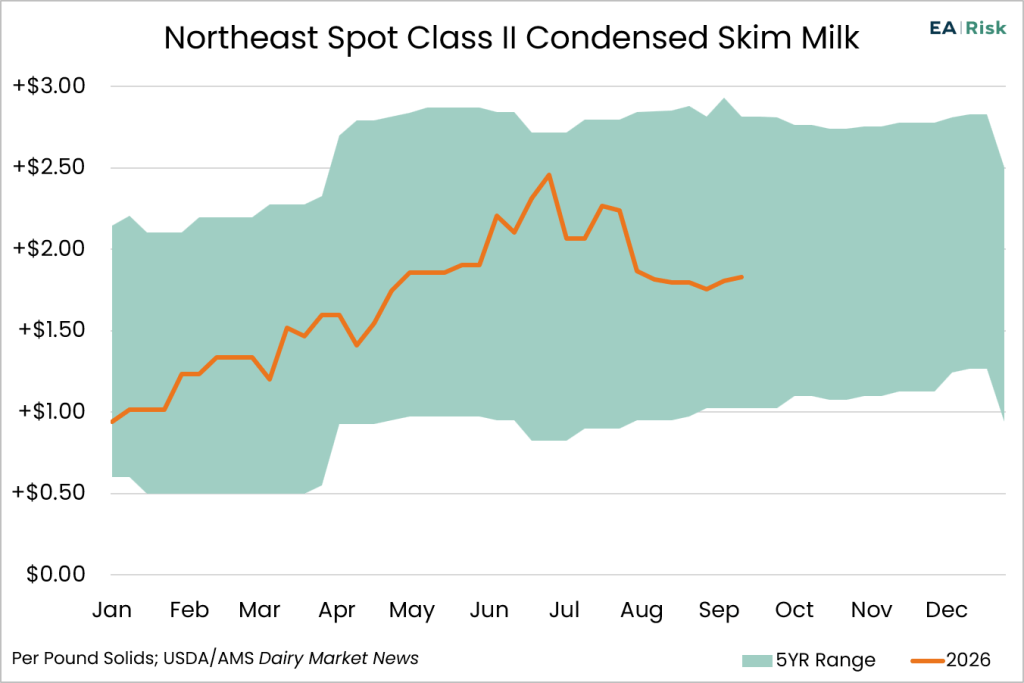
Milk volumes remain healthy as the region begins its seasonal transition to cooler weather. Fluid supplies are sufficient for current draws and all contractual obligations. With the holiday weekend, spot trading was less efficient. Ultrafiltration (UF) pulls remain strong. Class I demand is steady to firm as school bottling ramps up across major metro areas, with New York City schools opening this week. Class II continues seasonal draws. Packaged ice cream output is slowing, while yogurt production remains strong to meet ongoing demand. Cream cheese demand should increase soon, in line with holiday baking. Class III cheese operations are consistent, supported by steady milk availability across much of the region. Class IV butter churns are operating to fulfill the beginning of seasonal draws, and contacts note private-label production has increased to six days per week. Overall, the market tone is steady.
WEST
Western region milk production is steady for Week 37. California is experiencing high heat this week, resulting in a small, temporary decline in volumes. According to contacts, milk remains available despite seasonal decreases. The Northwest continues to trend cooler, supporting improved cow comfort and consistent milk output. The Southwest reports stable milk volumes with no holiday-related issues. Class I demand remains steady as the pipeline transitions from school bottling back to standard operations. Class II and Class III demand show early holiday baking preparation patterns, while Class IV demand has eased, with prices trending lower. Milk-fat components have recovered following prior weeks of heat stress. Contacts report that plant capacity currently exceeds the volume of milk being received.
Questions or concerns? Please contact EA Risk Insights at insights@ever.ag