Here’s what USDA/AMS had to say:
Midwest:
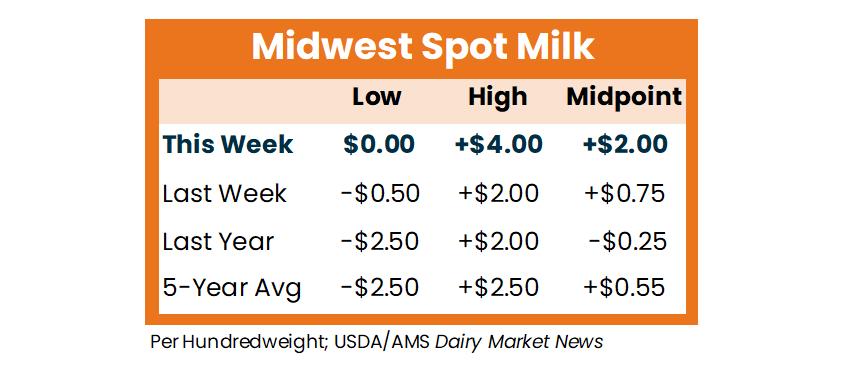
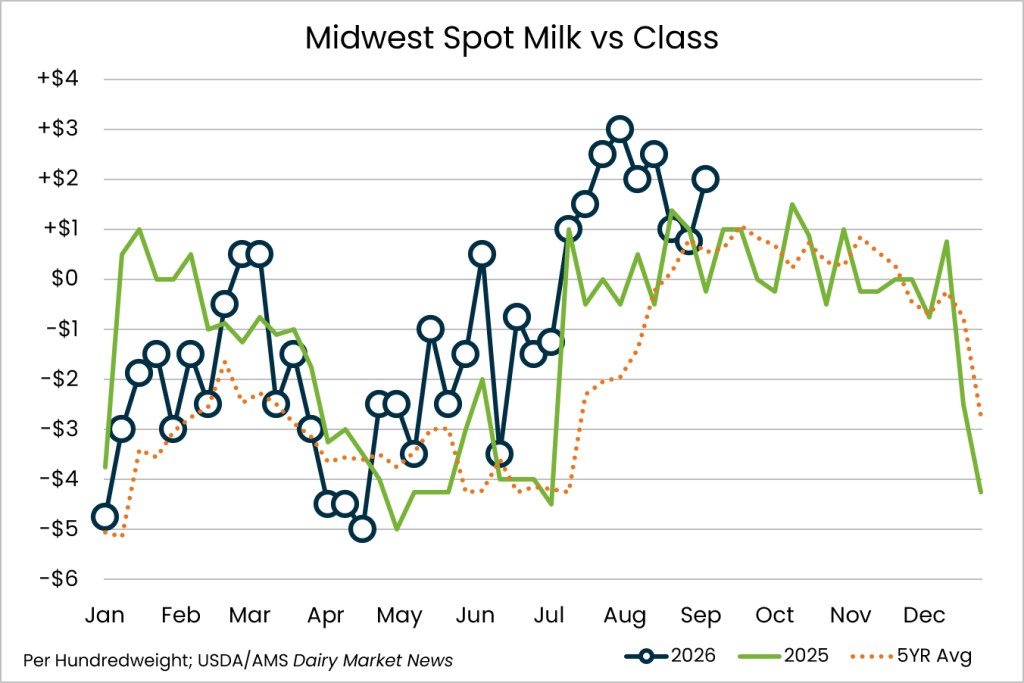
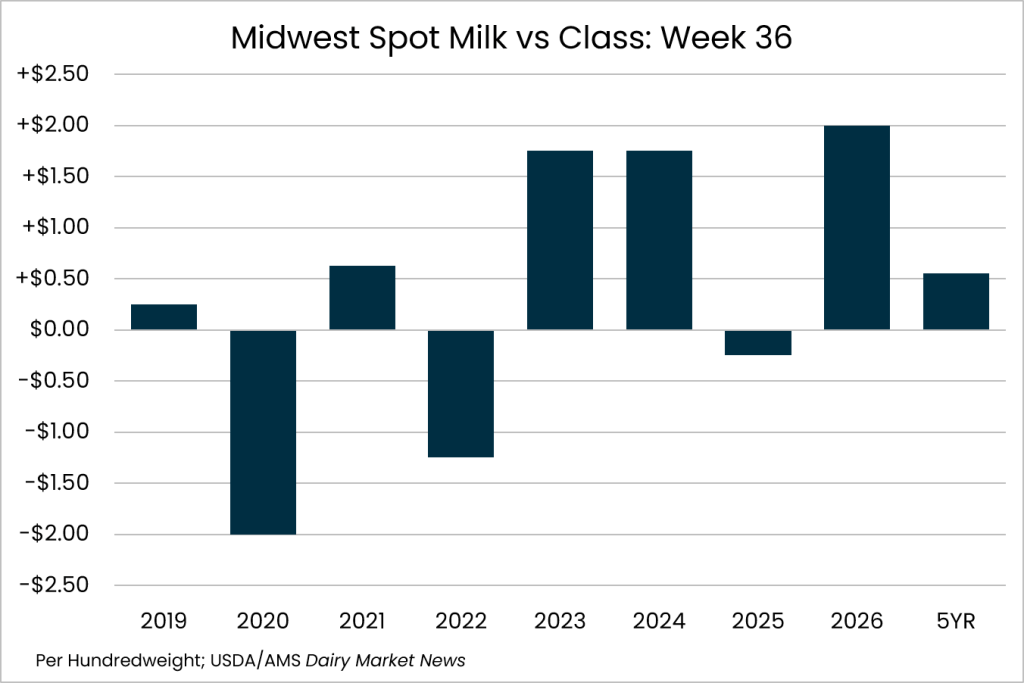
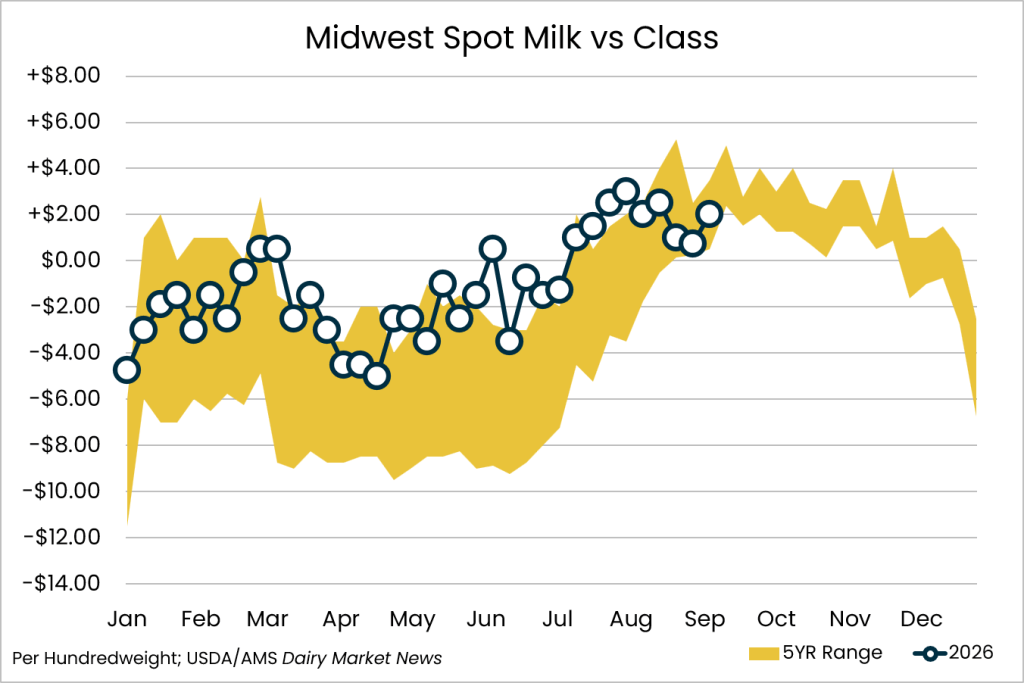
Milk supply in the Central region has become more available as mild weather conditions are supporting production and the approaching holiday weekend is improving supply. Stakeholders note milk volumes are holding firm within their networks, and bottling operations continue to pull heavier volumes as Class I demand strengthens with the school year beginning across much of the region. Spot milk remains available, though hauling constraints continue to limit some buyers’ ability to secure additional loads. Class III milk prices were reported from flat-Class to $4.00 over. Cheese plants across the region indicate operations are running smoothly, although they note limited spot milk purchases as in network volumes are sufficient to maintain production schedules.
EAST
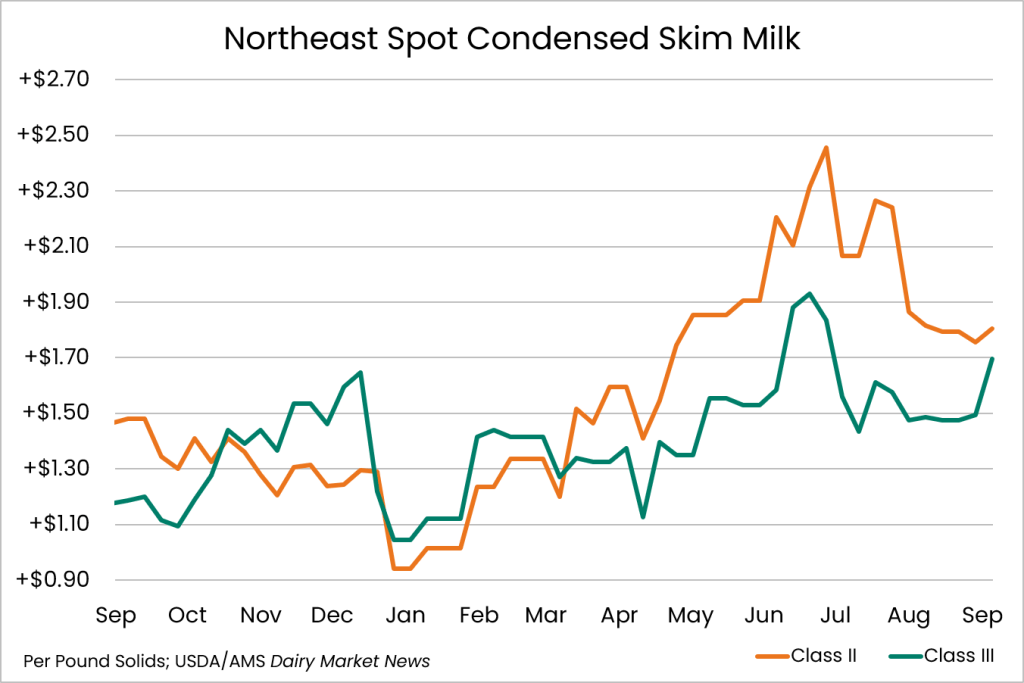
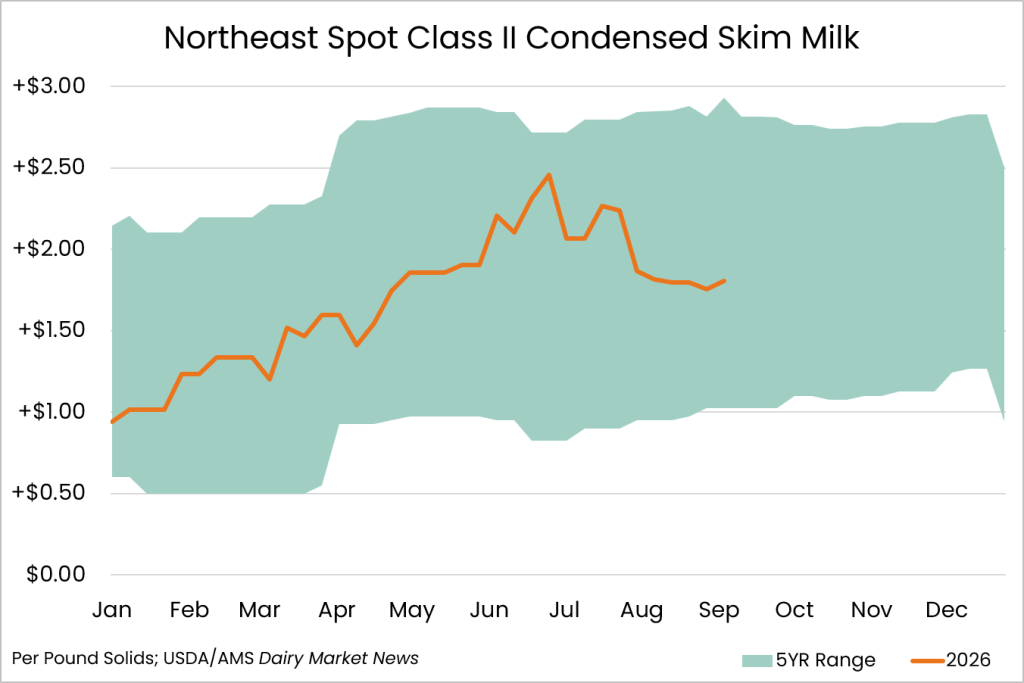
Milk production in the East is higher year-over-year and steady on the week. Fluid supplies are sufficient for current draws, though parts of New York remain tight with little surplus as plant demand outpaces farm growth. Ultrafiltration (UF) pulls remain strong. Class I demand is steady to firm as school bottling ramps across major metro areas, keeping plants on active schedules. Class II continues seasonal draws. Packaged ice cream output is slowing seasonally but demand remains strong. Available cream is clearing primarily to Class II. Class III cheese operations are consistent on steady milk availability across much of the region. Class IV butter churns are operating five days per week, aligning with milk and cream supplies and anticipated storage draws during the holiday season. Overall, the market tone is steady.
WEST
Milk and cream volumes have returned to seasonal norms now that peak heat has passed. Class I bottling remains focused on school demand and is expected to return to normal after Labor Day. California producers report milk output is down 6-8 percent from peak levels but expect recovery. This aligns with the National Milk Production report released August 21, 2026, which shows a 0.8-percent year-over-year decrease in California milk production. The report also notes fewer cows in the state but higher production per cow. In the Northwest, both cow numbers and milk per cow have increased, except in Oregon, where both metrics declined. Contacts note planned herd expansion to meet demand and support new and expanded manufacturing capacity in the region. The Southwest also reports year-over-year increases in cow numbers and milk per cow, though rising freight costs remain a concern. Class III spot and contractual milk volumes are arriving as expected. Class IV milk and cream remain consistent, with improved milk-fat components.
Questions or concerns? Please contact Ever.Ag Insights at insights@ever.ag