Here’s what USDA/AMS had to say:
Midwest:
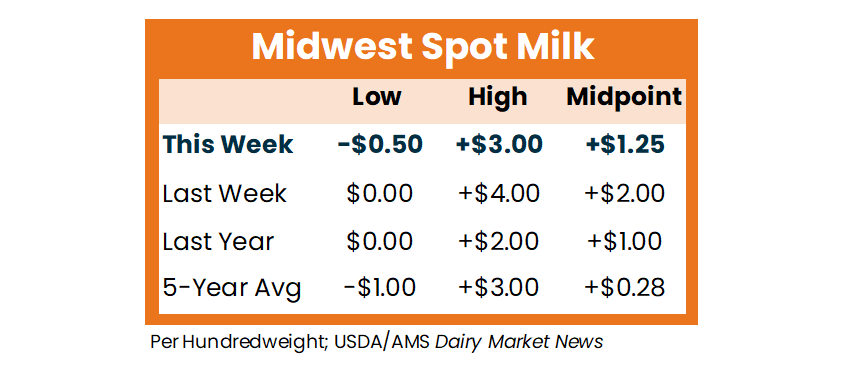
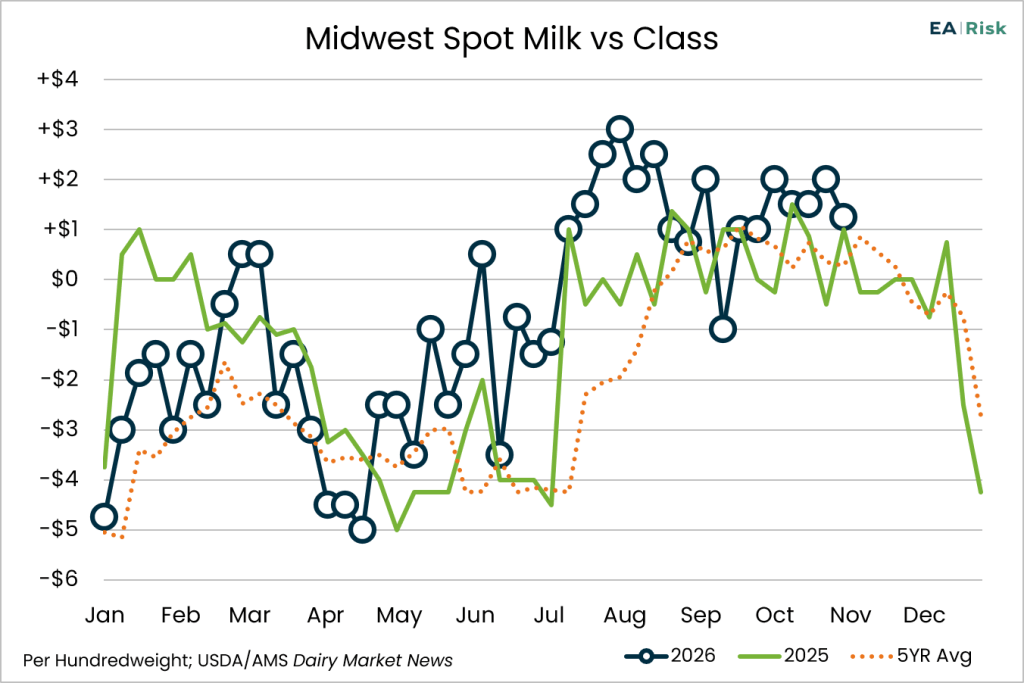
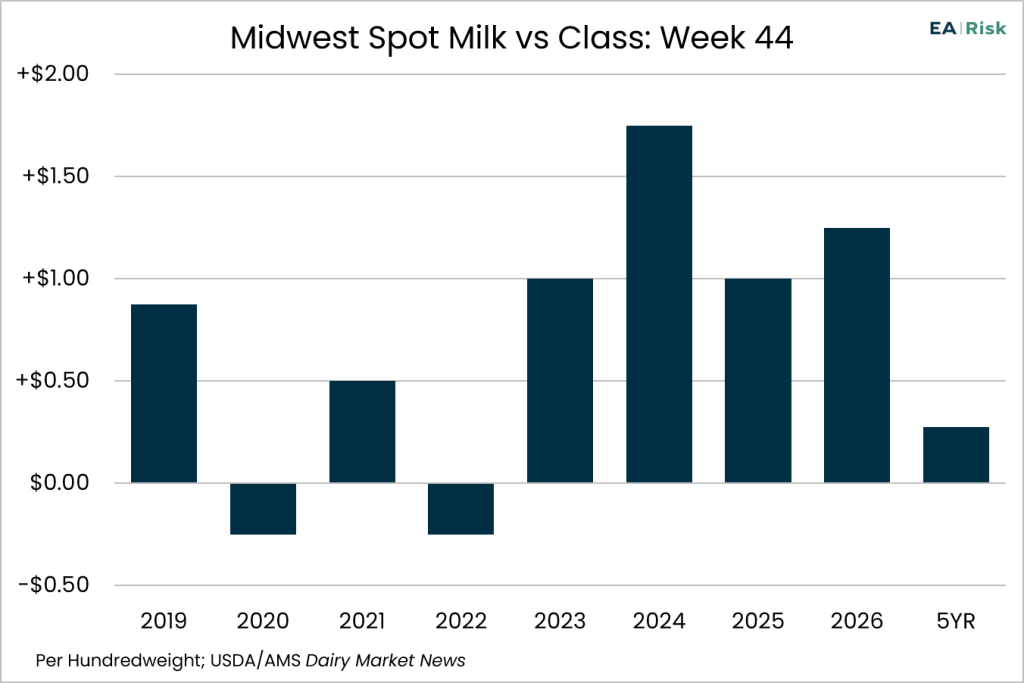
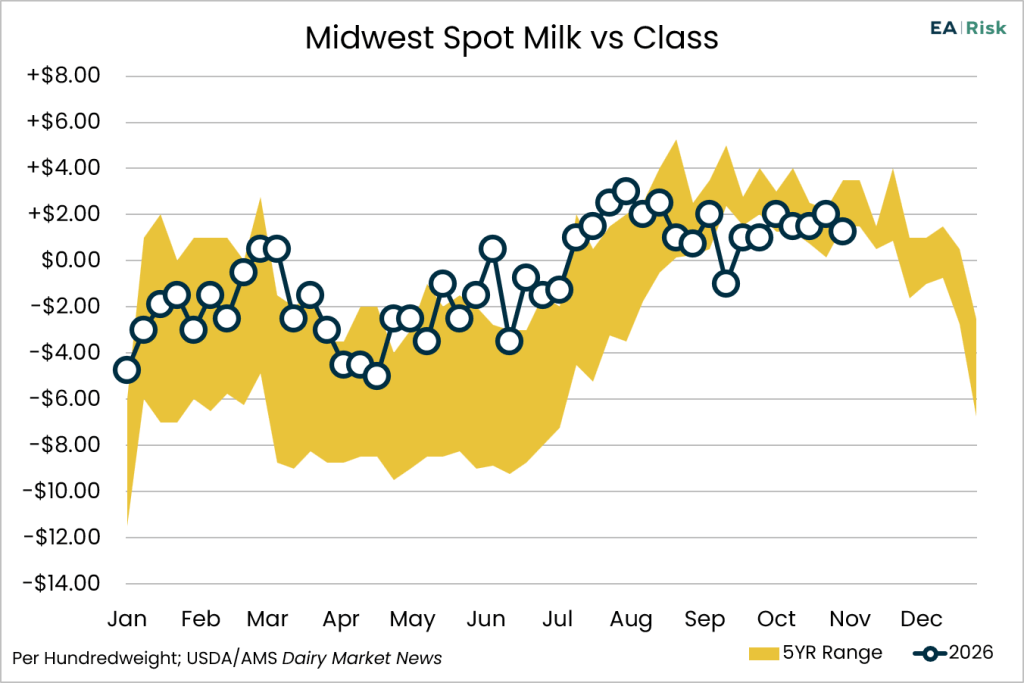
Central region milk availability varies by area. Some contacts indicate milk supplies are tight in the Upper Midwest as production demand increases, while other contacts mention increased milk supplies in more southern locations. Seasonal dips in the weather are contributing to increased cow comfort and higher milk components. Class I demand is steady and production schedules remain busy. Class II production is increasing. Contacts mention increased spot purchases of milk in preparation for the upcoming winter holiday demand. Class III production is strong. Contacts note demand for Italian style cheeses is heavy and manufacturers are purchasing spot loads of milk to keep production schedules full. Reported Class III spot milk prices range from $0.50-under to $3.00-over Class. Spot purchase activity is increasing.
EAST
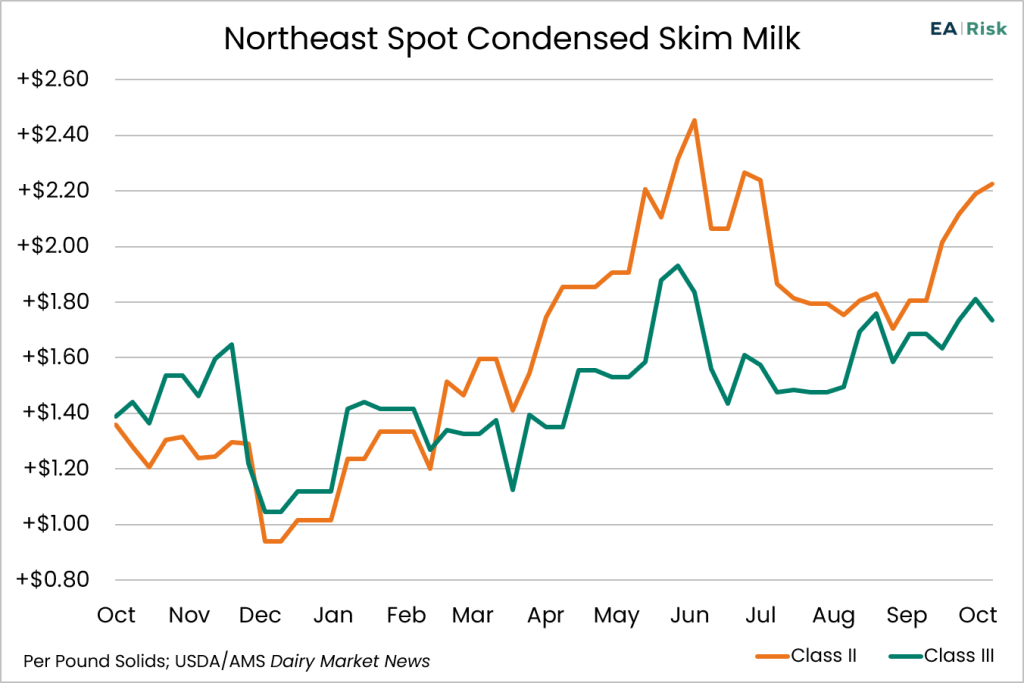
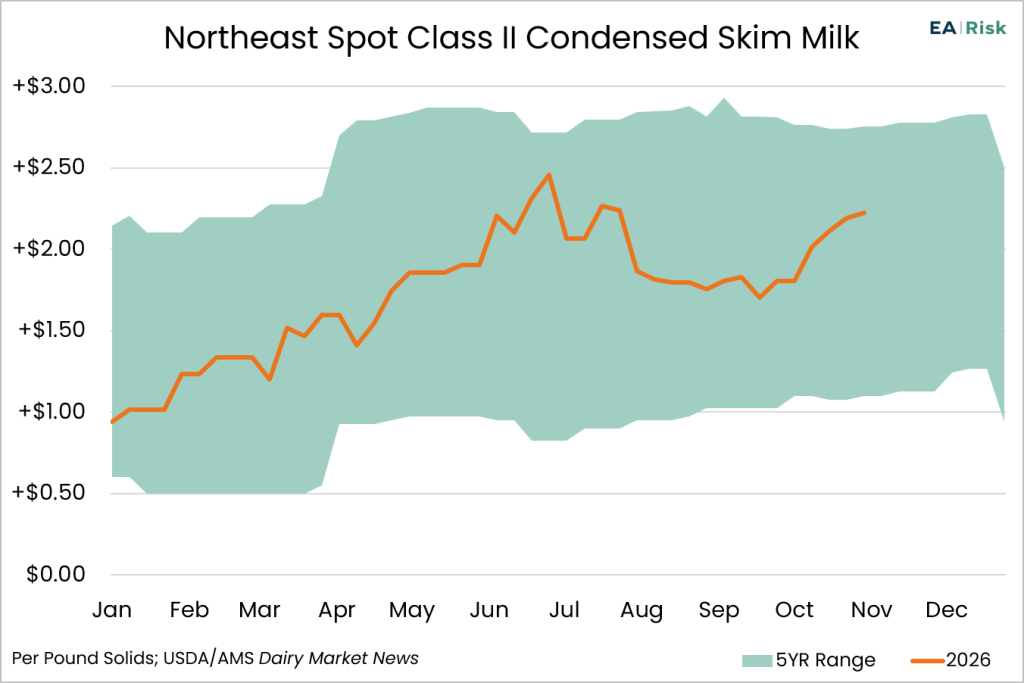
Milk supplies are tight in the Northeast this week. Ultrafiltered (UF) milk plants continue to draw on available milk supplies and are seeking additional loads. The National Agricultural Statistics Service (NASS) reports September milk production in the six East Coast states included in the 24-state survey increased 2.7 percent from a year earlier. Higher milk output per cow accounted for about two thirds of the year-over-year increase, while increased cow numbers accounted for the remainder. New York accounts for nearly half of the six-state total, three-quarters of the production gain and all net herd growth among the six states. Class II cream purchases for seasonal ice cream production are largely complete. Class III cheese demand is good heading into the holidays. Class IV butter churns continue to operate up to six days a week.
WEST
In California, milk production is strong, with some reporting coops are not able to accept all the milk from handlers. Stakeholders note stronger-than-normal spot milk demand this week. According to the National Agricultural Statistics Service (NASS), in September 2026 milk production in California was stable year over year. Federal milk market order data shows producer butterfat tests increasing, rising from an average of 4.21 percent between September 2024 and September 2025 to an average of 4.25 percent between September 2025 and September 2026. Farm-level milk output is also stronger in New Mexico and Arizona. Some downtime at a Southwest cheese facility diverted milk to balancing plants this week. In contrast to other regions, September 2026 milk production in Arizona was reported down 4.9 percent year over year, totaling 350 million pounds. Regional contacts report herd sizes are being maintained and expected to remain stable into 2027. In the Pacific Northwest, milk production is steady. Additional farms in Washington reported positive Highly Pathogenic Avian Influenza (HPAI) tests in dairy cows. Producers are working closely with veterinary experts and regulatory agencies to ensure effective biosecurity measures to limit further transmission. No impact on overall milk output or availability is reported at this time. The Mountain States report balanced farm-level output. According to the latest NASS report, September 2026 milk production in Idaho increased 3.2 percent from September 2025. Idaho stakeholders indicate handlers plan to add cows and expand facilities in 2027. Holiday production is shifting demand across all classes. Class I eggnog demand is growing. Class II demand is increasing with stronger heavy cream and half-and-half sales. Class III production is moving towards cream cheese and Class IV butter demand is showing an uptick over the past week.
Questions or concerns? Please contact EA Risk Insights at insights@ever.ag