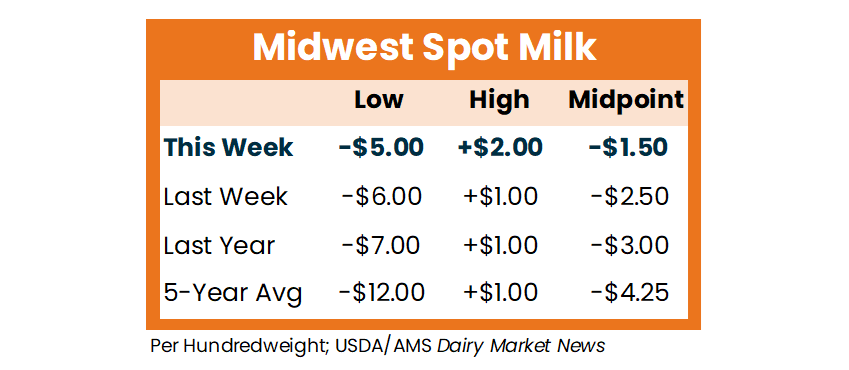
Here’s what USDA/AMS had to say:
Midwest:
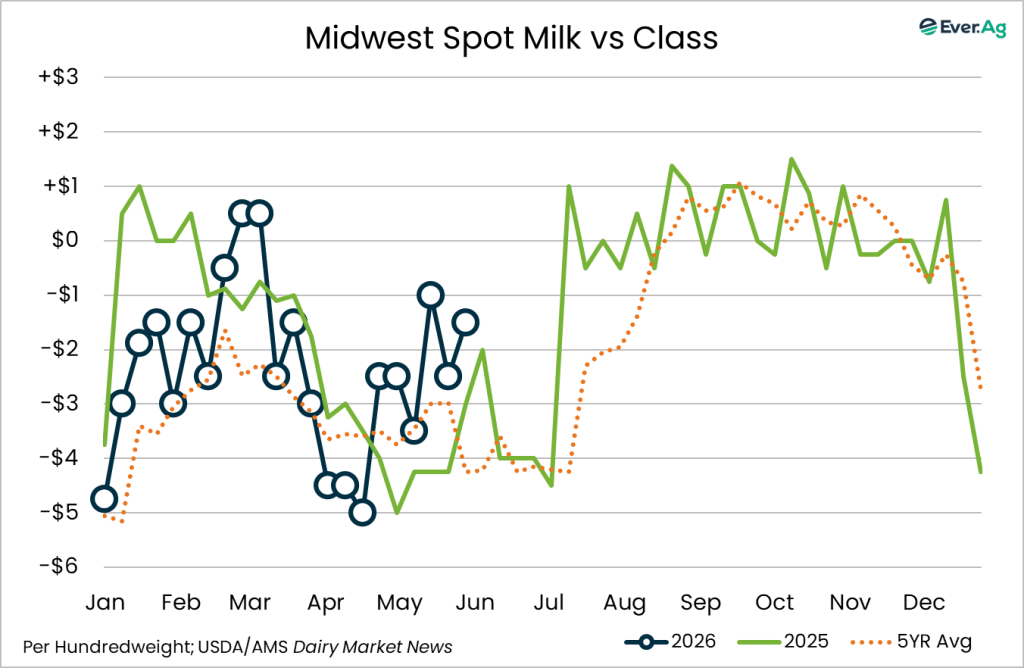
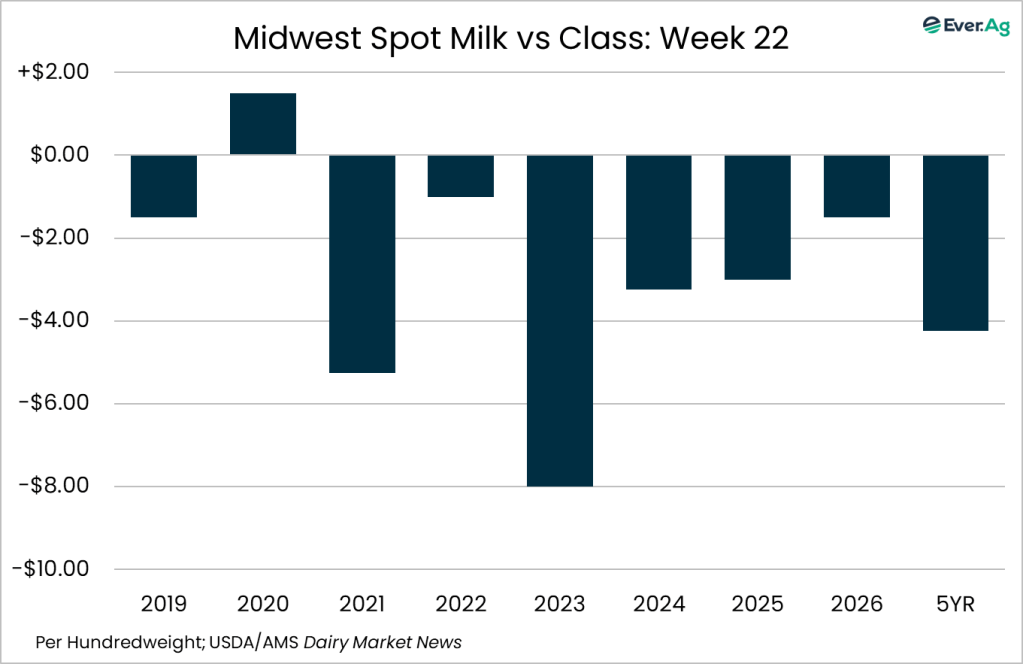
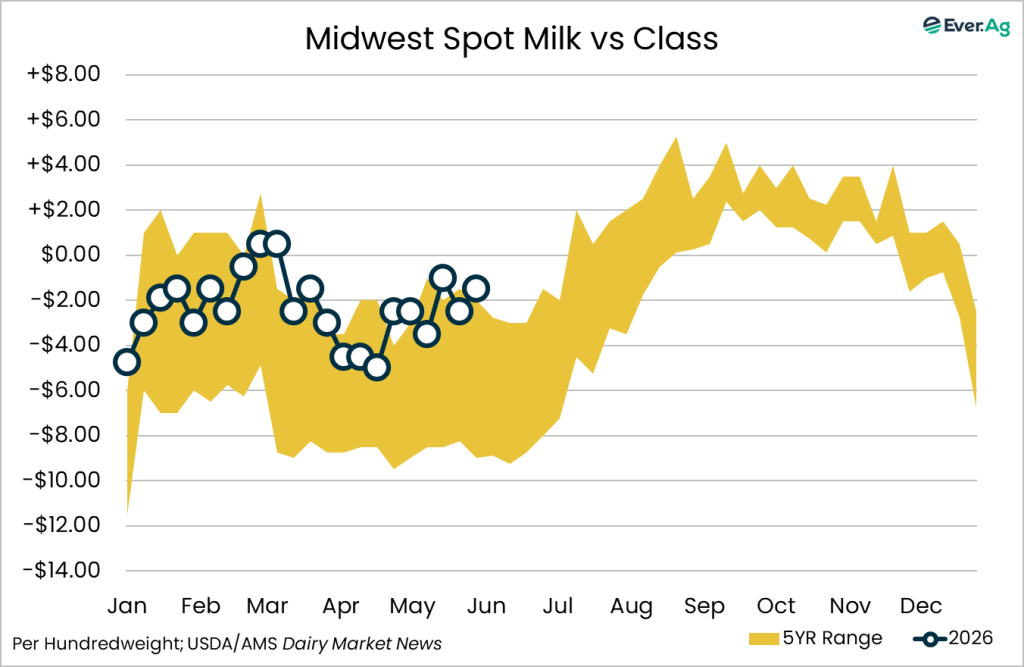
Milk output is steady in the Central regions. Class I demand is softening, as more educational institutions are heading to summer break. Class II demand is strong, and contacts say ice cream makers continue to ramp up schedules as summer grows near. Cheese production is lighter this week, due to Monday’s holiday, but plant managers say they ran busy schedules the rest of the week. Class III spot milk prices are up slightly from last week, ranging from $5-under to $2-over Class. Some cheesemakers say they are purchasing additional spot milk to maintain full schedules, while others are securing loads from nearby plants with downtime at below Class prices. Demand is strong from Class IV processors. Butter makers are running busy schedules, and some plant managers are securing cream from other regions to keep churns active.
EAST
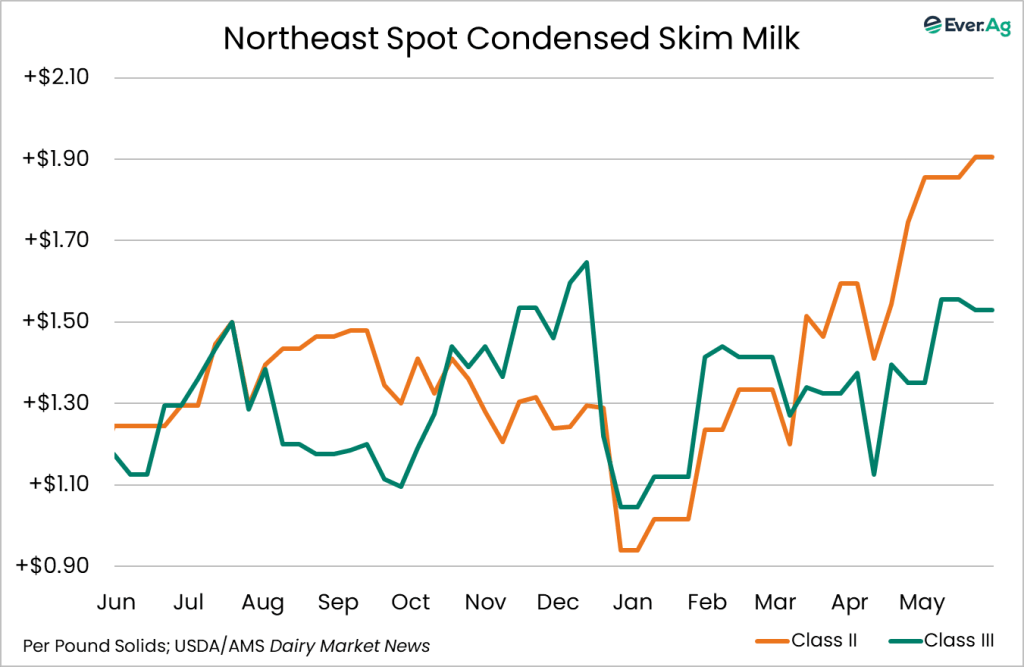
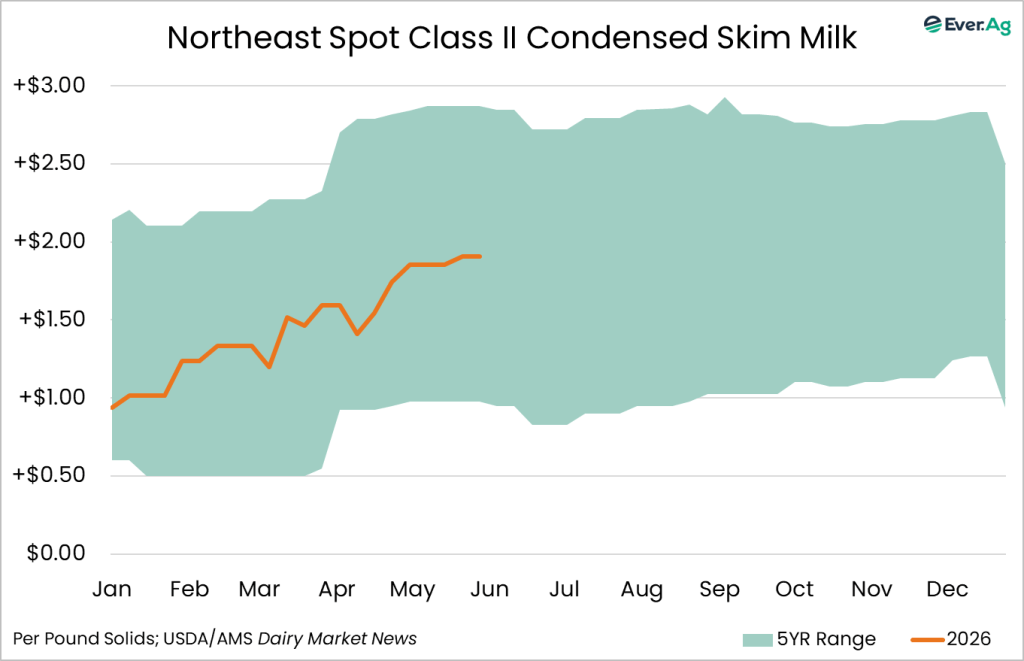
Milk production in the Northeast remains near peak spring flush levels, while the Southeast flush season has concluded. Class I orders in the Northeast and New York are tapering off with the onset of summer break. The Midwest and Southeast have earlier summer break dates. Surplus Class I milk is being diverted to Class III cheese plants, Class IV butter and powder operations, and balancing facilities. Class II cream demand is strong as ice cream production peaks, with cream cheese and yogurt demand remaining steady. Industry contacts report Class III milk supplies are sufficient for ongoing cheese production.
WEST
California handlers report steady or lighter milk production for week 22. Milk production is down from the previous month, but up year over-year. Central Valley stakeholders report balanced milk volumes. Although some manufacturers indicate milk intakes below anticipated volumes, spot milk loads are available for buyers to secure. Arizona and New Mexico farm level milk output is steady. Spot milk loads are somewhat tight. Pacific Northwest milk production is steady. Manufacturers indicate milk volumes are tight. Handlers in the Mountain States of Idaho and Utah report close to ideal temperatures for cow comfort and steady farm level milk output. Handlers in Colorado indicate farm level milk output varies from steady to lighter. In many areas of the West region snowpacks were not heavy and stakeholders voiced nervousness about water resources for the remainder of this year. Some stakeholders throughout the region report increasing milk hauling rates. Class I demand is lighter with the start of summer breaks at educational institutions. Class II, III, and IV demands are steady.
Questions or concerns? Please contact Ever.Ag Insights at insights@ever.ag