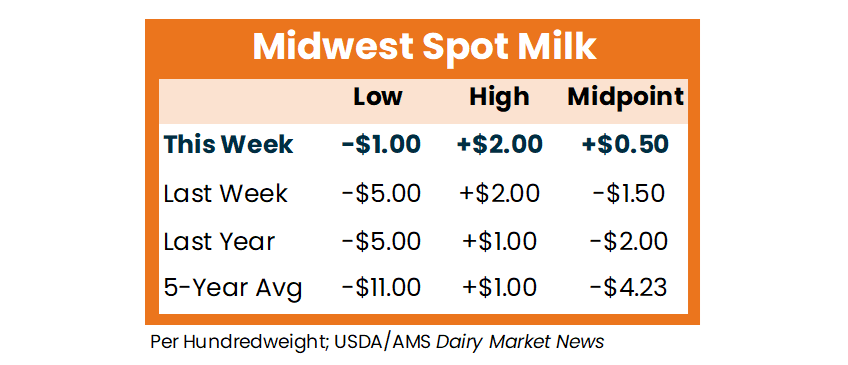
Here’s what USDA/AMS had to say:
Midwest:
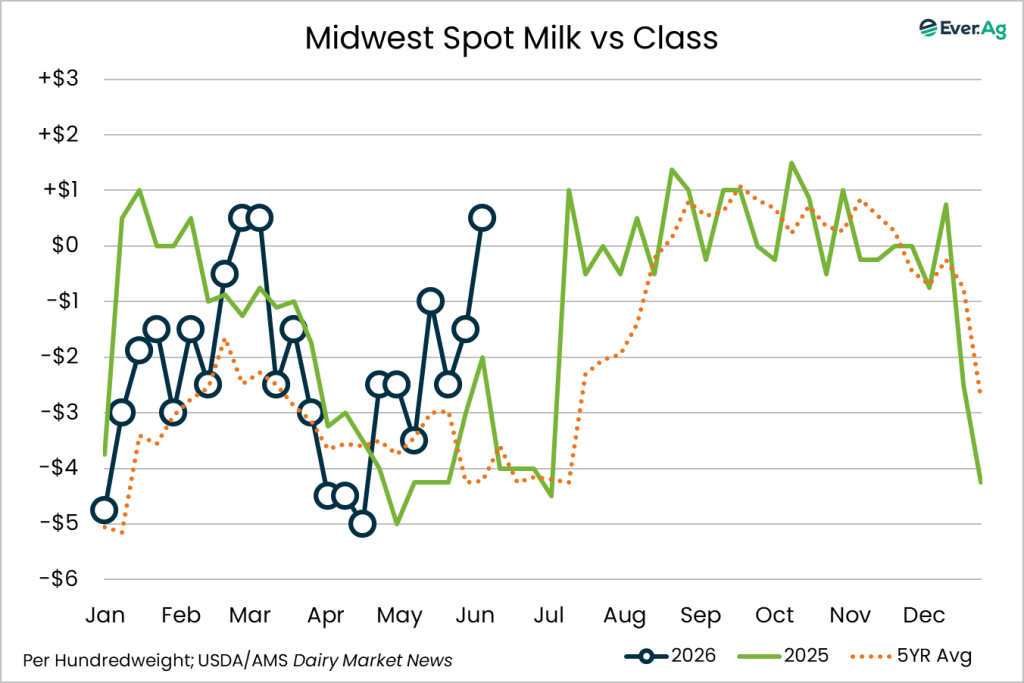
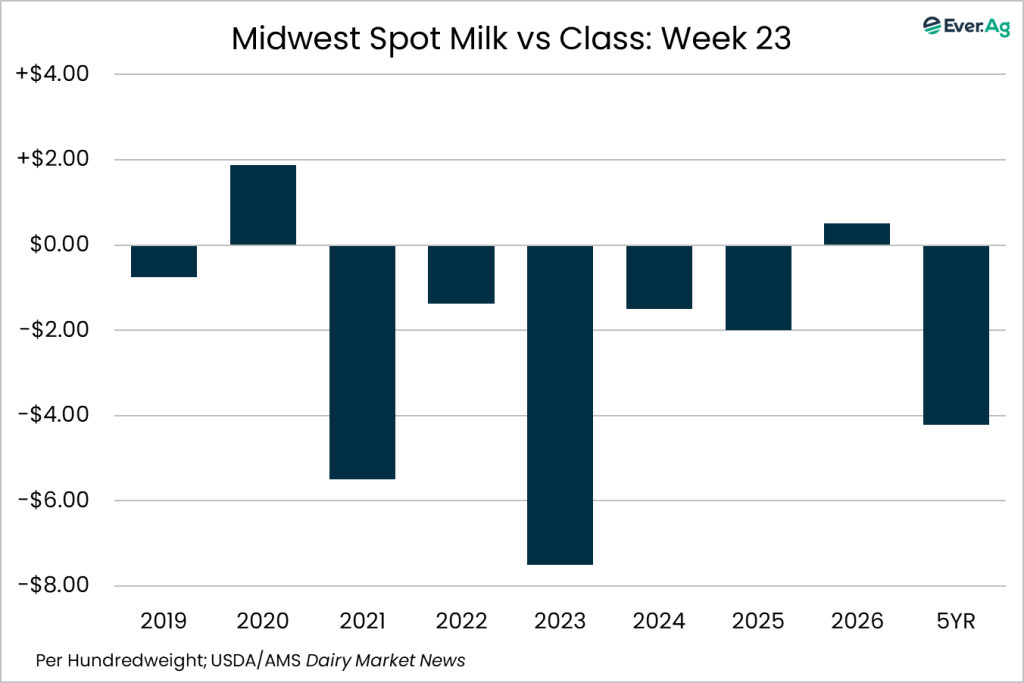
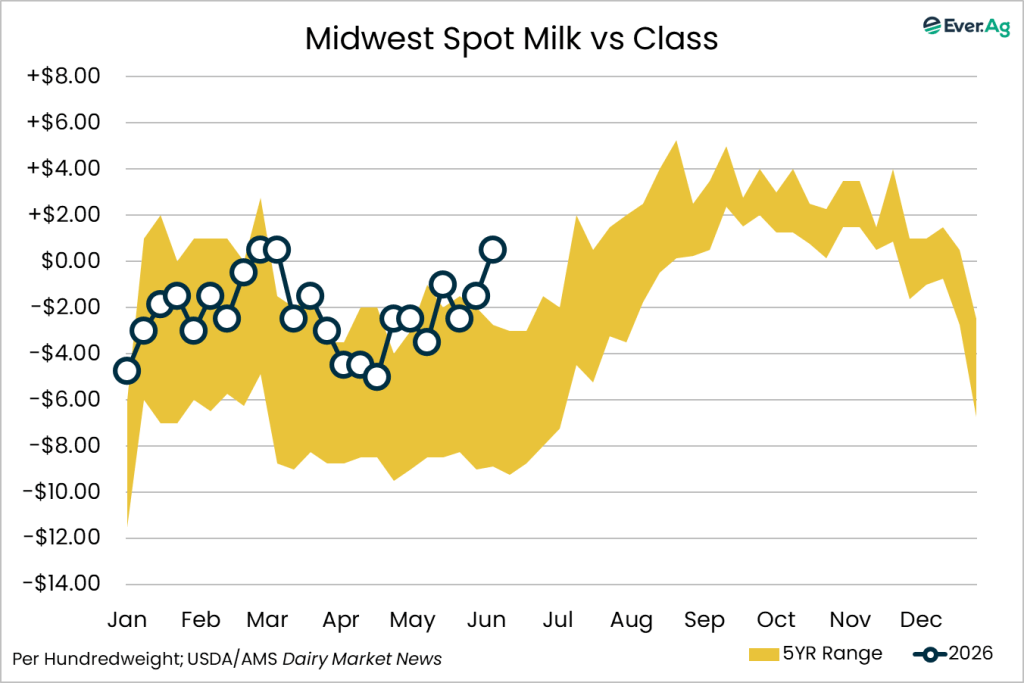
In the Central region, milk production is steady and contacts say output is up compared to this time last year. Demand for Class I milk continues to soften as summer break is starting for more educational institutions. Demand for Classes II and IV remains strong. Some Class II and Class IV plants are securing additional milk that was previously heading to bottling plants, to run busy schedules. Spot prices for Class III milk range from $1-under to $2-over, as contacts report lighter spot market activity this week. Several cheesemakers in the region say they are running full schedules using milk from within their network, but some report buying spot milk from nearby plants with scheduled downtime this week.
EAST
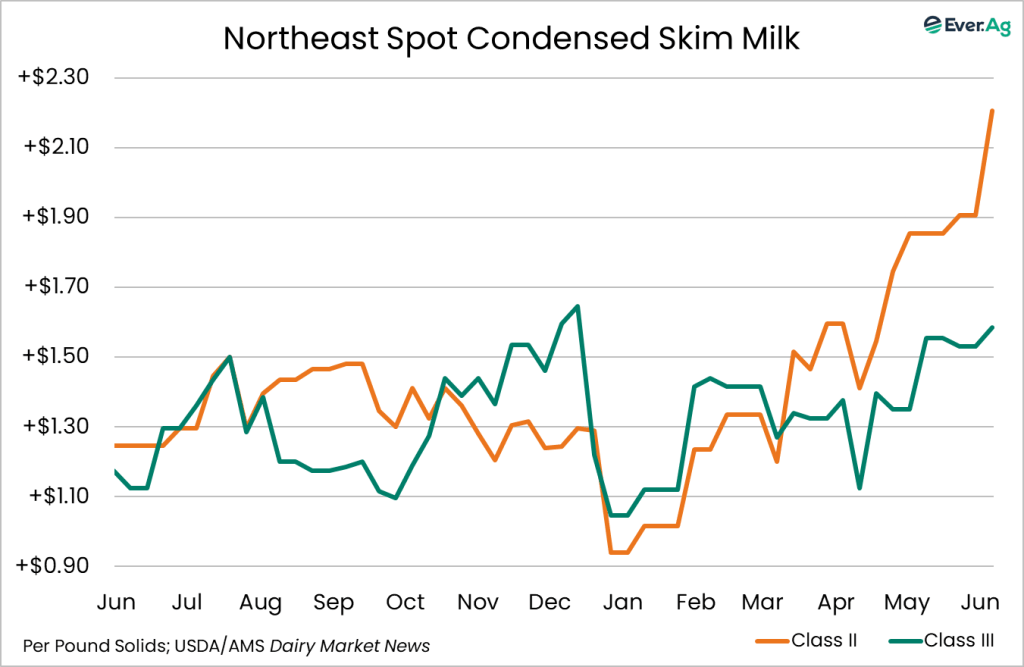
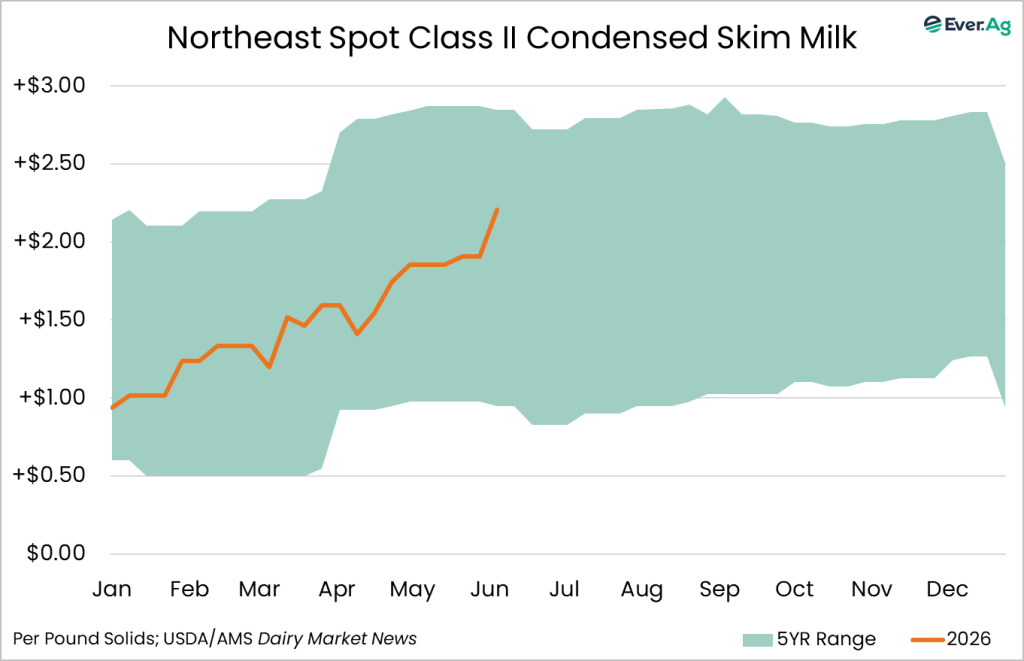
Milk volumes in the East remain strong this week. New England states are still in the spring flush, while Mid-Atlantic and Southern states are past peak levels. Class I production is lighter this week, particularly in the Southern states, where educational institutions have started the summer break. Unexpected downtime at a bottling plant caused milk diversions late last week. Class II production remains strong, particularly with strong retail demand for ice cream and cottage. Spot purchases of cream for Class II use rose this week. Class III demand is steady in the region. Contracted volumes of milk are being used to meet cheese production demand, although many facilities are looking for condensed skim with limited success. Class IV production is steady this week.
WEST
California milk production is seasonally lightening, but handlers indicate favorable temperatures in the evening are keeping significant declines in milk production at bay. Stakeholders indicate milk production in the state is covering processing capacities and spot loads are available. Arizona processors report week-to-week milk production varies from steady to lighter. Some manufacturers are bringing in spot milk loads. Farm level milk output in New Mexico is lighter. Pacific Northwest milk production varies from steady to lighter. Manufacturers report spot milk loads are tight in Washington. The latest milk production report from National Agricultural Statistics Service (NASS) shows the milk cow total and milk production for Washington decreased by 7 percent in April 2026 compared to the previous April, while neighboring Oregon and Idaho had year over year increases. In the mountain states of Idaho and Utah farm level milk output varies from steady to lighter. Spot milk loads are more readily available with some manufacturers planning downtime during parts of June for maintenance, projects, and/or upgrades. Stakeholders report water volumes are limited for certain uses. In Colorado farm level milk output is decreasing seasonally. Class I demand is seasonally lighter, Class II demand is somewhat stronger, and Class III/IV demand is steady throughout the region.
Questions or concerns? Please contact Ever.Ag Insights at insights@ever.ag