Here’s what USDA/AMS had to say:
Midwest:
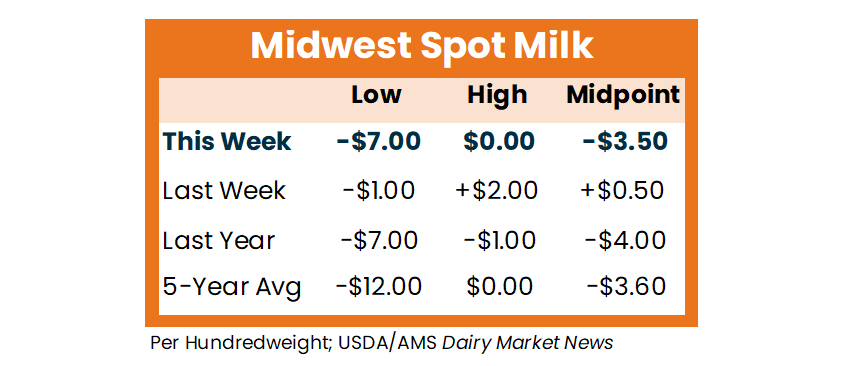
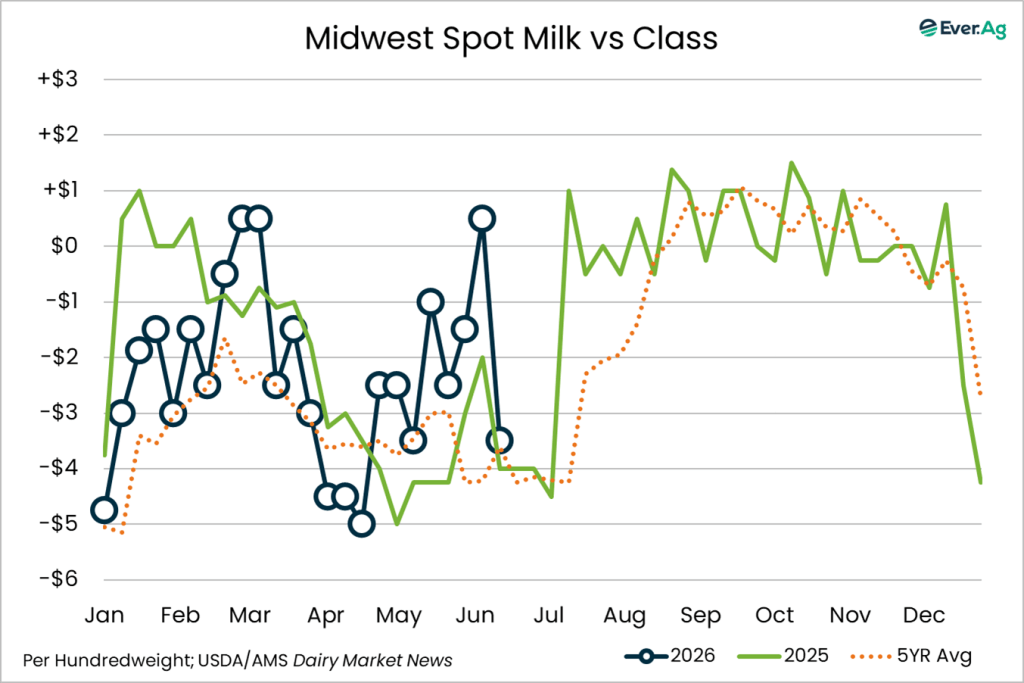
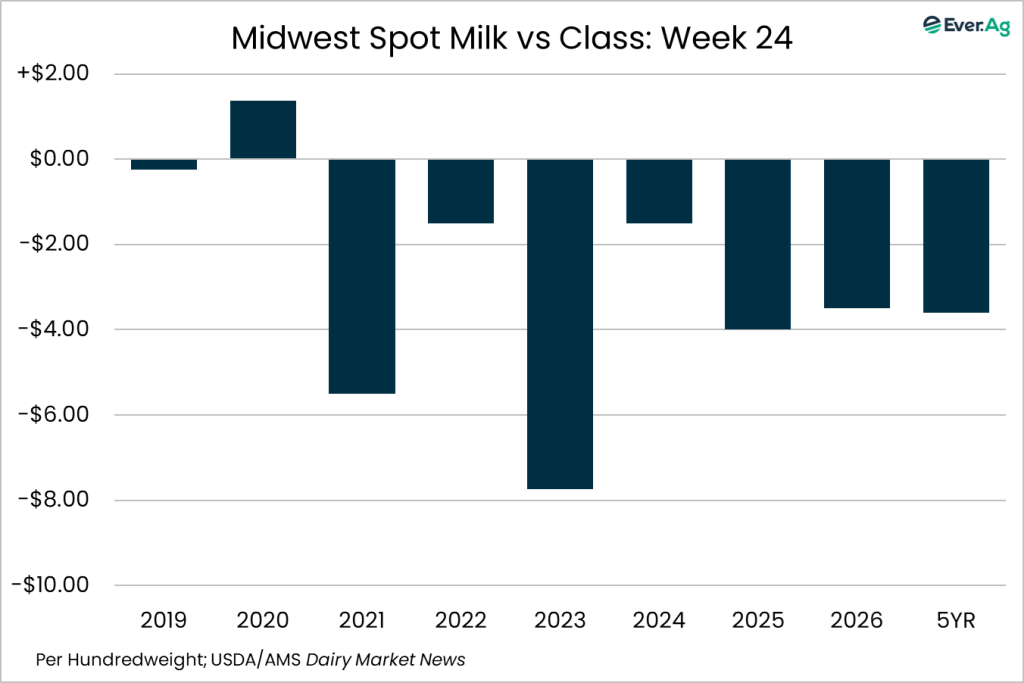
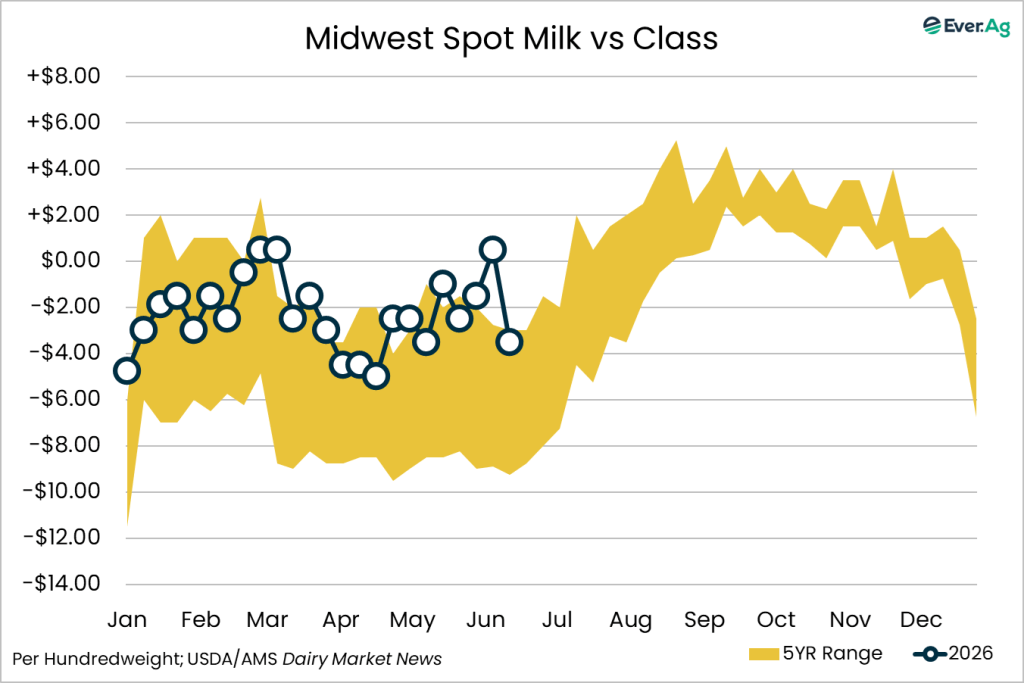
Farm level milk output is steady in the Central region this week. Some contacts are concerned about warmer temperatures affecting cow comfort, particularly in the Midwest. Class I demand is softening in the area, with many educational institutions in summer break and other institutions dwindling orders prior to the break. Class II demand is strengthening, particularly for cream. Ice cream makers are purchasing spot loads of cream to bolster production. Class III demand for milk is steady to strong. Contacts in the Midwest mention contract loads are mostly sufficient for current production schedules, while cheese makers in the Southwest are looking for spot milk. Class III spot milk prices are down slightly and range from $7-under to Flat Class price. Many cheesemakers are struggling with finding condensed skim and ultra filtered milk to fortify solid levels in cheese. Class IV demand is steady.
EAST
Class I supplies are tightening as the flush concludes, and abnormally high temperatures contribute to cattle and pasture stress. Class II demand for cream is increasing, particularly for ice cream production. Manufacturers report they are largely fulfilling contract orders only. Class III demand is softening. Contacts report cheese production schedules are easing back to five-day workweeks at many facilities. Reports show a seasonal decline in milk components appears to be occurring earlier than typical, preceding the recent rise in temperatures. Class IV butter inventories, particularly salted, are described as plentiful.
WEST
California milk production is seasonally lightening, but handlers indicate favorable temperatures in the evening are keeping significant declines in milk production at bay. Stakeholders indicate milk production in the state is covering processing capacities and spot loads are available. Arizona processors report week-to-week milk production varies from steady to lighter. Some manufacturers are bringing in spot milk loads. Farm level milk output in New Mexico is lighter. Pacific Northwest milk production varies from steady to lighter. Manufacturers report spot milk loads are tight in Washington. The latest milk production report from National Agricultural Statistics Service (NASS) shows the milk cow total and milk production for Washington decreased by 7 percent in April 2026 compared to the previous April, while neighboring Oregon and Idaho had year over year increases. In the mountain states of Idaho and Utah farm level milk output varies from steady to lighter. Spot milk loads are more readily available with some manufacturers planning downtime during parts of June for maintenance, projects, and/or upgrades. Stakeholders report water volumes are limited for certain uses. In Colorado farm level milk output is decreasing seasonally. Class I demand is seasonally lighter, Class II demand is somewhat stronger, and Class III/IV demand is steady throughout the region.
Questions or concerns? Please contact Ever.Ag Insights at insights@ever.ag