Here’s what USDA/AMS had to say:
Midwest:
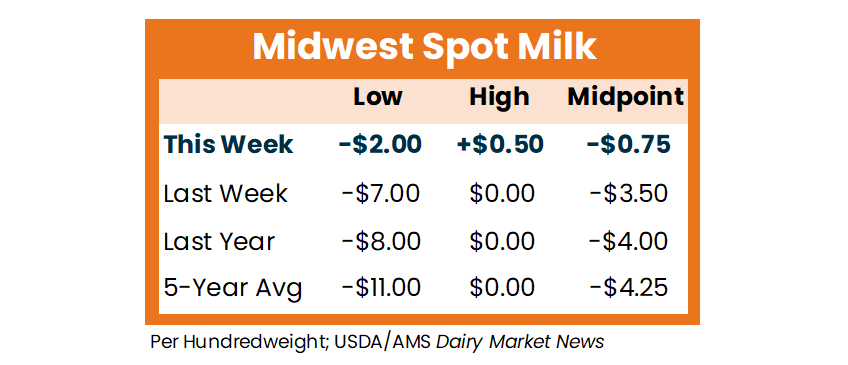
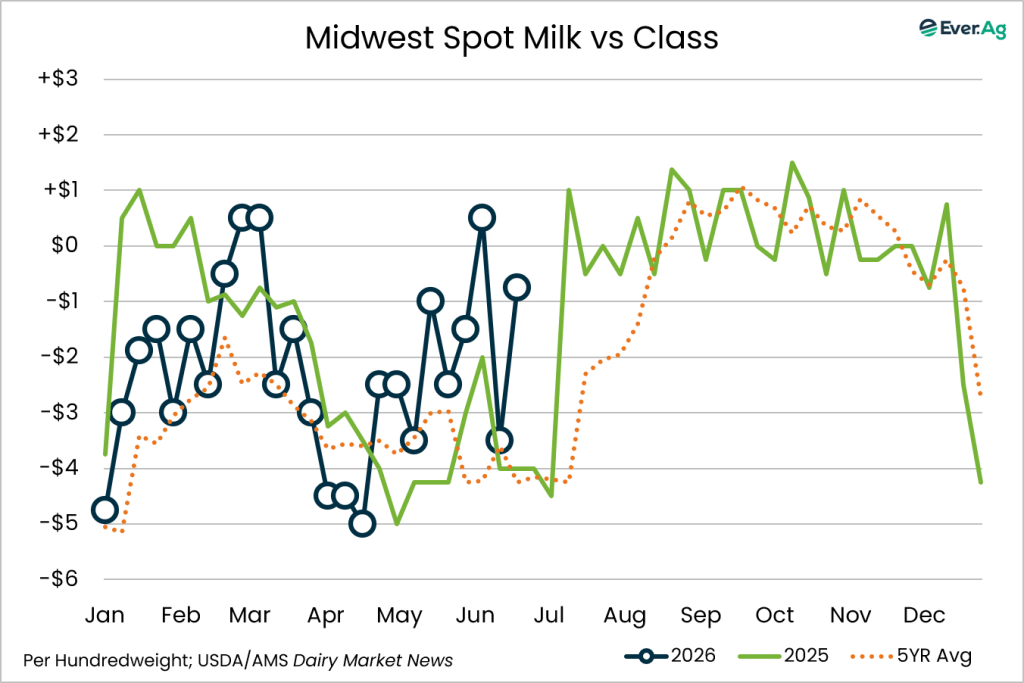
Milk production is strong in the Central region, though contacts anticipate higher temperatures to negatively impact output in the coming weeks. Demand for Class I milk is soft, and contacts say milk previously heading to bottling plants is being purchased by Class II and Class IV processors. Demand for Class II milk is strong. Ice cream makers are running busy production schedules as they prepare for strong summer demand. Class III demand is steady, but there are few spot loads of milk heading to cheese plants this week. Cheesemakers report fewer plants had downtime and were offering spot milk this week. Spot prices for Class III milk traded at a slightly higher range this week, ranging from $2-under to $0.50-over Class. Demand for Class IV milk is unchanged.


EAST
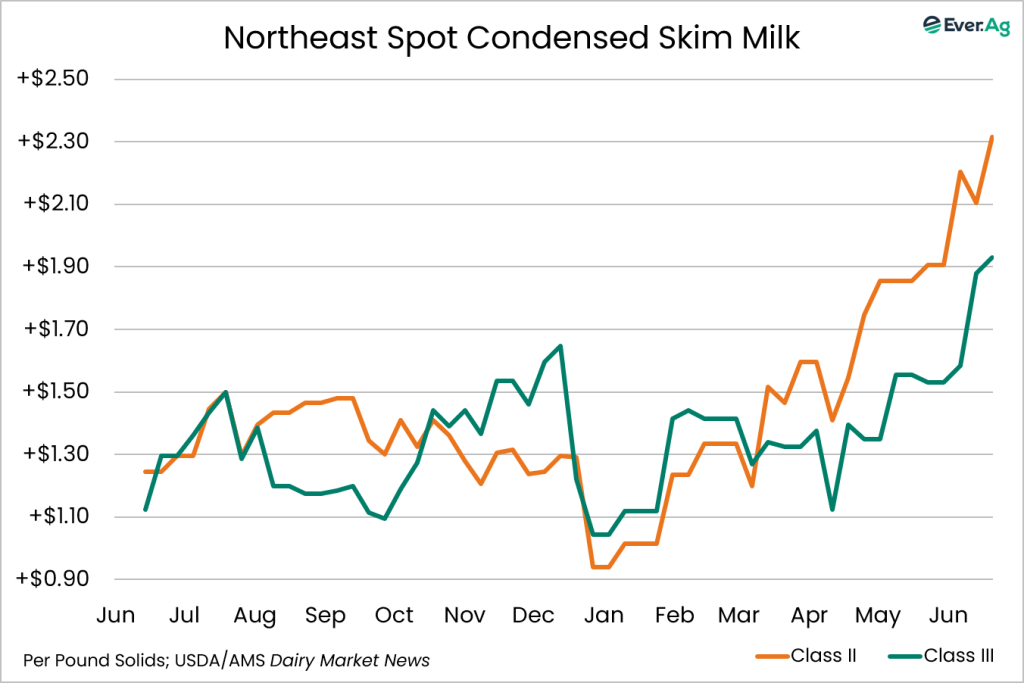
The Northeast region spring flush season has ended. Other than with Class I, where milk orders have declined from school closings for the summer, demand for raw milk from Classes II-IV is steady to strong, limiting the need to send additional volumes of milk to balancing facilities. Class III continues to draw milk for cheese plants, as well as cream cheese demand, which remains a mainstay in the Northeast region. Class IV butter demand, particularly at the retail level, remains in place, with butter churns operating seven days a week. Furthermore, the seasonal storage of butter should continue into July. Manufacturing nonfat dry milk powder, above contract needs, is being produced, incentivized by continued elevated prices.

WEST
California milk production is lighter, but stakeholders report decreases are not dramatic. Year-over-year milk production is up. Some manufacturers’ milk intakes are above anticipated volumes, partly due to planned downtime at some manufacturing facilities. Spot loads of milk are available. Arizona and New Mexico farm level milk output is lighter. Pacific Northwest milk production is steady. Some manufacturers are bringing in spot milk loads. Week-to-week farm level milk output is mixed in the mountain states of Idaho, Utah, and Colorado. Idaho handlers note cooler than normal temperatures are keeping cow comfort close to ideal, contributing to a strong spring milking season. Manufacturers report milk output is readily meeting production schedule needs. Class I and III demand is steady. Class II and IV demands vary from stronger to lighter.
Questions or concerns? Please contact Ever.Ag Insights at insights@ever.ag