
Here’s what USDA/AMS had to say:
Midwest:
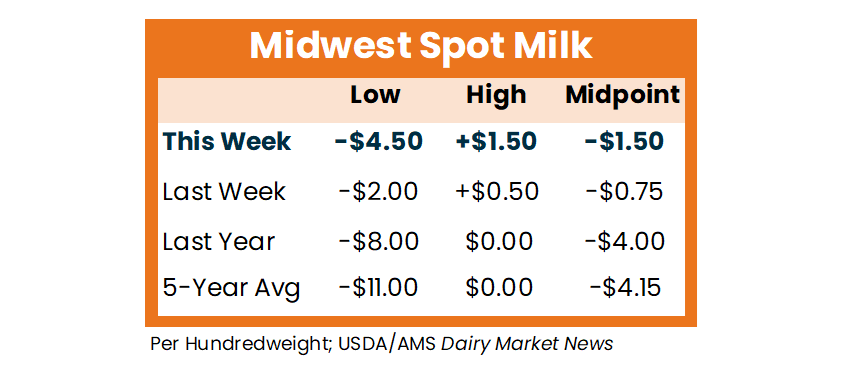
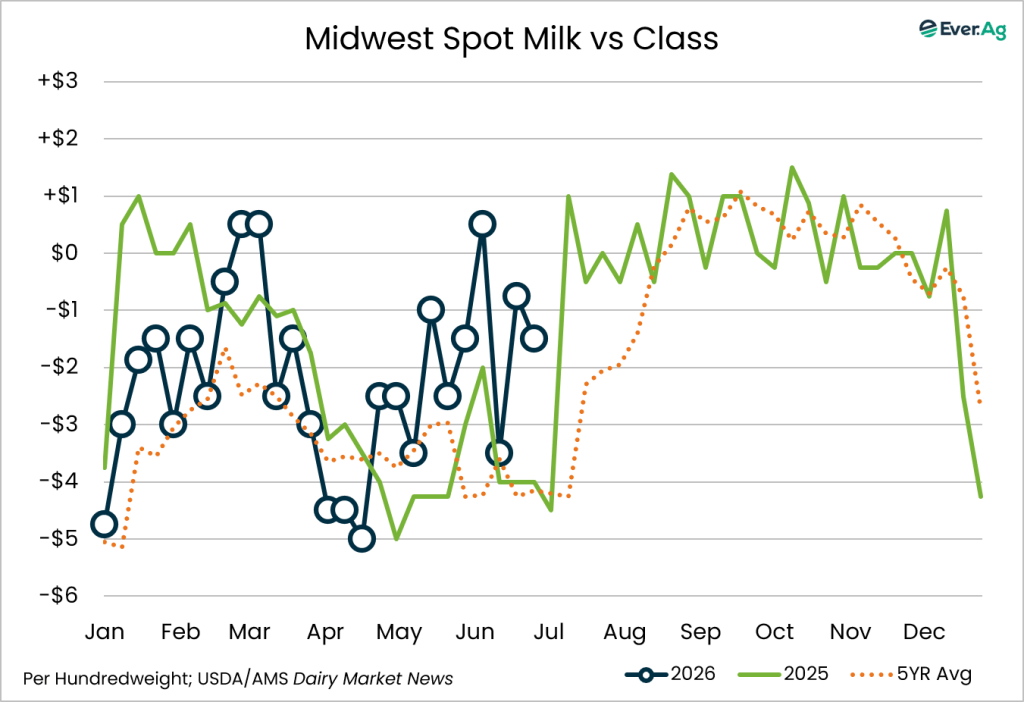
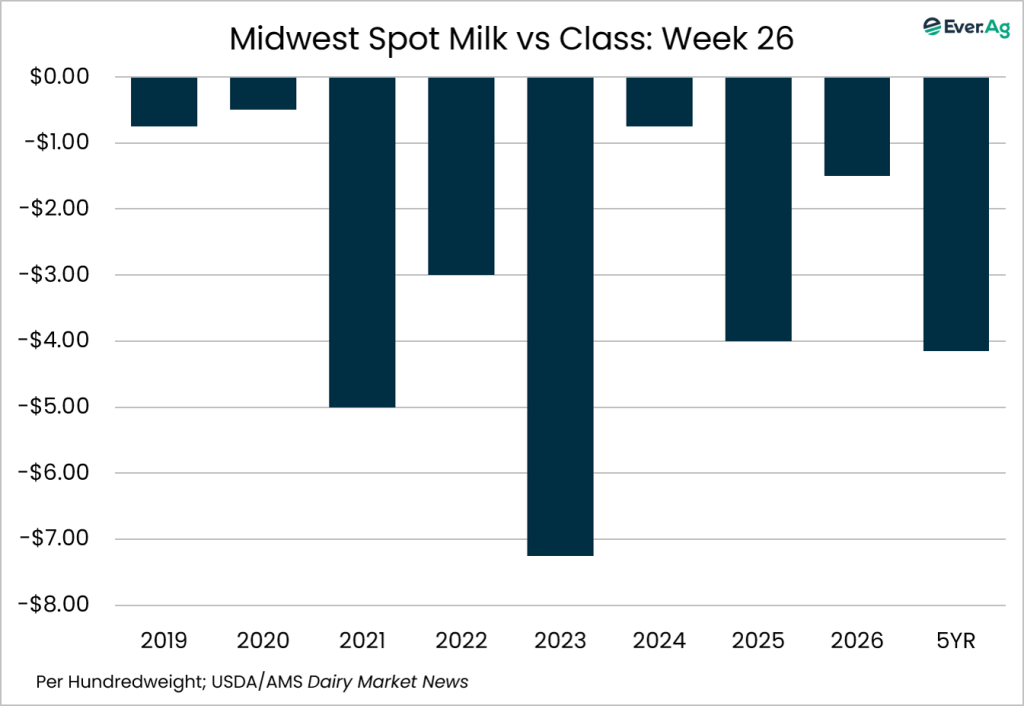
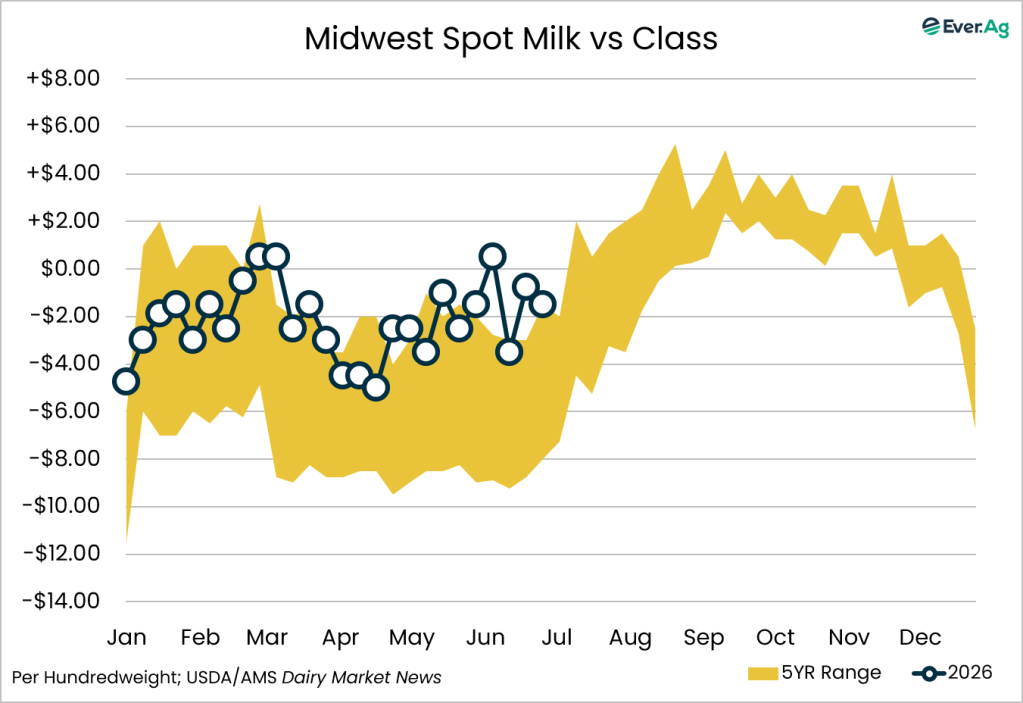
In the Central region, milk output is strong. Contacts in the Southwest say higher temperatures are having a negative impact on production. Class I demand remains soft. Class II processors are running busy production schedules and purchasing additional milk as they try to keep pace with demand. Class III processors say spot offers are somewhat light, limiting trades. Some cheesemakers are purchasing additional spot loads from Class IV plants at discounted prices, but others say they are paying slightly higher prices compared to last week, to maintain full production schedules. Spot prices for Class III milk range from $4.5-under to $1.5-over Class. Demand for Class IV is softening.
EAST
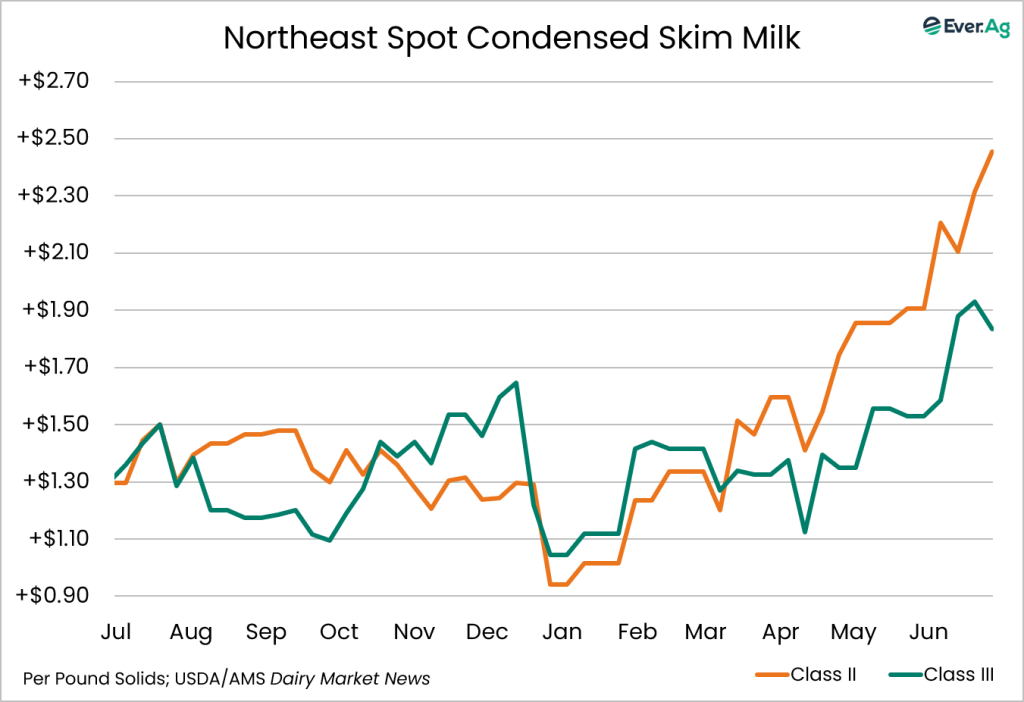
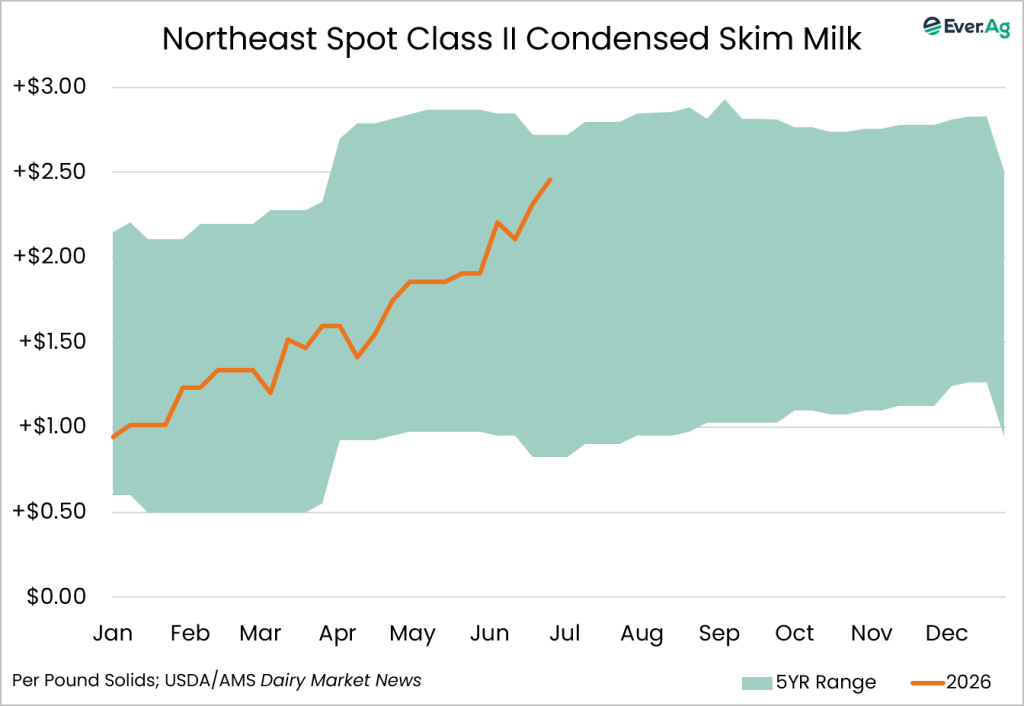
The Northeast region spring flush season has ended. Milk production in the Eastern region is declining due to weather conditions becoming seasonally warmer. Milk supplies continue to be pulled strongly by expanding Class I needs outside of school and institutional uses. Cottage cheese and yogurt production remain year-round anchors for Class II utilization, with both categories continuing to grow in volume sold. Class III milk availability is adequate to support seven-day-a-week cheese manufacturing. Cream cheese demand also remains steady throughout the year in the Eastern region. Class IV supply remains adequate to support continuous butter churn operations. Seasonal butter storage growth is expected to continue through July, ahead of the late-August inventory pull and preparing for retail shelves. Retail interest typically ramps up post Labor Day, followed by steady inventory draws through the holiday baking season. Condensed skim milk and spot nonfat dry milk powder inventory remain tight due to a structural dislocation in regional condensed skim and powder production.
WEST
Overall, milk production in the West is seasonally low but sufficient to meet current production demands. California contacts indicate milk volumes are better than anticipated. New Mexico and Arizona milk volumes are holding steady. The mountain states of Idaho, Utah and Colorado have more than enough milk to meet production needs. Contacts indicate spot volumes of milk are available. Pacific Northwest milk volumes are good and meeting manufacturing needs. Class I production is light with more milk designated for Class II and IV use. Class II demand is strong, and some manufacturers are taking in spot volumes of milk and cream to keep busy production schedules. Class III demand is steady. Class IV demand is steady to strong.
Questions or concerns? Please contact Ever.Ag Insights at insights@ever.ag