Here’s what USDA/AMS had to say:
Midwest:
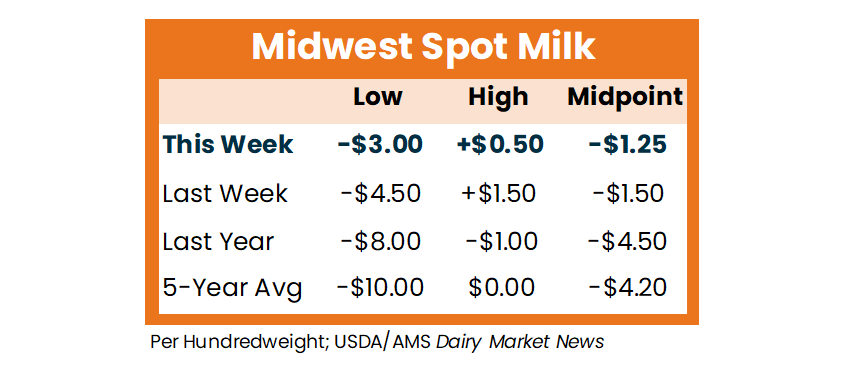
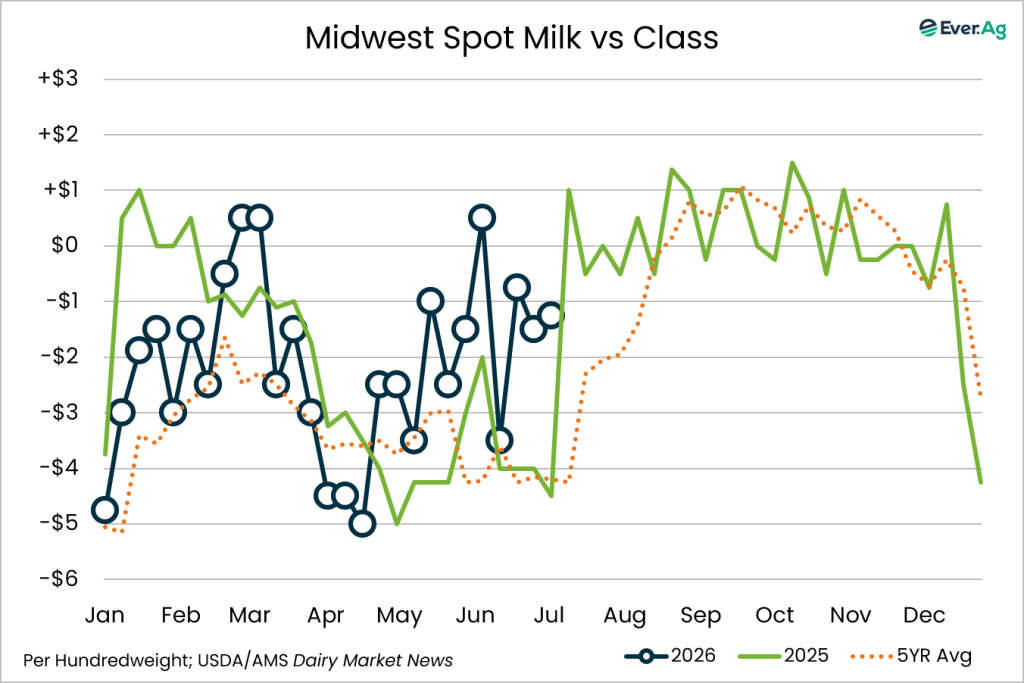
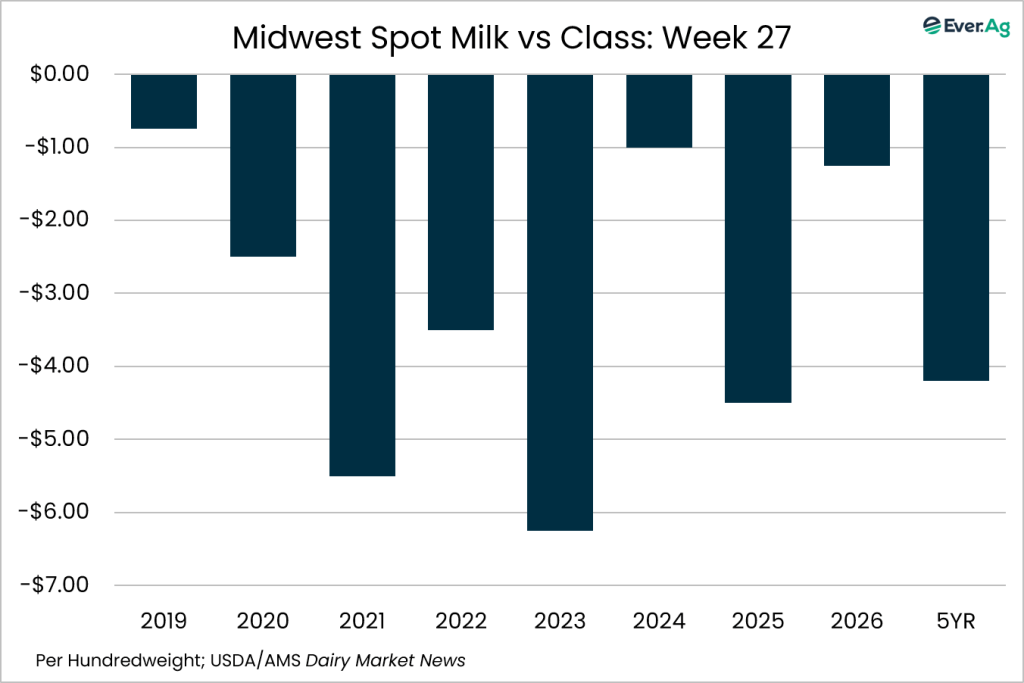
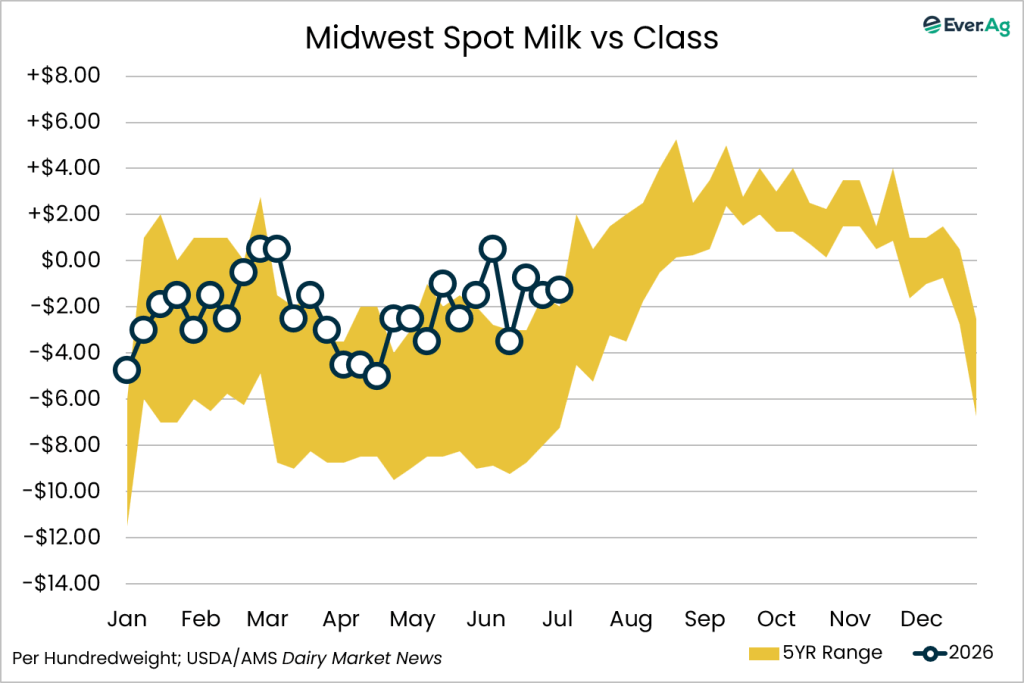
Milk production is declining in the Central region, as higher temperatures are having a negative impact on cow comfort. In the Midwest, contact reports regarding milk output range from steady to lighter. However, most contacts say they expect this week’s heat wave, that brought temperatures in the upper Midwest up to the 90s, to cause production to decline in the coming weeks. Several manufacturers in the region are taking a long holiday weekend to celebrate July 4th, contributing to lighter demand across all Classes of milk. Outside of the holiday, contacts say Class I demand is seasonally light. Demand for Class II milk is strong overall, while interest is unchanged for Classes III and IV. Contacts say spot milk offers are somewhat quiet, but spot trades are a bit more active ahead of this week’s holiday. Some cheesemakers say they are unable to take in additional spot milk, but a few are purchasing a few spot loads to help nearby processors with downtime later in the week. Class III spot prices range from $3.00-under to $0.50-over Class.
EAST
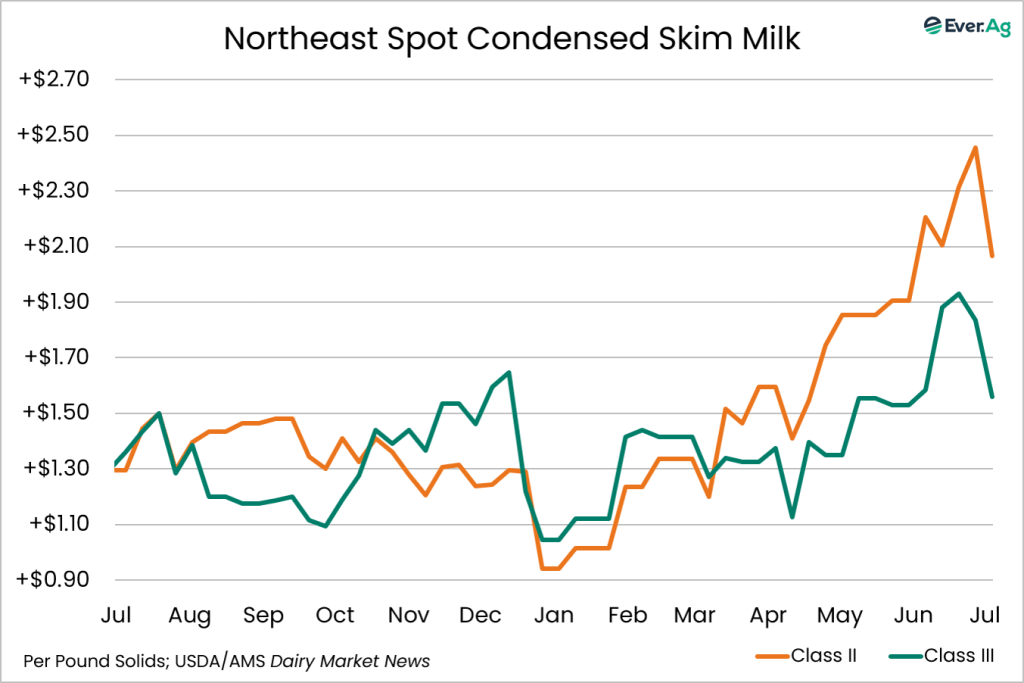
Milk was plentiful this week due to shortened holiday schedules and some plant downtime, which temporarily increased volumes moving through the supply chain. As operations return to normal cadence, milk supplies are expected to settle back to pre-holiday levels next week. Class II production schedules were well supported by available cream. Cottage cheese and sour cream production remain steady, though contacts note giving priority to Greek yogurt to meet current strong retail demand. Class III milk supplies were ample enough to maintain seven-day-a-week production schedules. Though some softness remains in the retail market, cheese manufacturers continued pulling milk for ongoing shipments to Midwest converters to support their demand for private-label retail cheese and export-oriented product. Class IV butter manufacturing remained steady.

WEST
California milk production is lighter. Handlers report June 2026 milk output is down from May 2026 but remained up year-over-year. Spot milk loads are available. Among manufacturers in the state, some scattered downtime is planned during Q3. Farm level milk output in Arizona is lighter. Spot load availability is looser as some facility equipment issues are causing unplanned downtime. Milk production in New Mexico and the Pacific Northwest is seeing some seasonal decreases, but manufacturers indicate volumes are sufficient for their production needs. Handlers in the mountain states report temperatures are rising after a slower than expected pace to seasonal increases, especially with nighttime temperatures. Week-to-week milk production is lighter. Idaho and Utah stakeholders note spot load availability is tighter. No changes in Class I, II, III, or IV demands are reported this week.
Questions or concerns? Please contact Ever.Ag Insights at insights@ever.ag