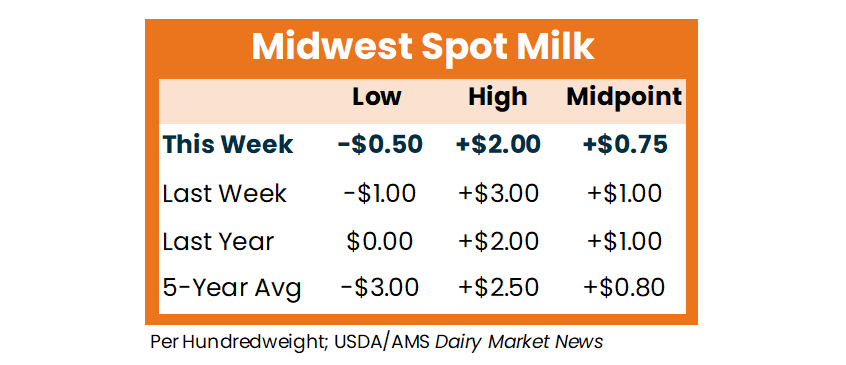
Here’s what USDA/AMS had to say:
Midwest:
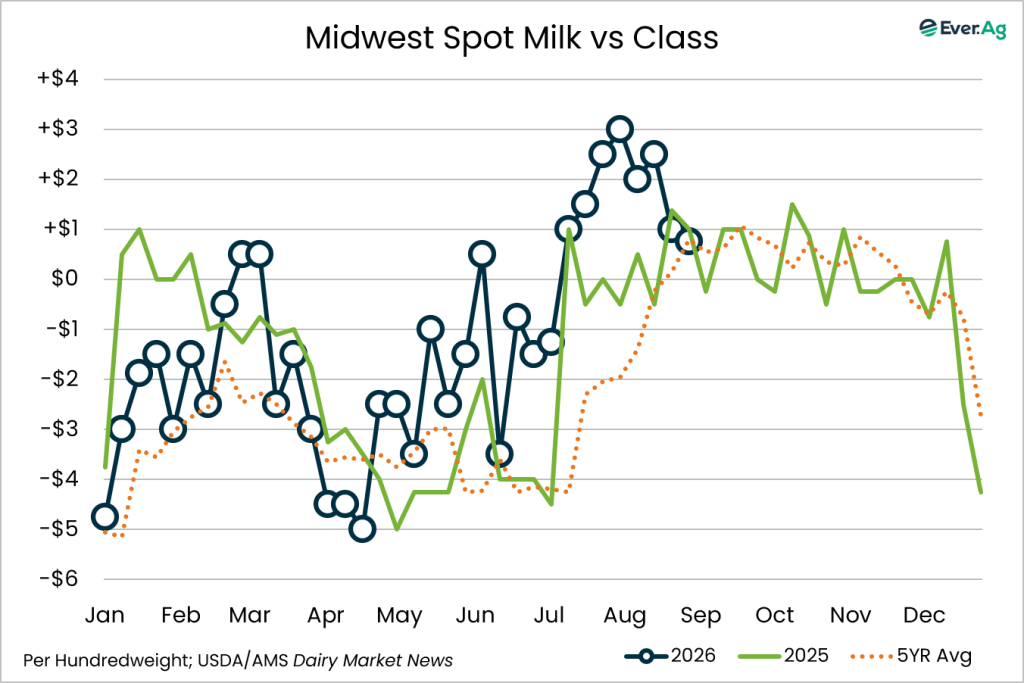
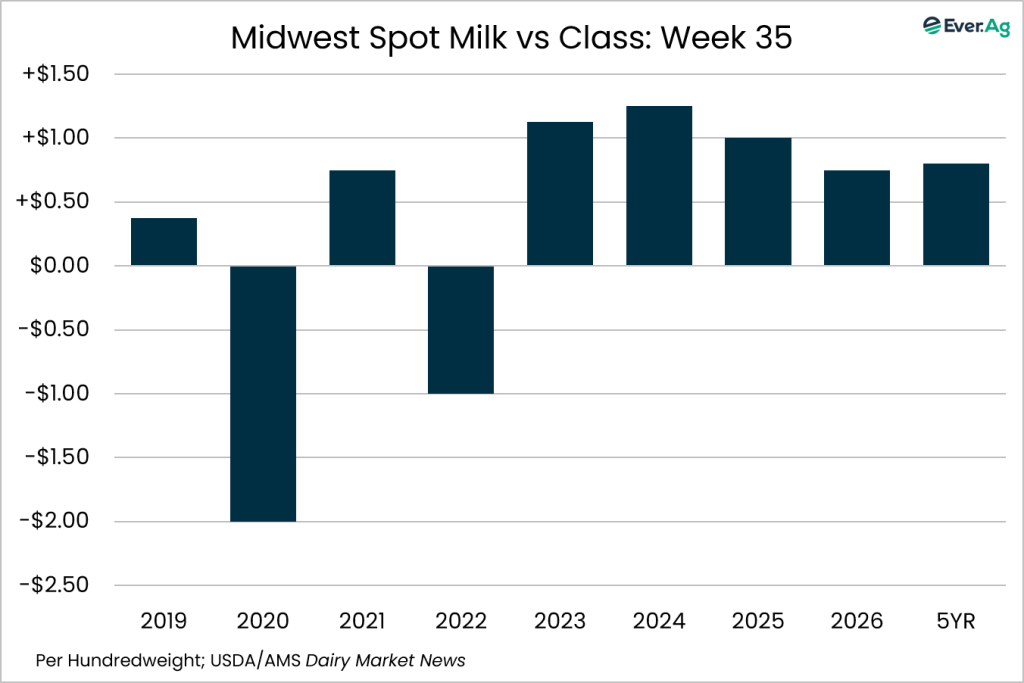
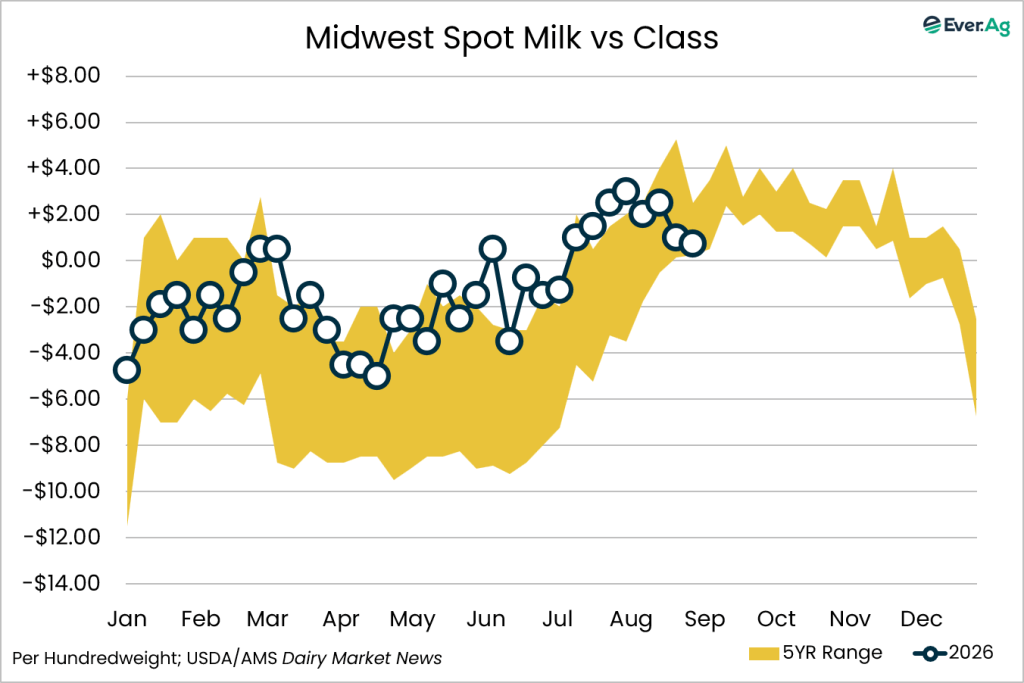
Cooler August temperatures in the Central region have supported steadier milk flows. Contacts note that improved weather has contributed to stronger overall production, and milk supply is well balanced. Recent downtime at some processing facilities has added to spot milk availability. Industry stakeholders report that a portion of these spot loads are being directed to Class I plants in preparation for the upcoming school year. Spot milk prices ranged from $0.50 under to $2.00 over. Cheese production is steady, while demand is mixed depending on variety.
EAST
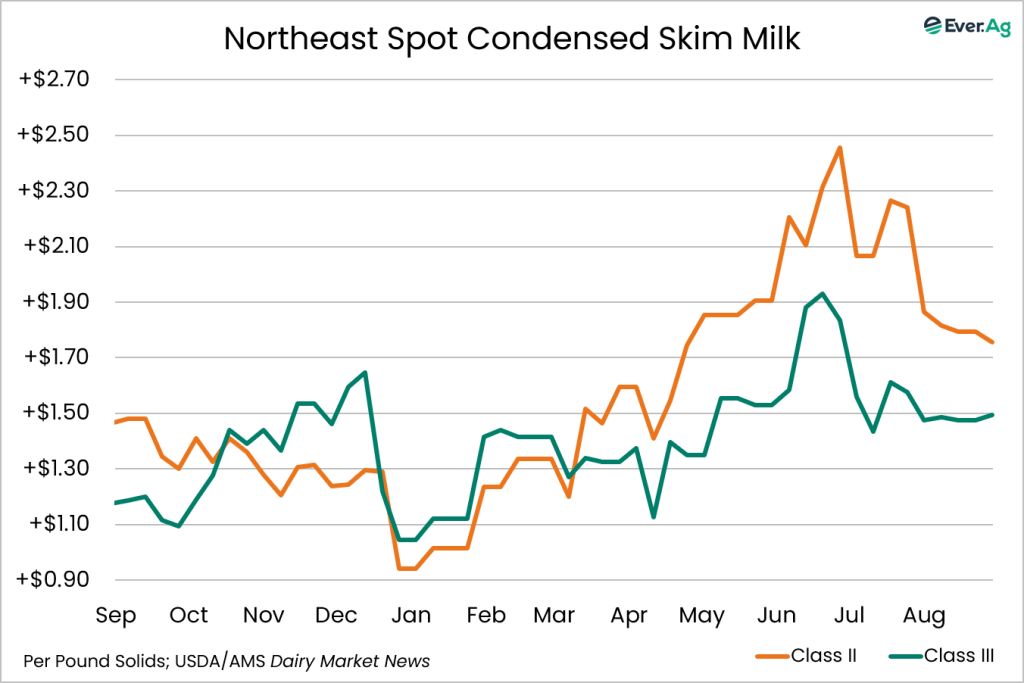
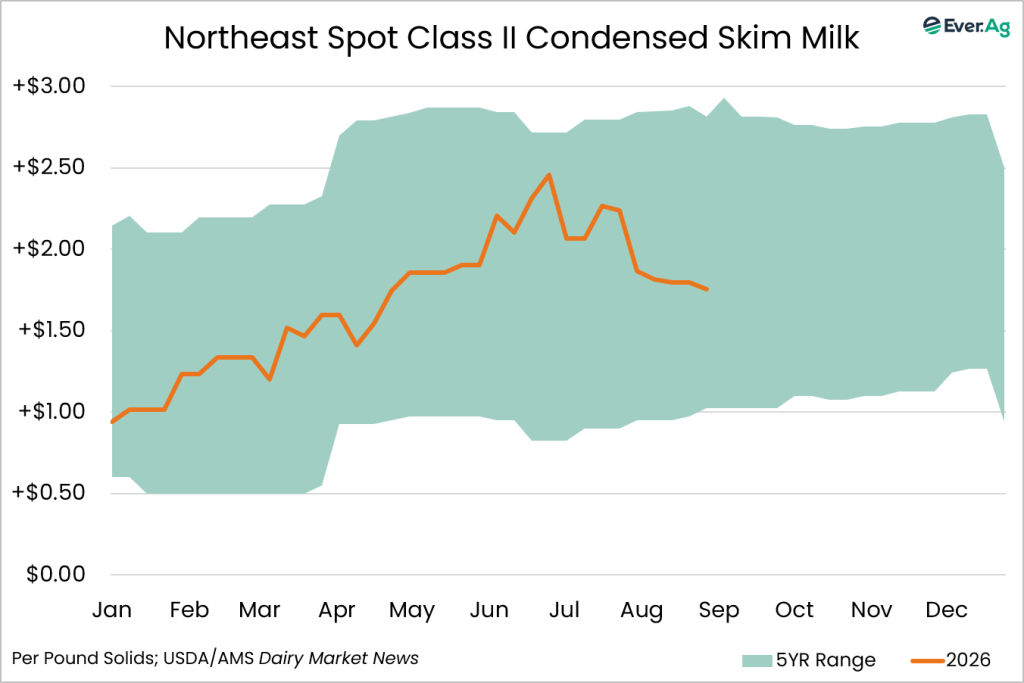
Fluid milk production in the Eastern region is steady, supported by cooler weather in upper New York that is boosting component levels and farm output. Milk supply is mixed, with cooperative manufacturers reporting adequate supply for current needs, but processors sourcing externally reporting tight conditions as plant demand exceeds dairy farm growth. Ultrafiltration demand remains a strong pull on regional supplies. Class I demand is rising as school bottling ramps up, with larger metropolitan statistical areas (MSA) opening soon. Philadelphia schools are opening this week and New York City schools start September 10. For Class II, ice cream manufacturing is tapering off seasonally, but other Class II products, such as yogurt, cream cheese, and cottage cheese manufacturing remain steady. In Class III, cheese operations remain consistent, with demand for value-focused products holding steady and premium brands supported by increased marketing. Class IV butter demand is solid, and draws from storage are anticipated with upcoming post-Labor Day promotions and holiday baking needs.
WEST
Milk volumes continue to recover and improve week over week in the West. Improved weather conditions in California have made milk more available, and contacts report plants are able to secure the volumes they need. Arizona and New Mexico remain tight on milk, relying on spot availability from neighboring states to fill gaps. Milk volume in the Pacific Northwest and Mountain states is balanced; weather conditions continue to improve, increasing cow comfort. Across the region, contacts report decreases in milk fat components. Class I production is focused on filling school demands. Class II demand is strong, and some manufacturers are taking in spot volumes of milk and cream to maintain busy production schedules. Class III and Class IV demand is steady.
Questions or concerns? Please contact Ever.Ag Insights at insights@ever.ag