Here’s what USDA/AMS had to say:
Midwest:
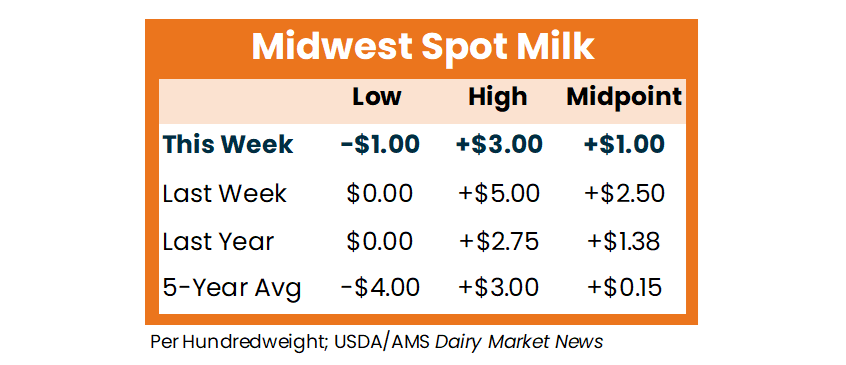
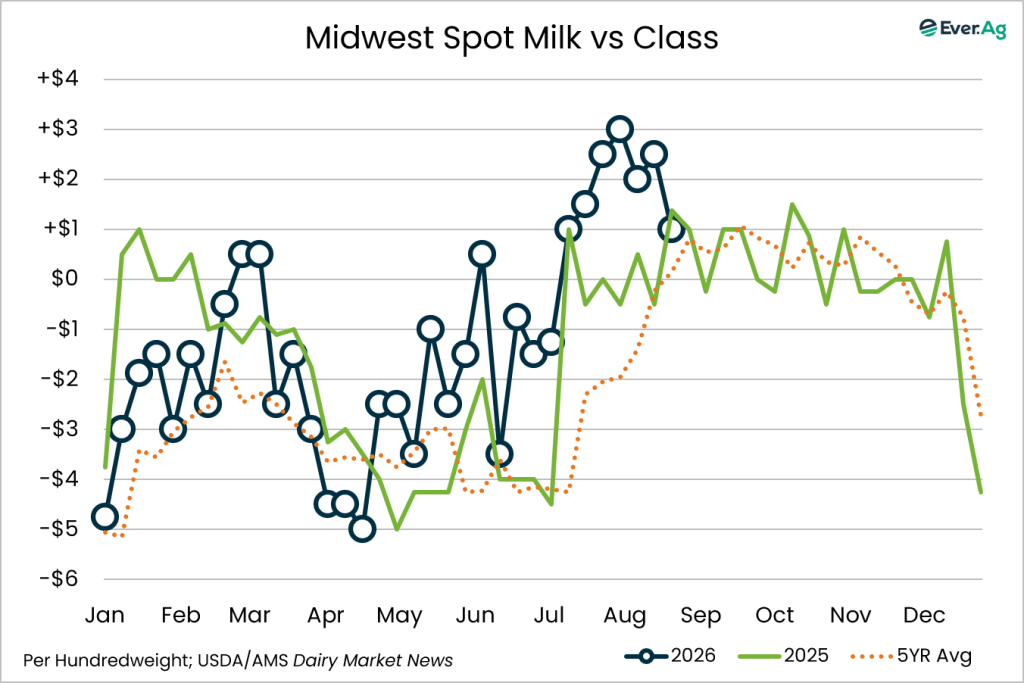
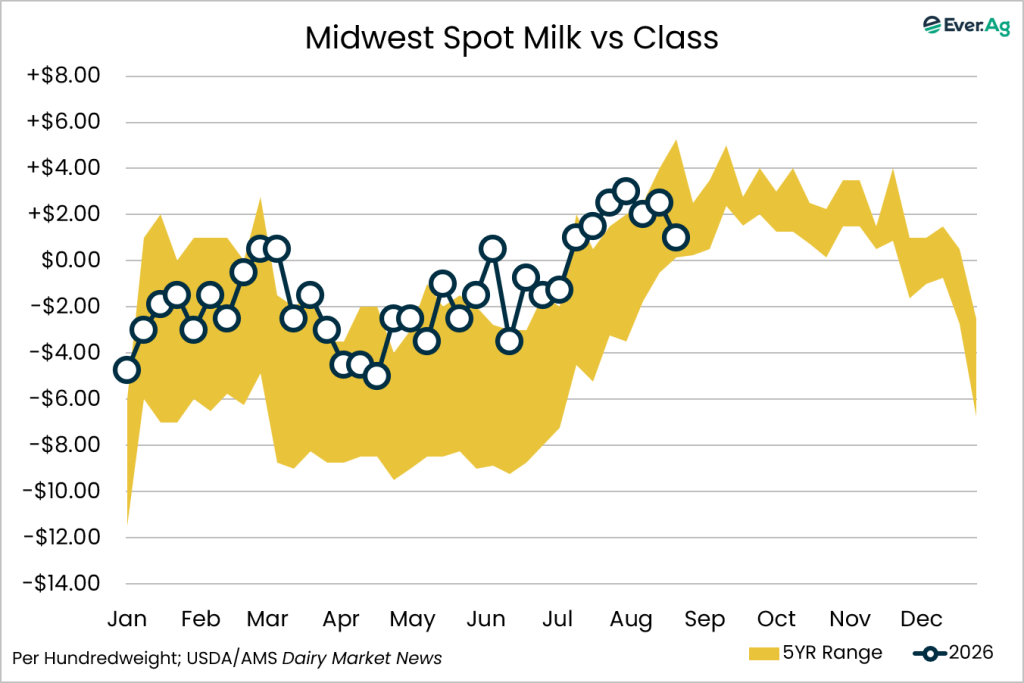
In the Central region, cooler August weather has contributed to increased cow comfort and steadier milk volumes. Class I production and demand continue to be strong as the region prepares for schools to reopen. Contacts say milk is balanced, and spot milk volumes are available in the region due to unscheduled and scheduled plant down time. Spot milk pricing moved lower this week at both ends of the range: from $1.00 under to $3.00 over. Cheese makers in the region note that demand is good and production is steady. Class II and Class IV demand remain strong throughout the region.

EAST
Fluid milk remains sufficiently available across the Eastern region. Class I demand is intensifying as school bottling ramps up, with preordering reported in some areas. Class I pulls are drawing more heavily on the fluid stream, though manufacturing channels remain adequately supplied. Class II demand is steady against tightening supplies. Draws for ice cream production are expected to diminish through the month, while yogurt, cottage cheese, and cream cheese demand is expected to support ongoing, though more limited, pulls. Class III supplies are steady, supported by consistent cheese operations. Class IV cream supplies remain sufficient; butter producers are maintaining five-day production schedules ahead of the typical late-season supply and demand imbalance, and ample milk is allowing some butter plants to sell spot cream into Class II channels. The fluid milk and cream market tone is steady to firm, supported by building Class I pulls, tightening cream availability, and consistent Class III and Class IV operations.


WEST
Overall, milk production in the West is seasonally low but sufficient to meet current demands. California contacts indicate milk volumes have dropped with the heat but remain fairly available. The start of the school year is also causing milk volumes to be drawn away from manufacturing use, though contacts report supplies are balanced for manufacturing needs. New Mexico and Arizona milk volumes are seasonally low, with milk being brought in from California to meet supply needs. The Mountain States – Idaho, Utah, and Colorado – report a continued decrease in milk volumes due to ongoing smoke, haze, and high heat, with a noticeable drop in milkfat levels. Pacific Northwest milk volumes show no change. Class I demand is increasing as schools reopen. Class II and Class III demand remain steady, while Class IV demand is firm, with prices trending higher but not significantly so.
Questions or concerns? Please contact Ever.Ag Insights at insights@ever.ag











Class III (October): $16.08, down $0.26Class IV (October): $19.61, unchangedCorn … Read more